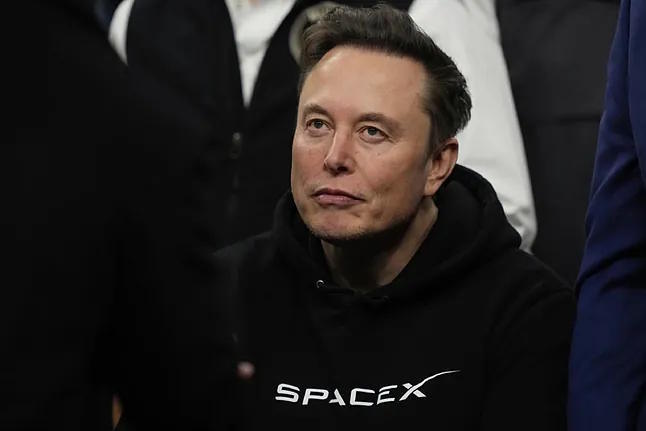
On July 12, SpaceX went public. The largest IPO in history, with its shares soaring nearly 20% in just a few hours, crowning Elon Musk as the world's first trillionaire. However, since then, it has been a rollercoaster ride. In the initial weeks, growing enthusiasm for Starlink (which Musk believes will cover the entire humanity within a decade and has doubled in size in 12 months), the space business now that humans have returned to the Moon, and the integration of xAI drove the stock to trade over 50% above the IPO price at the peak of excitement.
This August, however, a correction has arrived. Despite the company exceeding analysts' expectations in almost every aspect, with exceptional revenues (92% higher than a year ago, nearly $8 billion, $1 billion more than estimated) and significantly reduced losses to $541 million, the market severely penalized the massive spending on artificial intelligence and infrastructure. The company that was born, grew, and became a fetish with satellites and rockets, but profits from cloud services and broadband, is transforming faster than many expected. Many short sellers have taken advantage to cash in.
Just in the second quarter, Musk, with almost total control, invested over $18 billion, of which nearly $16 billion were allocated to AI and data centers, double the previous quarter. "We are developing AI computing capacity at a large scale faster than anyone else," Musk assured on Tuesday night in the first earnings call as a public company.
After the numbers were released, the stocks plummeted between 7% and 12% on Wednesday and are now trading below the IPO price, experiencing a drop of almost 20% since June. Doubts arise due to the challenge, after Musk announced his intention to increase SpaceX's data center capacity from two gigawatts to up to 10 gigawatts by 2027 (solely with Nvidia chips) and with the first orbital data centers possibly operational as early as next year.
Moreover, while the medium-term promises are astronomical and enticing, the company will continue to burn cash for a significant period. Not even considering the uncertainty of whether there will eventually be a merger with Tesla that would further empower Musk. According to the Financial Times, next year "in Musk's most optimistic estimates, the company's data centers would consume as much energy as New York City in the peak of summer."
Indeed, the sequence of events on Wall Street is not unusual. The investment in AI is massive but in line with its main competitors. Amazon indicated last week a capital expenditure of around $220 billion this year, also driven by AI. Alphabet, Google's parent company, raised its capital expenditure forecast for the year last month to a range of between $195 billion and $205 billion. Microsoft, at the same level, expects to invest up to $175 billion by 2026, while Meta estimates between $130 billion and $145 billion.
Furthermore, the behavior of SpaceX's stocks resembles that of other major tech companies in their early months on the stock market. Investors, who already had reservations about potential revenues in the early years, still believe in the potential of Starlink, with an increasingly global presence and 12 million customers. They see a bright future in the space business but also demand profitability and express logical concerns about the pace of investment since there is consensus on the necessity, but AI, after all, is also a gamble. Many analysts suspect that latecomers may reach the same destination but at a lower cost.
SpaceX has stated that if everything remains the same, it will reach $100 billion in annual revenue by December, mainly thanks to agreements with data centers. Musk also stated that the company now projects to reach a trillion dollars in annual revenue by 2030, a year earlier than previously anticipated.
The third element explaining the recent movements, besides short sellers closing their positions (by the end of July, the volume of shares sold short had reached 219.3 million, 34% of the float, a huge figure for a newly public company), is that the market assumes that when the so-called lock-up period ends on Thursday, and employees and initial investors dispose of millions of shares, there will be additional pressure on the value. That's why hedge funds closed positions at the beginning of the week.
The company does not seem concerned. Its commitment is medium to long term. When the goal is to colonize Mars, asteroid mining, data centers in space, or a mass accelerator on the Moon, the first quarterly results are insignificant. However, the market is aware that, for now, SpaceX makes money by selling broadband subscriptions and renting data centers, activities that represent less than 20% of the "total potential market" mentioned in SpaceX's IPO prospectus.