What if the massive arrival of migrants in Ceuta is part of an Intelligence operation driven by Morocco and Israel to destabilize Spain? This is the theory gaining ground in some academic and Chinese Intelligence circles. Beijing officials have shared with this newspaper their perspective on how the second world power has viewed the migration crisis in the Spanish autonomous city.
This week, Egyptian political scientist Nadia Helmy, an expert in Chinese politics and Sino-Israeli relations, openly presented this thesis in an article published by Modern Diplomacy, an international magazine specializing in geopolitical analysis. The author argues that some reports from Beijing interpret the events in Ceuta as a hybrid warfare operation aimed at increasing pressure on Prime Minister Pedro Sánchez's government. According to this interpretation, the maneuver would have involved Mossad, the Israeli Intelligence service, interested in promoting a destabilization campaign against Spain.
Helmy contrasts this interpretation with the coverage by major Chinese official media outlets, such as CGTN and Xinhua, which focus mainly on the deployment of the Spanish Army and the implications of the crisis for the European Union's external borders.
"Chinese Intelligence analysis centers have examined the escalation of diplomatic and political tensions between Spain and Israel. From that perspective, the deterioration of bilateral relations could have motivated Mossad to get involved in the migration crisis between Morocco and Spain, exacerbating the situation and infiltrating agents to foster discontent and chaos among the Moroccan population," Helmy explains.
In private conversations, some diplomats and analysts close to Beijing's political circles also wonder if the assault on Ceuta is related to the progressive deterioration of relations between Madrid and Israel, marked by the Spanish government's criticism of the massacre in Gaza and the recognition of the Palestinian state.
"Since the normalization of relations in 2020, Morocco and Israel have become allies and have strengthened their defense and Intelligence cooperation," a diplomat comments.
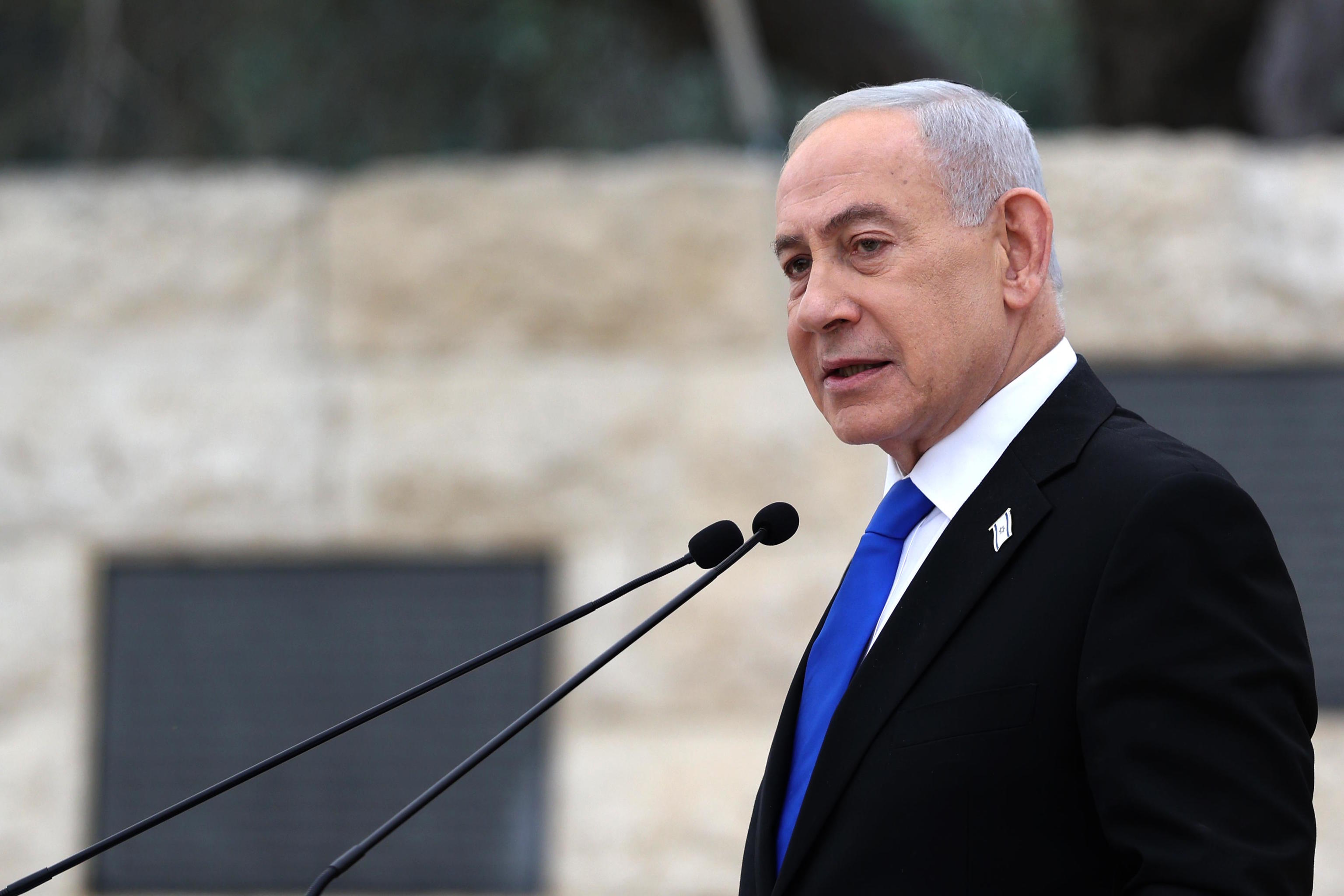
This theory has also resonated outside of China. Colombian President Gustavo Petro directly pointed to Israeli Prime Minister Benjamin Netanyahu as ultimately responsible for the migration crisis in Ceuta. He stated that the Israeli leader "pays for the poor to risk their lives to reach Spain" and that Morocco "has surrendered to the will of a fugitive genocidaire," linking the migration influx to the close relationship between Rabat and Tel Aviv. Petro also accused the Israeli Prime Minister of promoting destabilization campaigns against governments that question his policy in the Middle East.
In China, a country where border control is a pillar of national security, the images of thousands of people crossing into Spanish territory sparked a mix of astonishment and disbelief among many Chinese social media users. "How is it possible for them to cross the border so easily?" was one of the most repeated questions.
Official media also highlighted the political consequences for Europe. "The Ceuta crisis has exposed the deficiencies of the EU's post-2015 migration reforms and demonstrates the bloc's difficulties in building a unified response," stated Cui Hongjian, a professor at the University of Foreign Studies in Beijing, in remarks to the newspaper Global Times, which dedicated an in-depth analysis to the tensions within the European Union following the events at the Spanish border.
Beyond the migration dimension, Chinese officials and diplomats explain that in Beijing, the crisis is primarily viewed from a geostrategic perspective. Ceuta appears as another piece on the complex board of the western Mediterranean, a region where essential maritime routes, port infrastructures, energy supplies, and an increasingly significant Chinese economic presence converge.
The close relationship between the governments of Pedro Sánchez and Xi Jinping has been showcased through the four visits by the Spanish president to Beijing, more than any other European leader, solidifying Spain as one of the most receptive interlocutors towards China within the European Union. However, for the communist regime, Morocco has become one of its partners with greater strategic projection in Africa.
Morocco, a trading partner for China
In just five years, Rabat and Beijing have significantly strengthened their economic relations through major infrastructure projects and commercial agreements that position the Kingdom of Morocco as one of the main gateways for China to both the African and European markets.
This commitment is particularly evident in the manufacturing sector. Dozens of Chinese companies have announced multibillion-dollar investments to establish factories for electric vehicle components, batteries, and strategic materials in Moroccan territory. The choice is based on several factors: political stability, free trade agreements with the European Union and the United States, abundant phosphate reserves - crucial for battery manufacturing - and a privileged location, just 14 kilometers from Europe.
From Beijing's perspective, Morocco can play a role similar to what Vietnam has assumed in Asia: an industrial platform from which to supply Western markets, bypassing some of the growing trade barriers affecting exports directly from China.
In addition, there is increasingly intense cooperation in infrastructure. Chinese state-owned companies participate in railway, energy, and port projects, while the Tanger Med port - the largest in the Mediterranean and one of the world's main container traffic hubs - has established itself as a logistical node of enormous value for Chinese supply chains. From there, goods can be distributed quickly to Europe and West Africa, reinforcing Morocco's role as a logistical platform with continental reach.
Therefore, every time a crisis erupts in Ceuta or any point in northern Morocco, Beijing assesses the potential impact on one of its economic partners whose strategic importance continues to grow.