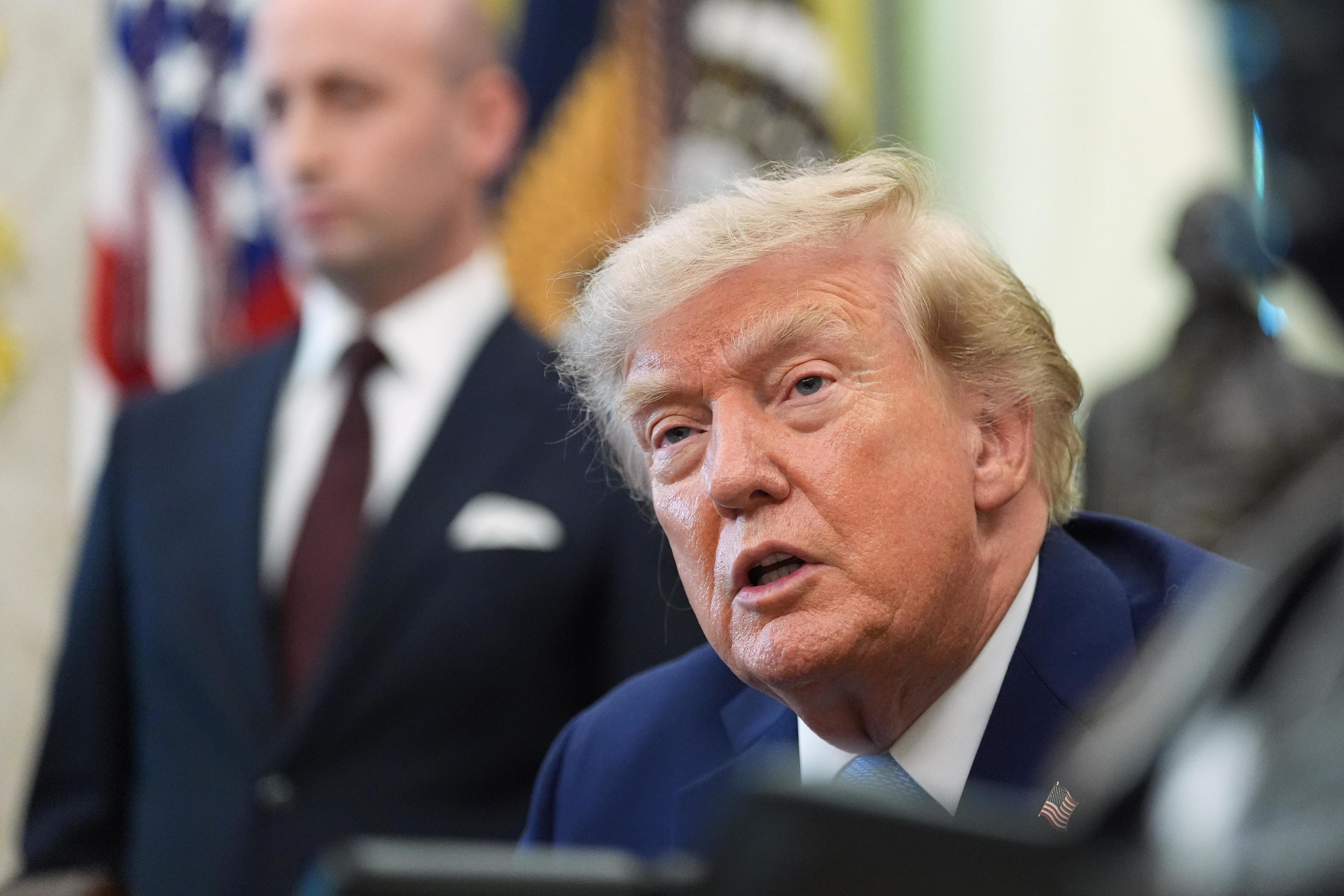
On board the Air Force One, Donald Trump wanted to present the latest financial operation of his Administration with one of those phrases that mix diplomacy and provocation. "The intervention was a show of friendship," he said about the rescue of the Japanese yen. And, almost seamlessly, he finished with one of his recurring jokes about the Asian ally: "Japan has always been very good to us, with the exception, of course, of Pearl Harbor."
In Tokyo, they are familiar with that joke. And they don't find it amusing. The reference to the 1941 attack resurfaces periodically in the repertoire of the U.S. president and has already caused moments of discomfort during the visit that Japanese Prime Minister Sanae Takaichi made to Washington earlier this year. But the Japanese government has learned to ignore the outbursts of its main strategic partner. When the security umbrella of the United States now extends to the national currency, any offensive comment takes a discreet back seat.
The real news was that, for the first time in over a decade, the U.S. directly intervened in the foreign exchange market to support the yen, coordinating with Japanese authorities after the currency reached its lowest level against the dollar since 1986. Washington and Tokyo decided to act when a dollar was exchanged for 163 yen, a threshold that set off alarms on both sides of the Pacific.
The operation began on July 31. While the U.S. Treasury was selling euros to buy yen, the Japanese government was making massive purchases of its own currency. The effect was immediate. In just a few days, the exchange rate retreated to around 157 yen per dollar, a recovery sufficient to send a message to the markets: the White House was willing to support the weakened yen.
The news quickly spread from the Japanese press to the pages of major international financial newspapers because it was not a common move. Major powers rarely intervene to defend another country's currency. The last time Washington came to the yen's rescue was after the 2011 earthquake and tsunami, and before that during the Asian financial crisis of 1998.
Analyses published in Bloomberg and Nikkei in recent days agree that the U.S. decision reflects how the weakness of the Japanese currency is no longer exclusively a local problem. The yen is not just any currency. It is the third most traded in the world, behind only the dollar and the euro. Any fluctuation in its value affects banks, investment funds, exporting companies, and central banks around the world.
Japan has been grappling with anaemic growth for three decades, historically low inflation, and interest rates that have remained near zero or even negative for years in an attempt to stimulate the economy. Although the Bank of Japan began a timid monetary normalization last year, the difference with the high U.S. interest rates continues to favor the dollar.
This year, Japan's energy costs have increased due to the U.S. war against Iran. The Asian archipelago imports the vast majority of the oil and gas it consumes. Every rise in crude oil prices directly impacts households and industries, fueling inflation.
Japanese consumers have seen gasoline, electricity, and many imported food bills skyrocket. But when their currency loses value, major Japanese multinational companies sell their products better abroad, and tourists enjoy a much cheaper Japan. That is one of the reasons why the country has seen record numbers of international visitors.
In Washington, however, it is understood that an excessively strong dollar reduces the competitiveness of U.S. exports by making their products more expensive. Additionally, U.S. media highlight an even greater concern in the Treasury Department: Japan holds over $1.1 trillion in U.S. Treasury bonds.
If Tokyo needed liquidity to continue defending the yen on its own, it could be forced to sell part of that massive portfolio. Such a sale would raise U.S. debt interest rates at a particularly delicate time for public finances that already exceed $39 trillion in debt. In other words, the Trump Administration is also protecting its own debt market.
The main driver of this strategy has been U.S. Treasury Secretary Scott Bessent, one of Trump's cabinet members who knows Japan best from his time as an investment fund manager. After the operation, he promised that Washington will do "whatever it takes" to help stabilize the Japanese currency, considering that a prolonged collapse of the yen could trigger new competitive devaluations in Asia and generate financial turbulence that would also harm the U.S.
His words were interpreted in Tokyo as much more than a simple diplomatic endorsement. Also as a political signal directed at the Bank of Japan to continue normalizing its monetary policy. "Bessent's comments must be music to the ears of hawks within the Bank of Japan," summarized Naomi Muguruma, chief fixed income strategist at Mitsubishi UFJ Morgan Stanley Securities. "I get the impression that a rate hike in September is practically a done deal."
In Japan, where the alliance with Washington has been the cornerstone of its foreign policy since the end of World War II, the intervention has been seen as a demonstration that this strategic bond is no longer limited to aircraft carriers, military bases, or missile shields. It now extends to the foreign exchange market.