The war over Iran's nuclear program could have paradoxically accelerated military nuclear programs worldwide. It could have also extended Tehran's strategy of "nuclear latency," consisting of not possessing atomic bombs, but having the technical capacity to develop them within a period ranging from a few days to six months. Japan could take decades in that situation. South Korea has set that goal, at least as a political objective. The U.S. could have endorsed Saudi Arabia's entry into that group on July 22, which, combined with tension with Iran, could lead the United Arab Emirates to pursue that goal. Thus, the world seems to be moving from nuclear proliferation to almost nuclear proliferation.
The agreement signed between Saudi Arabia and the U.S. -although Trump conditions it on Riyadh's recognition of Israel- if sanctioned by the U.S. Congress -which is far from clear-, would open the doors for Riyadh to achieve exactly the cause of the conflict in Iran: uranium enrichment. Washington and Riyadh have stated that the pact does not include the so-called "additional protocol" of the International Atomic Energy Agency (IAEA), which allows that organization to conduct inspections of countries with a two-hour notice of any monitored nuclear programs, and to take soil, air, and water samples. In other words, IAEA technicians could only go where Riyadh allows them.
The potential Saudi nuclearization has not gone unnoticed in the United Arab Emirates, its main regional rival after Iran, with which Riyadh cut off banking transfers three weeks ago without further explanation.
The confrontation is not only geopolitical, in countries in civil war like Yemen and Sudan, but it also becomes personal. Saudi Crown Prince Mohammed bin Salman (better known by his initials MBS), who rules the country, and the President of the Emirates, Mohammed bin Zayed (MBZ), harbor a deep animosity towards each other. Both lead their countries without any institutional control, adding an extra element of unpredictability to their nuclear programs.
Furthermore, the Emirates, along with Israel, are the countries with the most hostile attitude towards Iran, and the ones that have pressured the U.S. the most for the current war to end in the overthrow of the Islamic Republic. This places them in an unenviable position, sandwiched between two states (Saudi Arabia and Iran) with which they have serious disagreements and who are determined to enrich uranium, although without producing atomic bombs.
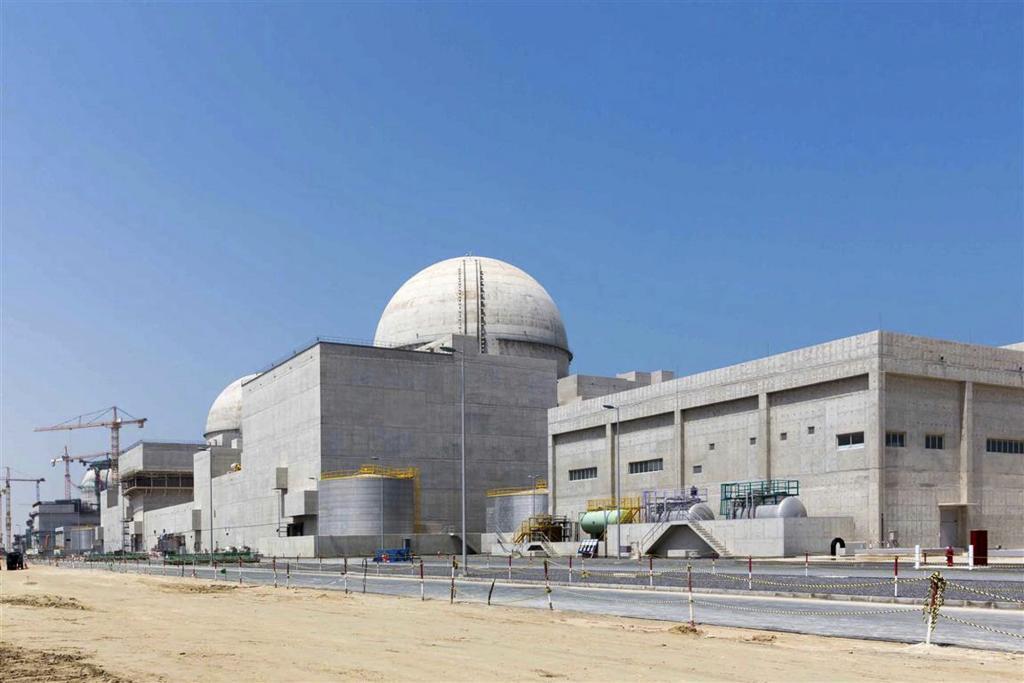
The Emirates have the only nuclear power plant in the Arab world, the Barakah plant, in Abu Dhabi. Since 2009, they also have a similar agreement to the Saudi one with the U.S., although without uranium enrichment. However, according to sources familiar with the situation, that country "is exploring the acquisition of technology to at least have the possibility of enriching uranium." Secretly producing atomic weapons is almost impossible. Therefore, if the Emirati plans are true, they are looking towards the long term.
Additionally, Barakah is vulnerable, as was evident in May when a drone launched by pro-Iranian militias in Iraq hit the plant, destroying a power generator. Although a reactor is built to withstand much larger impacts than those of drones or missiles, a direct attack would have a considerable psychological, political, and economic effect.
The Emirates are the Arab country with the closest relations with Israel, to the point that in this war, Israeli soldiers have been on their territory operating air defense systems to shoot down Iranian drones and missiles. Israel has a long history of nuclear cooperation with countries, including a secret agreement signed in 1975 with Apartheid South Africa, with whom they even conducted a secret nuclear explosion over the Indian Ocean in 1979. Currently, there is no indication of nuclear cooperation between Israel and the Emirates.
In Asia, Japan has had a uranium enrichment program since the 1970s, endorsed by an agreement signed in 1987 with the U.S. allowing Tokyo to enrich uranium up to 20% purity solely for commercial purposes. Although Japanese uranium only has a concentration of 5%, there are various theories on how long it would take to produce an atomic bomb. The official version indicates it would take between three and five years.
However, Japanese leaders have been insisting otherwise for decades. From when in 1994 the then Japanese Prime Minister, Tsutomu Hata, stated in the country's Parliament that "indeed, Japan has the capacity to build atomic weapons, although it has decided not to," to when Prime Minister Taro Aso declared in 2006 that it would take them "probably about six months", that latter date has become the most accepted. Although Japan is under the IAEA inspection regime, since the 80s, the phrase "N minus 6" has circulated, meaning it would take six months to reach a nuclear weapon.
South Korea's Experiments
A neighbor of Japan that has been considering following that strategy for some time is South Korea. Eleven years ago, the U.S. agreed to authorize Seoul to carry out controlled experiments on nuclear fuel enrichment. In 2023, South Korea's National Security Strategy prioritized the development of uranium enrichment capabilities, and since then, the term "nuclear latency" has gained prominence in the country's political debate. However, that same year, the U.S. and South Korea signed the Washington Declaration, which structures a system with Seoul to share information on nuclear weapons.
Saudi Arabia, the Emirates, Japan, and South Korea have something in common: they are major allies of the U.S.. This has allowed them to advance their nuclear programs to levels that the U.S. or Israel would hardly have considered acceptable had they maintained a different strategic alignment. In fact, Washington went to extreme lengths to acknowledge the nuclear programs of its ally India by signing a treaty in 2008 that divides that country's nuclear program into a military and a civilian one. Regarding the latter, the U.S. has lifted all restrictions, while for the military one, it has successfully lobbied the IAEA not to supervise it.
Developing independent military atomic programs has another advantage: it can lead the U.S. to agree to share information or to extend itsnuclear umbrella in exchange for them not continuing their work in that area. The 2023 Washington Declaration partly responded to the Biden administration's interest in making South Korea's nuclear program unnecessary. The isolationism of the Trump administration could now be questioning that strategy and making it more logical for U.S. allies to seek "latency" in their nuclear programs if there is a crisis and Washington does not come to their defense. Surprisingly, the Iranian example -and also the Japanese- is gaining supporters among United States allies.