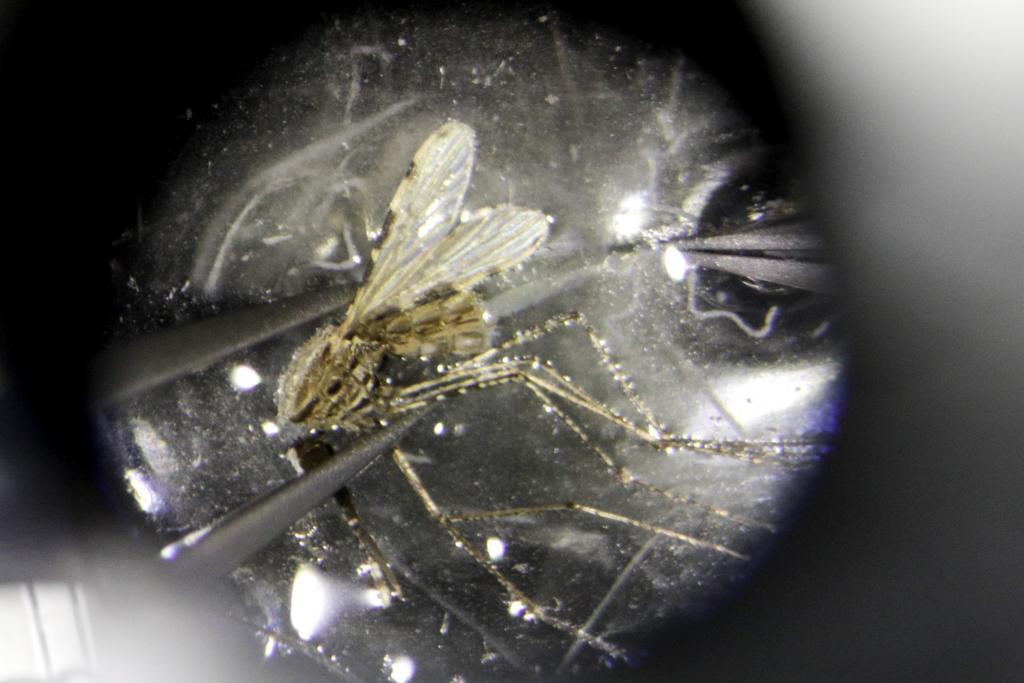
Malaria causes half a million deaths annually globally, according to the World Health Organization (WHO); it is the leading cause of fever in migrants and travelers, and among parasitic diseases, it has the worst prognosis in our environment, where it is not endemic.
Mutations in the parasite that causes it and resistance to antimalarials complicate the management of this mosquito-transmitted disease. And there is an additional problem: it is important to treat patients who can rapidly progress to severe forms of the disease early, but detecting them in time is not easy, especially in areas where clinical experience is limited and access to specialized resources is concentrated in very few hospitals, as is the case in Spain.
Scientists from the Rovira i Virgili University (URV) in Tarragona and the Barcelona Institute for Global Health (ISGlobal) are working on a solution to alleviate this last handicap. They are developing a mobile phone tool that allows analyzing the image of the rapid test result for malaria diagnosis, a test that works through lateral flow and its interpretation is based on the appearance of color lines (pink, red, or purple).
With the combination, in addition to detecting the infection (what the test does), it is possible to identify patients who may develop severe forms of the disease (what the mobile tool does). Furthermore, the latter analyzes in less than six minutes, allowing for the immediate transfer of the infected person to a healthcare facility where they can be treated early.
The results of this new tool (which complements the tests) have been published in Biosensors and Bioelectronics. The article concludes that "this study illustrates how established biodetection technologies, combined with digital health tools, can be adapted to address the growing need to assess the severity of malaria."
Specifically, "we demonstrate that pan-pLDH, while less specific than PfHRP2 for diagnosis, adds value as a prognostic biomarker by helping to differentiate severe cases from uncomplicated ones within minutes at the point of care. Along with video interpretation via a smartphone, lateral flow tests can be read more quickly and consistently, reducing user variability and extending their utility beyond diagnosis to support early patient classification."
As mentioned, the analysis focuses on two biomarkers produced by the parasite: the Pf HRP2 protein, specific to Plasmodium falciparum (which usually causes the most severe form of the disease), and the pan-lactate dehydrogenase enzyme (pan-pLDH), present in Plasmodium spp. Through laboratory immunoassays and lateral flow tests (similar to pregnancy tests or those used in the COVID-19 pandemic), researchers compared the ability of the two markers both to diagnose malaria and to identify cases of greater severity.
The results show that, although Pf HRP2 is very accurate in confirming the infection, pan-pLDH is especially useful in distinguishing patients at risk of severity, even when used in simple rapid tests. "This difference is key from a clinical perspective, as it provides relevant information for decision-making without the need for complex laboratory equipment," according to Claudio Parolo, a Ramon y Cajal researcher in the Department of Chemical Engineering at URV and an associated external researcher at ISGlobal.
The research is led by Parolo and Daniel Camprubí, a researcher at ISGlobal and a specialist in the International Health Service of Hospital Clínic Barcelona, and has been developed within the framework of the doctoral thesis of Júlia Pedreira, a predoctoral researcher at ISGlobal. It has also received support from the data science team coordinated by Paula Petrone from the Barcelona Supercomputing Center-National Supercomputing Center (which manages the MareNostrum 5 supercomputer) for quantitative analysis.