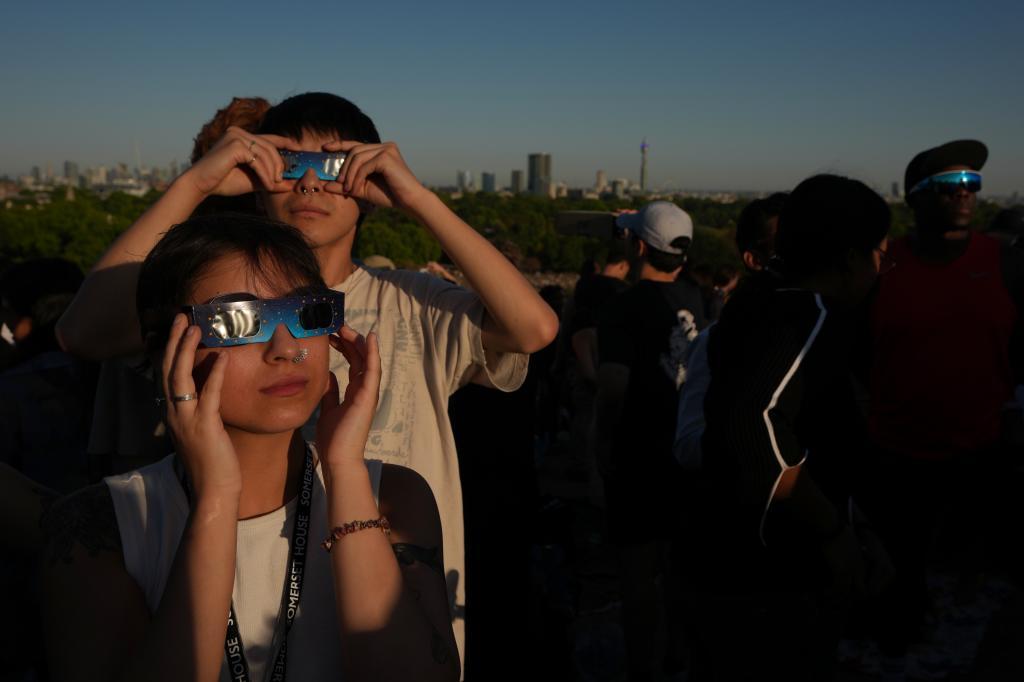
Damage to the eyes occurs at the moment of looking at the sun, but symptoms may take hours or days to manifest, and there is no specific treatment to reverse these injuries, so the best way to protect the eyes was to prevent through approved glasses or avoiding exposure.
The impact may go unnoticed at the time of exposure because the retina "barely has pain receptors, which causes many not to relate the symptoms to eclipse exposure," noted Jesús Merayo, director of the Fernández-Vega University Institute, in a recent article on how to safely view the eclipse.
How can you tell if the retina has been damaged? What would you notice if that happens?
After following protection recommendations, damage to the retina should not occur, considers Merayo, who emphasized that damage in patients with solar retinopathy generally may go unnoticed.
Once occurred, in most cases, symptoms may take "up to 12 hours to appear, almost always appearing within the first 24-28 hours", points out Lucía Galletero, ophthalmologist at Vithas Vitoria.
The most common symptoms are:
"Upon noticing any of these signs, it is recommended to see an ophthalmologist as soon as possible for a better assessment. In any case, prevention is the best option, as injuries can be irreversible," concluded the ophthalmologist.
Why viewing it without protection may have left a mark?
"The sun emits dangerous radiation even when partially covered by the moon. At that moment, high-energy radiation is especially intense and can directly affect ocular structures. The only safe way to observe the total or partial eclipse is by using approved glasses," emphasized Merayo.
What has the radiation caused in the eye?
"Sun exposure can cause a burn and destroy exposed tissue. This is known for exposure to other tissues like the skin, but the eye also has a focusing system (cornea and lens) that concentrates the sun's energy at the point where we are looking and multiplies the thermal effect and the risk of permanent and irreversible damage," argues the director of the Fernández-Vega University Institute.
Direct observation of the sun can permanently damage the retina and even cause solar retinopathy, an injury caused by the photochemical and thermal damage of solar radiation on the macula (where the majority of color-seeing or reading cells are located) that can lead to total vision loss. "This risk exists whether looking at the sun with the naked eye or using inadequate methods," Merayo adds.