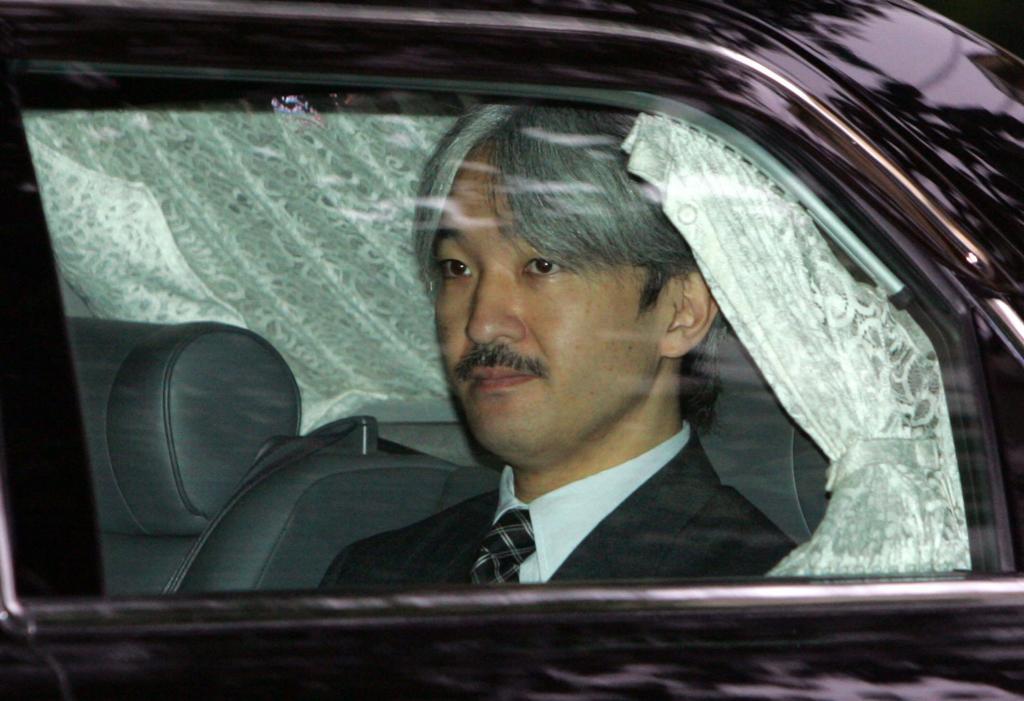
As is the case in any parliamentary monarchy around the globe, members of the imperial family of Japan cannot publicly express political opinions. In fact, in the Land of the Rising Sun, they are so strict on this matter that in 2016, Akihito - then emperor and father of the current sovereign, Naruhito - had to carefully choose his words in a historic speech to the nation where he admitted that, due to "his physical decline" and health problems - he had undergone two major surgeries - he was "hindered in carrying out his high responsibilities." The elderly head of state needed to step back, but he could not openly state his desire to abdicate the throne.
This is why it is so surprising the clarity with which the current Crown Prince of Japan, Akishino, brother of Naruhito, has referred to the recent and very controversial reform of the Imperial House Law, not holding back in what clearly amounts to a criticism of the political elite, in line with the bewilderment and discomfort of the Japanese citizens, who, as reflected in surveys, mostly do not understand the insistence on maintaining the strict Salic law that completely sidelines women from the succession order.
"I have mixed feelings," Akishino said about the legal amendment that insists that only men can become emperors and transmit succession rights. "I believe there is no difference between men and women" when it comes to carrying out the functions of the imperial family to meet social needs, emphasized the emperor's brother during a press conference prior to the trip to Paraguay that he and his wife, Princess Kiko, will undertake at the end of this month to commemorate the 90th anniversary of Japanese emigration to the South American country.
Akishino was very subtle in his comments, but still quite clear to the surprise of all: "I have mixed feelings about it, and it would be quite strange if I didn't," he said when asked about the government's decision, endorsed by the Japanese bicameral parliament. He added, "It's a difficult question, and I really can't talk about it." "Society needs to continue progressing, and I think it's important for people with different viewpoints to keep thinking about what is best," Akishino concluded.
The lack of males in an imperial family where women are excluded from the succession order has become the biggest institutional problem in a country as ultra-modern economically and technologically as it is conservative socially and politically. Both the current Prime Minister, Sanae Takaichi, and her party, the Liberal Democratic Party, seem to have set out to find a solution, although the approved legal reform has received much criticism and considerable social incomprehension.
From now on, imperial princesses will be allowed to retain their royal status after marrying commoners - to prevent the family from alarmingly shrinking, as until now any princess ceases to be one upon marriage. And it is supported that the reigning family adopts males over 15 years old who descend through the male line from the 11 ancient imperial branches that lost that status with the 1947 Constitution, imposed by the United States after Japan's defeat in World War II. These males, now commoners, would not have rights to the throne, but they would pass them on to their future sons, also males, which would indeed greatly increase the chances that in a few generations there will be enough little princes running around the beautiful palaces of Tokyo with the possibility of reigning, as the Yamato dynasty has been doing continuously for about 2,600 years - the first emperors, however, are considered of a legendary nature.
The presumed discomfort within the dynasty is evidenced not only by Akishino's current criticism - father of Hisahito, the young man on whose shoulders rests the immense responsibility of bringing male heirs into the world to ensure dynastic continuity without resorting to strange formulas like adopting commoners descended from former emperors. Akishino has expressed his concern many times about the dwindling number of members serving the Crown. And Emperor Naruhito himself surprised at the press conference he held before traveling with Empress Masako to Europe - for State visits to the Netherlands and Belgium - by calling for efforts to ensure the future of the institution "to have the understanding of the people". It doesn't seem like much attention has been paid to him.