Being the President of United States is a full-time job filled with obligations, travel, and constant and impossible decisions. Being a candidate for President of the United States is, if possible, even more exhausting. And with unwritten rules that are even more fascinating. To reach the White House, you need a top-notch team, a campaign of at least two years, and above all, huge amounts of money. But there are also lesser-known yet equally important elements. Creating exploratory committees, secretly commissioning opinion polls in different states, making miracles to become known throughout the country without burning out too soon or exposing oneself to criticism. Finding the ideal running mate, always publishing a book, securing interviews on major TV shows and newspapers. And, as if that weren't enough, managing to spend time without seeming desperate in those small states, mainly on the East Coast, where the primaries kick off and where in a matter of days, a few thousand rural residents decide the nation's future.
The next presidential elections will be in November 2028. In any other place, media and political attention would be focused on the November legislative elections, the crucial midterms that could return control of Congress to the Democrats and seriously complicate Donald Trump's agenda. But in the US, national politics is a perpetual cycle, with no rest. If the same week that Kamala Harris was defeated in 2024, speculations began about who were the best positioned to replace her, now that the race is about to truly begin in both parties, the players are starting to emerge and deploy their pieces.
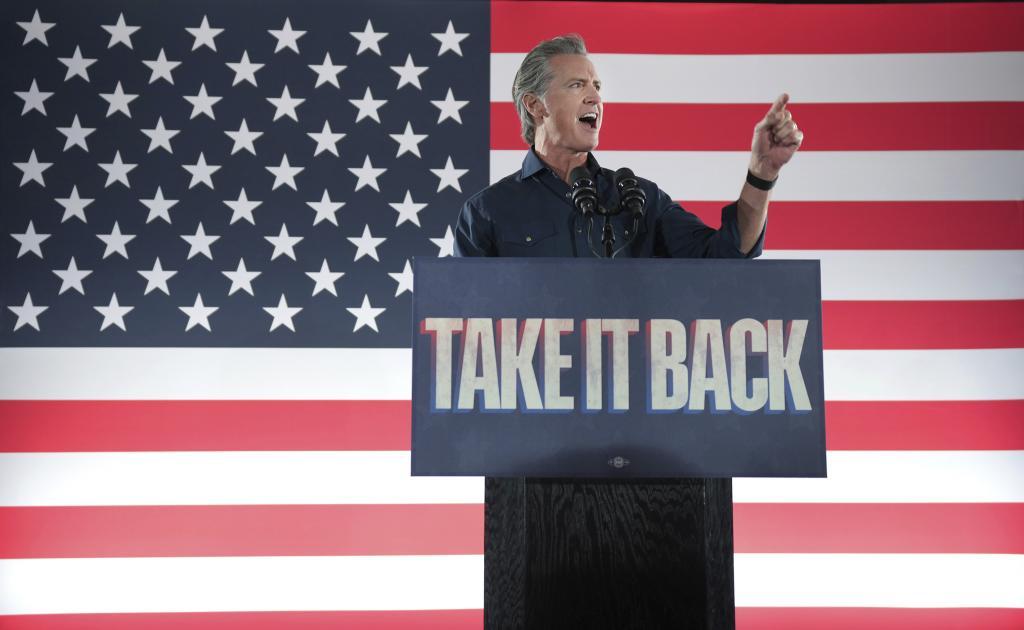
The first and most prominent is undoubtedly the outgoing Governor of California, the Democrat Gavin Newsom. He gained experience in the 2024 campaign on the sidelines of the presidential debates. He immediately started moving when Trump won, underwent a significant shift in his identity worldview, launched a podcast, began seeking daily clashes with Trump on social media, denounced a political persecution by the Department of Justice. And he has admitted his interest in the position. With a reputation for being posh, and a lot of personal scandals in his history, he is a classic option but one that fits irregularly with the current battle for the party's soul, which seems to lean towards someone younger, more ideological.
The next figure is Kamala Harris, in limbo since losing to Trump. There was speculation that she would try to become the Governor of California, but she did not take the step. She has released her memoir and toured the country. In April, during an event at the National Action Network, she was directly asked about her ambition and replied: "Maybe... I'm thinking about it," the most explicit signal to date. Interestingly, she is suddenly in contact with the Mayor of New York, Zohran Mamdani, the prominent figure of the Democratic Socialists, an independent party but in practice forming the leftmost wing of the Democrats. And whom she used to denounce until recently. Mamdani is Muslim, something very relevant as Harris lost the support of many young people and the Arab community in the country due to her position on the Gaza war. Furthermore, in recent interventions, Harris has advocated for proposals such as eliminating the Electoral College, expanding the Supreme Court to 13 judges, making Puerto Rico and Washington DC states, and tightening control over federal judges, more progressive ideas than in her campaign two years ago.
In this context, it is impossible not to mention right after Alexandria Ocasio-Cortez (AOC), one of the most well-known and undoubtedly left-leaning congresswomen on Capitol Hill. She drives Fox News and conservative commentators crazy, who have a strange fascination with her. Ocasio-Cortez, along with the also leftist and very popular Senator Bernie Sanders, has been traveling across the US for months trying to build a daily opposition to Trumpism. And building a broader base for a possible campaign. In May, Democratic strategist David Axelrod explicitly asked her if she aspired to the Presidency or the Senate. AOC replied that her ambition was to "change the country" and that she was not thinking in terms of a specific position. A deliberately ambiguous response. Her rivals know it well: Vice President J.D. Vance, perhaps the heir of Trumpism, said in June that she was, in his opinion, "the top Democrat" for 2028.
At 39 years old and a Senator from Georgia since 2021, he has become one of the most prominent young figures in the party in recent months. He has a pragmatic, centrist profile; he is a great communicator and, after having been an investigative journalist, he has focused on denouncing the corruption of the Trump Administration, civil rights, and more effective ways to control the executive power. His national projection has grown significantly in 2026, tripling his chances of victory in hypothetical primaries according to prediction markets, especially due to his increasingly tough speeches against Trump and his ability to raise money and mobilize voters.
He is one of the few Southern Democrats with a significant advantage in a state that leaned towards Trump in 2024. This week, political analysts were surprised to hear a speech in which Ossoff attacked the President in an unprecedented way: "While the sailors on the Lincoln fight their war, while he uselessly drains our ammunition and oil reserves, the President falls asleep during his meetings, plays golf, and buys and sells stocks. He doesn't want to do his job. He wants to build his ballroom and travel with Natalie in his seemingly defenseless flying palace gifted by the Emir of Qatar."
The reference to Natalie Harp, a young assistant and devoted to the President, is explosive. It directly points to rumors in the capital about a possible romance between Trump and his employee. Something so aggressive that only someone with presidential aspirations would dare to launch, speculate strategists. Despite repeatedly stating that he has no aspirations in 2028 and that his only priority is to win re-election this year.
Another name considering the leap is Senator Mark Kelly, former pilot, former astronaut, singled out by the Administration along with other Democrats for reminding troops not to follow illegal orders. He was extensively interviewed by The Atlantic, alongside his wife, former Congresswoman Gabby Gifford, who suffered a gunshot wound. He did not confirm anything there, but clarified that his candidacy will depend on what happens after this November's elections and Trump's reaction. However, his wife has publicly encouraged him to take the leap, and during that conversation, the Senator already spoke about what it would be like for the country to have a person with a disability as the First Lady.
One of the names strongly considered as a potential vice-presidential candidate in 2024 is Josh Shapiro, the governor of Pennsylvania. A powerful figure, he also survived an attack when a disturbed individual set fire to his home. He is seeking reelection as governor, has published a book this year, has toured extensively to promote it, has become involved in other campaigns, and has the support of major donors, such as billionaire Mike Bloomberg.
Pete Buttigieg, Secretary of Transportation under Joe Biden, is one of the party's rising stars. Young, an excellent orator and debater, he doesn't hesitate to appear on more conservative media outlets to discuss and criticize the government and defend progressive positions. Openly gay, he recently suffered a cruel attack when an anonymous person reported that his children were being abused. The police went to his home and, despite the weak nature of the case, separated him from his family for a night while the investigation was conducted. This was likely due to his status as a potential presidential candidate. He closed a Democratic rally in Michigan, one of the swing states that will be key again in 2028.
Another who is clearly raising his profile these days is Rahm Emanuel, Obama's former chief of staff and mayor of Chicago. He is currently everywhere, positioning himself on the future of the party, distancing himself from the unconditional support for Israel of the past. They call it a shadow campaign. He advocates for a centrist agenda, but more aggressive on the economy and opposed to the party getting bogged down in culture wars. In New Hampshire, he spoke about the pressure on the middle class and the excesses of the tax system. He also addressed what he considers "cultural errors" on his side. He has weighed in on issues such as minors' use of social media and the role of digital oligarchs. He even happened to be cycling through New Hampshire, one of those small but crucial states in the American electoral landscape, making quite open stops at unions, restaurants, homes, and local communities.
Finally, Andy Beshear, governor of Kentucky, a very conservative state, also stands out. Young, prudent, and more of a consensus builder than a breaker, he is seen as someone capable of connecting with voters on the other side. Furthermore, he has achieved a fiscal surplus in recent years and lowered some taxes. Although he still has little presence in Washington and in the media, he has clearly already made some moves. In This Together PAC, one of the vehicles used in the US to channel large donations to election campaigns, has already received contributions and is active in states that will be important in the early stages of the Democratic primaries, especially Iowa and South Carolina. In March, Beshear went to Ohio, J.D. Vance's home state, and gave a speech to local Democrats in which he directly attacked the vice president and questioned his connection to Appalachia and the working class.