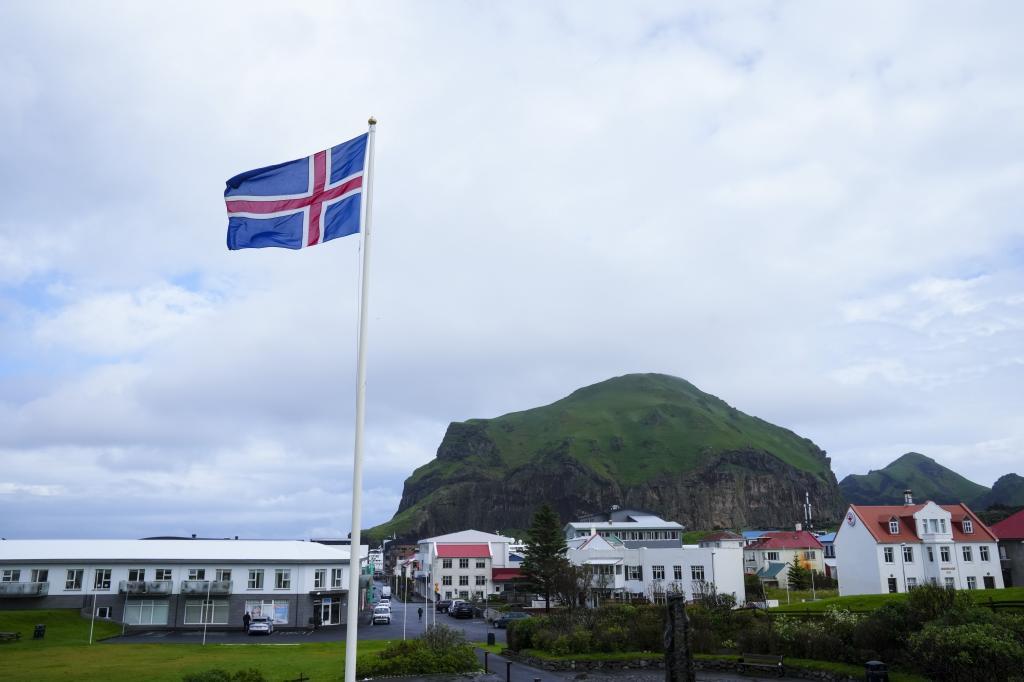
Since gaining independence from Denmark, the history of Iceland has been marked by wars. Three of them with the United Kingdom. They were the cod wars, in 1958, 1972, and 1975. Iceland won them all, thus expanding its exclusive fishing rights zone at the expense of British ships that had been fishing in those waters for centuries. The fourth was the mackerel war, which pitted Iceland, the Faroe Islands - an autonomous territory of Denmark, with a legal status similar to Greenland -, the European Union, and Norway from 2009 to 2014.
The outcome of those wars is one dead (Icelander, due to an accident) and several seriously injured. There were only shots fired in the cod wars, all by Icelanders, although sporadically, against British fishing vessels in waters over which Reykjavik had unilaterally decided it had economic rights. The mackerel war was purely diplomatic.
Iceland would have a hard time entering a real war because it does not have Armed Forces. The reason is that the country has always had someone to defend it, thanks to its contradictory geographical position. Iceland is simultaneously remote, as it is only 40 kilometers from the Arctic Circle, and critical because it controls the North Atlantic and the western half of the Arctic Ocean.
During the Cold War, one of NATO's critical fronts was the GIUK Gap (the English acronym for Greenland, Iceland, and the United Kingdom), through which Soviet submarines entered and exited the Atlantic, and which, in case of conflict, would be sealed by the allies to protect convoys carrying US troops to Europe. But in 1991, the USSR disappeared. And since then, Iceland has experienced a geopolitical "vacation." Until now, it has once again found itself caught in the crossroads of the strategies of the great powers, with a melting Arctic, a Russia advancing in the Norwegian archipelago of Svalbard, 2,000 kilometers to the northeast, and the United States threatening to invade Greenland, just 390 kilometers to the west.
Iceland has entrusted its security to its membership in NATO and its bilateral defense treaty with the United States. But Trump has made it clear that this is no longer enough. This has given a geopolitical dimension to the promise made in 2024 by the government of Prime Minister Kristrún Frostadóttir, a social democrat, to hold a referendum to decide on opening negotiations for EU entry. The date is the 29th of this month. If the yes wins and the negotiations are successful, the accession treaty will be subject to another referendum. In other words: the issue at stake is not whether Iceland joins the Union, but whether Icelanders want to find out the price and benefits of doing so.
The yes would open negotiations dominated by fishing. The no would keep the country out of EU institutions but would not alter its significant integration into Europe. Iceland is a member of the single market and is one of the four non-EU countries that are part of Schengen. Foreign Minister Þorgerður Katrín Gunnarsdóttir supports the yes because, she says, Iceland already applies much of the EU legislation. The island, accustomed to fiercely defending its independence, faces two conceptions of sovereignty: preserving it by maintaining a relative distance from Brussels or exercising it from within the EU bloc.
Icelanders seem to be in favor (by a very small margin) of negotiating accession and, at the same time, voting against it once achieved. In June, a Gallup poll gave the yes 39% of the votes, and the no 35%, but in April another survey by the same company had shown that 54% of citizens are against joining the EU. The division is even visible within the government, led by the Social Democratic Alliance, with two smaller partners: the Reform liberals and the smaller People's Party (left-wing populist and unrelated to its Spanish namesake). While the first two are openly pro-European, the populists are in favor of negotiations, believing that this should be decided by the citizens but reject accession.
The EU debate follows the usual pattern in the West: cities - in this case, the capital Reykjavik, which is home to a third of Iceland's 395,000 population - and the more educated population are in favor of the EU; rural areas and less educated citizens are against. It also reveals elements of Icelandic society that break its touristy image of a Nordic, egalitarian, and sustainable paradise.
One in five Icelanders is an immigrant. Poles are the most numerous, but in recent years, the presence of Ukrainians, Romanians, and Lithuanians has increased significantly. Like Greenland, Iceland has a growing Filipino community that one would not expect in such latitudes. The influx of foreigners is not playing as significant a role in the referendum campaign as in the UK's Brexit referendum in 2016. But its intensity is significant enough for the pro-EU group 'Iceland and Europe' to launch a campaign to combat the fear that accession will unleash a wave of immigrants. Meanwhile, the Frostadóttir government has tightened access conditions for refugee visas.
One of the obstacles, in fact, is a company called Hvalur, which means "whale" because its activity is killing these animals and exporting their meat to Japan. There are only three countries in the world that engage in commercial whaling. One is the official "bad guy," Japan. The other two are Nordic nations with a "green" reputation: Norway (which is also the world's eighth-largest oil exporter, ahead of countries like Iran, Kuwait, or Libya) and Iceland.
The EU does not allow commercial whaling in its member states, and the last European country, apart from Iceland and Norway, to kill whales was Spain, which hunted the last one in Galicia on October 21, 1985, just 70 days before joining what was then the European Economic Community. Hvalur has been a source of diplomatic conflicts with the United States and the EU, and security issues with environmental organizations Sea Shepherd and the Paul Watson Foundation. But it is a sentimental debate. Or, if you prefer, irrational. The common minke whales that Iceland hunts are not endangered. Whether to kill them for the Japanese to eat or leave them alive in the sea is a matter of values. Officially, Iceland says that this is a sovereign issue that only concerns them. The half a dozen restaurants serving whale meat in Reykjavik have a clientele consisting almost exclusively of tourists.
The whaling controversy is part of a much larger one, which could be the main obstacle to Iceland's accession: fishing. In 2025, exports from this sector accounted for 38.9% of the country's total exports, a figure far lower than the 95% during the cod wars, but still enormous. The combination of fishing—including a thriving salmon aquaculture—and fish processing is the country's third-largest industry, behind only tourism and construction, which is growing due to the influx of foreign visitors, both tourists and immigrants. This, in turn, has driven up housing prices and strengthened the position of groups that fear the EU will bring in more people from abroad.
Fishing is key not only for its economic impact, but also because for many Icelanders it is almost part of their national identity. Within its 200-mile Exclusive Economic Zone, Reykjavik does not grant licenses to foreign vessels and maintains a quota policy that the industry considers exemplary and sustainable. In any potential negotiations with Brussels, it's difficult to imagine them allowing those waters to be shared with other EU countries.
Iceland's toughness in defending its fishing interests was evident in the mackerel war, which erupted when the mackerel's distribution area, due to ocean warming, began to shift northward, thus falling partly within Iceland's jurisdiction. A year after the conflict ended, Iceland abandoned the negotiations it had begun three years earlier to join the EU. The two sides had reached agreements in 21 of the 27 negotiating areas. But the fisheries issue was so thorny that it hadn't even been put on the table yet.
This negotiation encapsulates the ambiguous relationship between Reykjavik and Brussels. Iceland applied for EU membership in 2009, when the international financial crisis crippled its massive banking system and the country had to be bailed out with €6.2 billion from the IMF and the other Nordic countries. Since the failed institutions were much larger than the country's own economy, the government only reimbursed the deposits of Icelandic savers, thus excluding 229,000 Britons and 120,000 Dutch citizens who had deposits in the online unit of one of these banks, Landsbanki. But in 2013, with the economy stabilized and the euro crisis casting doubt on the future of the EU itself, the government decided to withdraw its membership application. Iceland thus remained outside the European Union. Now, Washington and Moscow have given new urgency to getting closer to Brussels again.