For over 40 years, Japanese Intelligence services have been haunted by a phrase: "Japan is a paradise for spies."
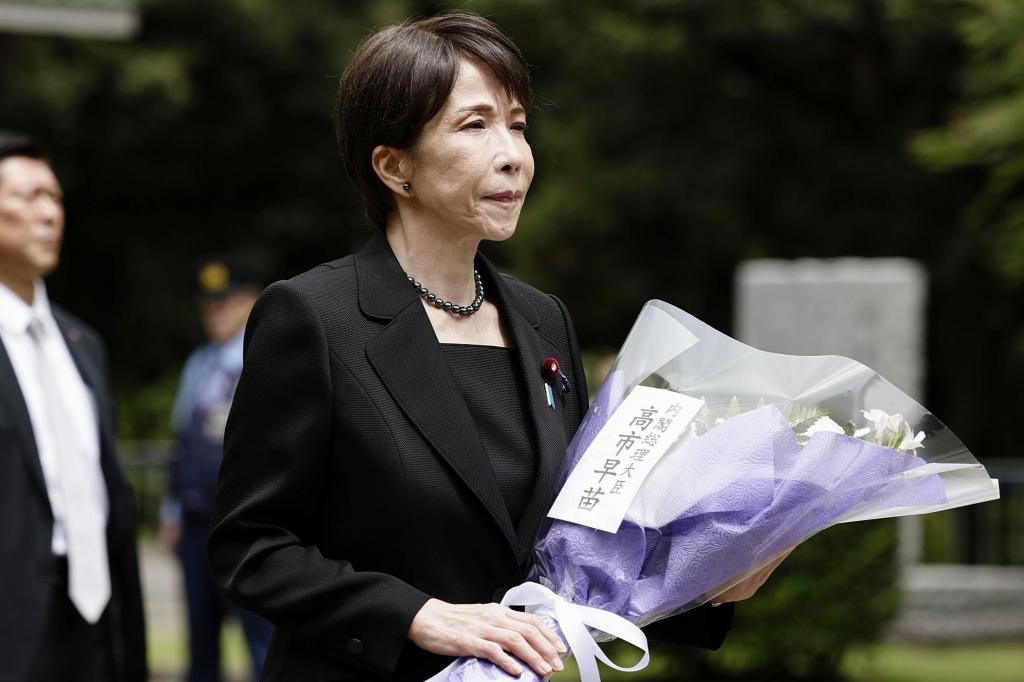
It was pronounced in 1983 by then-Prime Minister Yasuhiro Nakasone, frustrated because his country was unable to protect its own secrets. Now, with China tightening its military presence in the region, North Korea pointing its missiles, and Russia infiltrating agents, that warning no longer sounds like an exaggeration. The current Government of Sanae Takaichi believes that the time has come to create Japan's first centralized national intelligence agency since World War II.
Since this summer, Tokyo has consolidated the scattered information among ministries, police, military, and diplomats under a single command. "The purpose is to detect threats, combat foreign espionage, and respond to a much more hostile geopolitical reality," Japanese officials point out.
For supporters of the reform, it is an essential modernization; for its detractors, it is the first step towards dismantling some of the pacifist principles that defined post-war Japan.
From Tokyo, it is clear that this is the first step in a much more ambitious project: to turn the Asian country into an intelligence power comparable to its main Western allies.
"These measures are just the first step in intelligence service reform," stated conservative Takaichi when presenting an initiative that, according to her, responds to "the new methods of warfare" characterizing the current international scenario.
Until now, the Japanese system was an anomaly among major democracies. The Cabinet Intelligence and Research Office (CIRO), created during the Cold War, barely acted as a coordinator of a mosaic formed by different agencies that collected information independently and often without sharing it with others.
The new National Intelligence Office has been established to break this fragmentation. It will have a council chaired by Takaichi herself, who will decide on strategic priorities. The next step is for the Executive to approve a genuine anti-espionage law - the country still lacks specific legislation - and subsequently create an external intelligence service equivalent to the US CIA or the UK MI6.
All of this represents a historic change for a country that, since 1945, has largely relied on the US umbrella. US protection allowed Tokyo to neglect the development of its own intelligence capabilities. As analysts argue, foreign spies have been able to operate with unusual freedom in a country that also hosts around 55,000 US military personnel spread across its bases, making the country a top priority target for any secret service.
There was a recent espionage episode that shook Tokyo. A recent investigation by the New York Times revealed how Russia had taken advantage of these structural weaknesses to turn Japan into one of its main clandestine operation centers.
Dozens of Russian agents moved to the country after hundreds of diplomats and spies were expelled from Europe following the invasion of Ukraine. From Japanese territory, they coordinated the acquisition of dual-use electronic components that, after passing through intermediary countries like Vietnam, Uzbekistan, or Sri Lanka, ended up being integrated into missiles and drones used by the Russian army.
All this vulnerability led Tokyo to rearm its secret service. Although the project raises concerns among part of the public and the opposition. During a recent parliamentary debate, lawmaker Makoto Oniki criticized that the new office "lacks sufficient independent oversight mechanisms" and that it could "open the door to an excessively monitored society".
From neighboring China, these debates are observed from a much broader perspective. Spokespersons from Xi Jinping's government have been accusing Takaichi of dismantling the military restrictions imposed after the 1945 defeat and using the Chinese threat as an argument to justify it. The Chinese Foreign Ministry has even stated that Tokyo is "rebuilding its war machinery."
The rhetoric has hardened to openly speak of the resurgence of Japanese "neo-militarism," terms particularly charged in China due to the memory of the Japanese invasion during the first half of the 20th century. For Beijing, the emergence of a more powerful Japanese intelligence fits within a much larger transformation of its neighbor's security architecture.
The new Japanese secret service is another piece of a major strategic shift. Article 9 of the 1947 Constitution enshrined the renunciation of war, and for decades Tokyo maintained Self-Defense Forces subject to a strictly defensive doctrine. That corset has been loosening.
Japan has increased its military budget, is acquiring US Tomahawk missiles, and developing long-range weaponry that will allow it to strike targets located in enemy territory. It has also relaxed restrictions on military material exports and is strengthening its positions in the southwest islands, the arc extending towards Taiwan off the Chinese coast.
Takaichi aims to go even further. Her government has advocated for reviewing the main national security documents in light of the wars in Ukraine and the Middle East and the possibility of prolonged conflict in Asia. A few days ago, Beijing once again denounced that Japan was advancing towards remilitarization "at full speed."
Supporters of the new Intelligence reform argue that all mature democracies have similar agencies and that the real guarantee lies in establishing effective parliamentary and judicial controls. This will be one of the major tests for Tokyo: to demonstrate that it can build modern secret services without renouncing the freedoms that defined post-war democratic Japan.