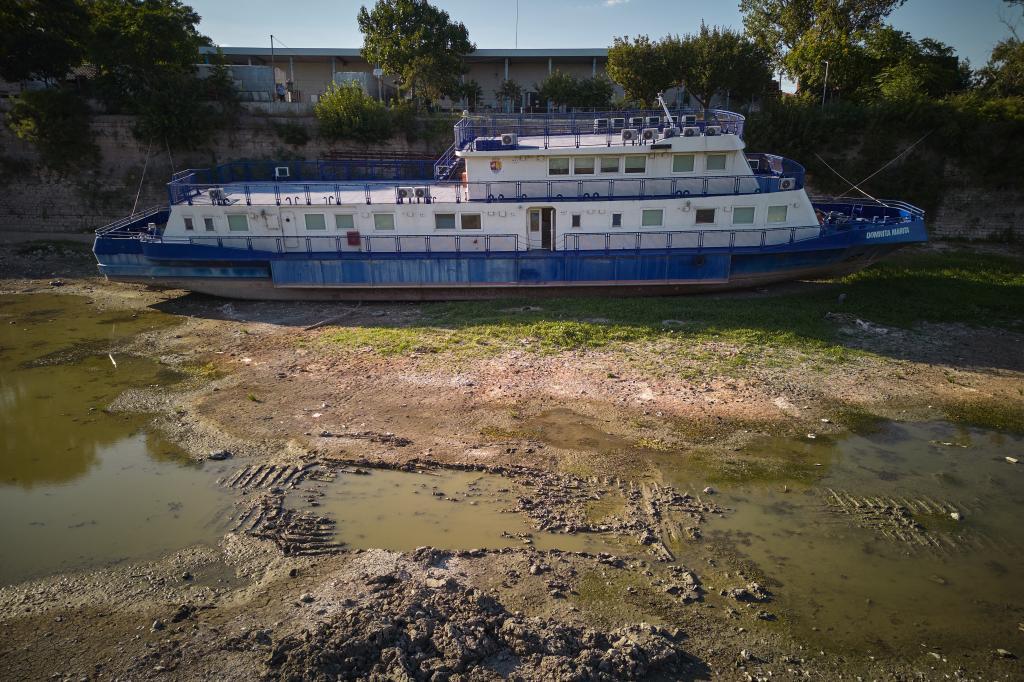
he 700-kilogram artifact was found submerged and later removed and detonated in a controlled manner by six bomb disposal experts, who took it to dry land for deactivation. This discovery highlights the severity of the situation facing the river, one of the most important in the continent, due to the drastic drop in its water levels to historic lows.
The prolonged drought and several extreme heatwaves have brought the Danube to levels never seen in at least 40 years, affecting multiple countries along its course. In Romania, this situation has had direct consequences on the energy supply: the Cernavoda nuclear power plant, the country's only one, had to completely shut down its two reactors due to the inability to cool the thermal cycle due to the river's low level. Both reactors, with an installed capacity of 1,400 MW, covered 20% of Romania's electricity demand. The flow of the Danube at its entry into Romania remains at around 1,400 cubic meters per second, well below the average of 3,900 cubic meters per second for this time of year.
The situation extends further. In Austria, for example, hydroelectric power generation has been compromised by the drop in the Danube's water levels, in a context where the country is experiencing the worst 12 months of drought since 1850 and record temperatures. Romanian authorities have already taken measures to increase energy production and do not rule out supply problems, even going as far as asking the population to reduce electricity consumption.