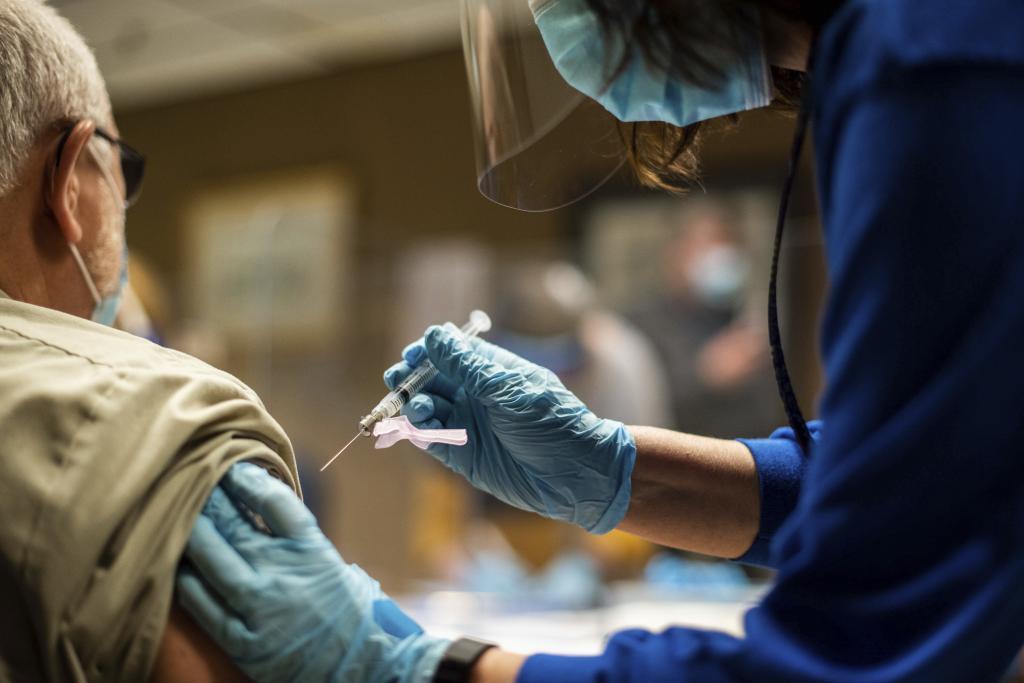
The United States has recorded 2,566 cases of measles and 38 outbreaks of the disease so far in 2026, already the highest number of infections since 1991 with still a quarter of the year to go, as reported by the Centers for Disease Control and Prevention (CDC) on Friday.
The figure represents nearly 250 more infections than the previous report on July 24, when the CDC reported 2,318 cases, surpassing the 2,289 cases in all of 2025 and marking a second consecutive annual record since the disease was declared eradicated in the year 2000 in the United States, where vaccination rates have declined.
The agency reported 38 new outbreaks of the disease in 2026, which occur when there are at least three related infections, while there were 48 throughout the entire previous year.
93% of the cases this year have occurred in unvaccinated individuals, and two out of three, 67%, have been reported in individuals aged 0 to 19 years, detailed the federal agency's report.
Despite the higher number of cases, there have been no confirmed measles-related deaths in the United States in 2026, unlike the three deaths recorded last year.
The disease has been reported in 47 states or territories in the United States. The states with the most cases this year are South Carolina (670), Utah (526), Pennsylvania (280), Texas (190), Virginia (176), Florida (141), and Arizona (109).
This record comes amid a decline in vaccination rates among preschool-aged children, which dropped from 95.2% in the 2019-2020 school year to 92.5% in the 2024-2025 school year, leaving 286,000 students "at risk," the report added.
Herd immunity requires that more than 95% of people in a community be vaccinated, a level only achieved by Alabama, California, Connecticut, Maine, Maryland, Massachusetts, Mississippi, New York, Rhode Island, and Virginia, according to federal data.
All of this is happening amidst policies that question vaccines and that have been implemented by President Donald Trump, who signed an executive order on Monday reducing the number of diseases recommended for vaccination by the federal government from eighteen to eleven for all children, and establishing new categories for other immunizations.
The measure, promoted alongside Health Secretary Robert F. Kennedy Jr., places vaccines against the flu, COVID-19, hepatitis A and B, rotavirus, and meningitis under risk-based or shared decision-making criteria between parents and doctors, while also ordering a review of the federal childhood vaccination schedule.