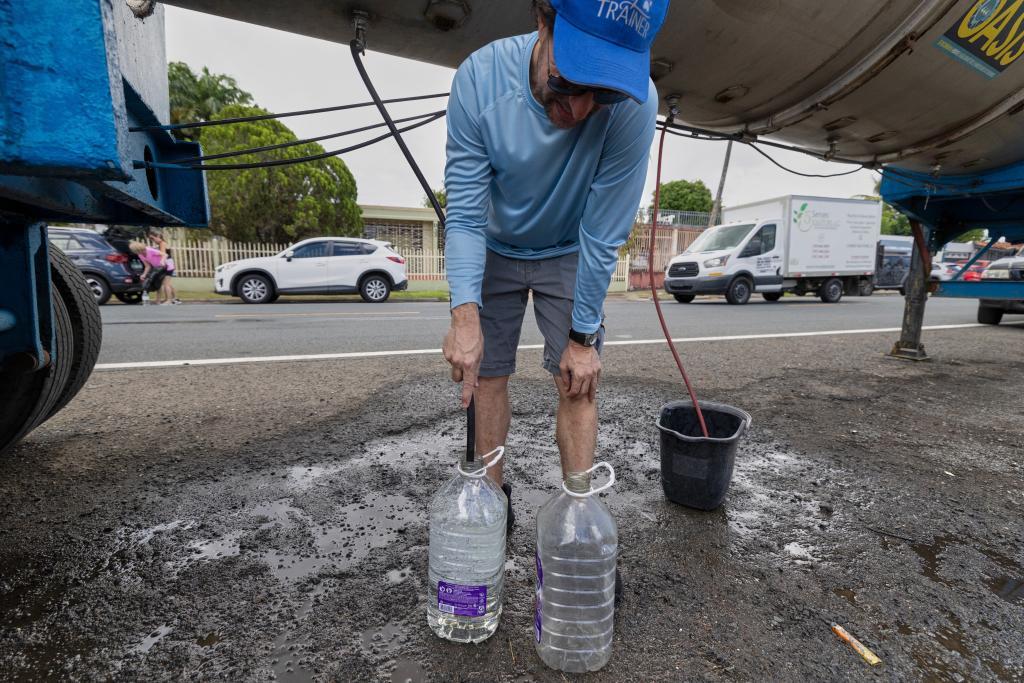
Puerto Ricans live in fear every year of facing La Niña or El Niño, the climatic phenomenon related to the warming of the eastern Pacific Ocean that in the archipelago manifests as hurricane onslaughts and prolonged periods of drought. The lack of rain is causing serious damage on the island of Puerto Rico, such as severe water rationing, lack of drinking water for endless days in many buildings, and struggles for farmers and ranchers to cope with a desperate situation.
Hundreds of thousands of citizens are forced to rely on bottled water due to the extremely low levels in the reservoirs. But the crisis is not only due to natural reasons, it is also a consequence of the precarious state of the infrastructure. One of the most important reservoirs, Carraízo, in Trujillo Alto - near the capital, San Juan - is already below 38 meters. Along with this, a total of 11 reservoirs have seen reductions in their water levels.
The island has received about 61 centimeters less rain than average in the last three months, as indicated by the hydrometeorologist Emanuel Rodríguez from the National Weather Service (NWS). Faced with this situation, and after multiple civilian complaints, the governor of Puerto Rico, Jenniffer González, declared a state of emergency on July 31 and activated the National Guard, as 80% of the territory is affected by the lack of precipitation. "In Cupey (one of the affected areas on the island) we were without water for a week and no one knew the reason or when it would return," says Tatiana González to EL MUNDO, one of the many affected individuals.
As a preventive solution, the Government established a water rationing plan in intervals that exceed full days. "Where we are, it's 48 hours with water and 48 without it," González explains, lamenting that the cuts came suddenly: "We went without water for seven days. When they announced the rationing, we couldn't prepare."
The deficient infrastructure causes the loss of over 60% of potable water due to leaks and damages in the distribution network, according to a report from the Committee of Experts and Advisors on Climate Change. Additionally, the Puerto Rico Aqueduct and Sewer Authority (AAA) has pointed out that the critical accumulation of sediments in reservoirs like Carraízo has drastically reduced their capacity. This vulnerability is evident with recurring breakdowns, such as the recent failure in the island's super aqueduct that left 100,000 subscribers without service, or the technical delays that prevent restoring the supply after rationing periods, according to the local newspaper El Nuevo Día.
Since the service reduction began, the population faces inconsistencies between what authorities say and what is experienced. "The water doesn't come or go during the established time periods," González points out, who has had to adjust her work schedule to get home while still having water. "In our area, the tanker is only open for 30 minutes in the morning and 30 in the evening at times that were not my usual ones, so I have been waking up earlier. I am an accountant, so I would usually leave the office late. But now I have to leave earlier to be able to shower," she adds.
For the agricultural sector, the losses are concerning. Wesley Cardosa, owner of a farm in Cabo Rojo (west), informed the local news outlet TeleOnce that he has lost about 70% of his production, being forced to discard many plantains and drastically reduce his lettuce cultivation due to lack of irrigation. According to the federal program for drought monitoring and forecasting National Integrated Drought Information System (NIDIS), the impacts extend throughout the geography: in Canóvanas (northeast), premature falling of dehydrated avocados is reported; in Orocovis (central), citrus production has fallen below normal due to pest infections; and in Caguas (central), water stress has delayed the growth of vegetables. In the south, the situation for ranchers is also critical.
All this has increased operational costs, which, according to the newspaper Metro Puerto Rico, could increase between 8% and 15%, making the final product more expensive for consumers. And to this scenario is added a dangerous frequency of forest fires. The newspaper El Nuevo Día and the Europa Press agency reported that a thousand fires have been attended to so far in 2026, a figure much higher than the previous year. In July alone, over 300 forest fires were recorded, particularly intense in the south and east of the territory.
A crisis like the current one has not been seen since the 2015 drought that the island experienced. Meteorologists warn that rainfall will remain below average in the coming months, extending the drought until January or February 2027. Thus, Puerto Ricans face an uncertain future under the extreme heat of the tropics.