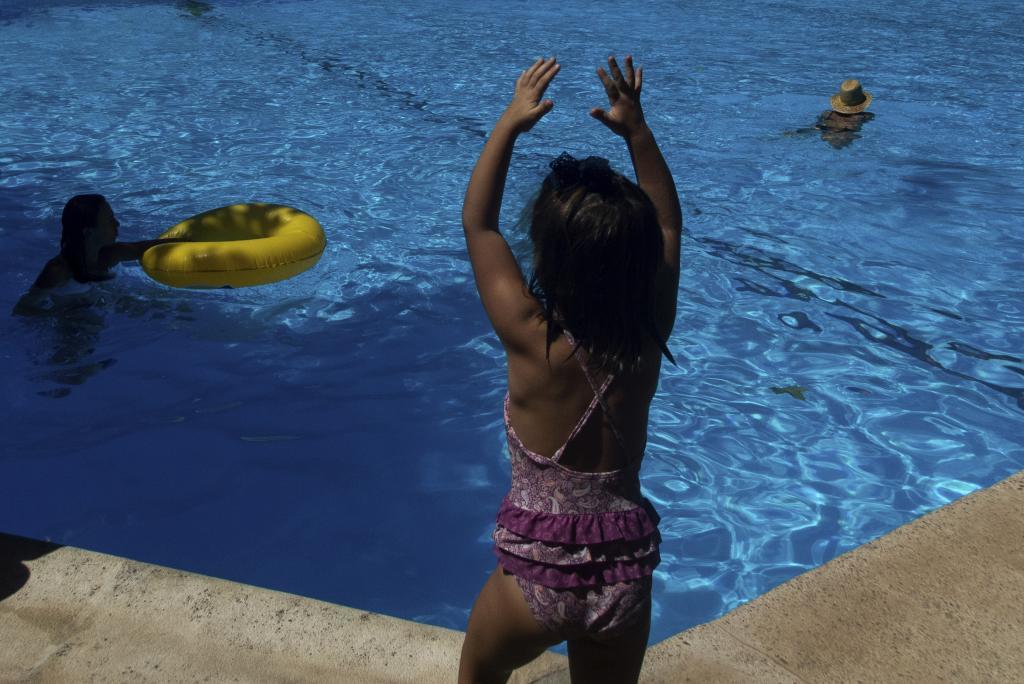
Saving the two hours of digestion to be able to swim was one of the great summer nightmares for the generations of our grandparents, parents (and ours). What was true about that mythical prophecy of "your digestion will be cut off"? Can we take a bath right after eating?
"In general, yes. There is no evidence that entering the water immediately after eating increases the risk of drowning or that digestion can stop due to swimming. A person who feels well can take a peaceful bath without the need to wait. Another issue is to start swimming intensively after a heavy meal, as the effort could be uncomfortable," says Doctor Pablo Turrión Fernández, medical director of Campus Sanitas La Moraleja.
To what extent does it depend on how much or what we have eaten? "The quantity and type of food mainly influence how the person feels. After a heavy meal, a feeling of fullness, reflux, nausea, or lower exercise tolerance may appear. In that case, it is advisable to wait before swimming, just as one would before running or engaging in any intense activity. However, that heaviness does not mean that there is a specific risk of digestion being interrupted by touching the water."
As explained by Doctor Turrión Fernández, "waiting 10 or 20 minutes from eating to getting into the water does not establish a relevant medical difference. The traditional recommendation was based on the idea that, during digestion, a large part of the blood concentrated in the digestive system and the muscles were left without sufficient irrigation, something that has not been proven. It is more useful to assess if there is discomfort and what activity will be carried out than to control the time with a watch."
So that we all know what we are talking about, this specialist clarifies that "the so-called 'digestive cut-off' is a popular expression, but it does not correspond to a specific medical diagnosis. It is usually used to describe a sudden discomfort in the water that may be due to a sudden reaction to cold, fainting, or another health problem."
As Doctor Turrión Fernández explains, "Sudden entry into cold water can cause involuntary inhalation, rapid breathing, a feeling of suffocation, dizziness, loss of coordination, or panic. If the person loses consciousness or cannot keep the airway out of the water, drowning can occur, whose fundamental mechanism is lack of oxygen."
At the first symptoms, he recommends, "you should get out of the water and alert the lifeguard. Urgent assistance should be requested if there has been a loss of consciousness or submersion, or if breathing difficulties, persistent cough, bluish lips or skin, chest pain, confusion, abnormal drowsiness, or symptoms that do not disappear quickly upon leaving the water appear."
Why does it happen? Is it because of the temperature contrast? "Sudden entry into cold water can trigger an intense physiological response, especially when immersion is done abruptly. When entering cold water suddenly, the body activates an automatic response that accelerates breathing and increases cardiovascular load. The combination of this response with immersion of the face and breath-holding can also favor heart rhythm disturbances, especially in predisposed individuals. Having eaten is not necessary for this to occur. The intensity of this response depends mainly on the water temperature, the speed of entry, and individual habituation. It can occur even on hot days because the water may be cold enough to trigger it."
To avoid it, therefore, "it is advisable to enter the water gradually when it is cold, especially after sun exposure, and avoid sudden dives. Before starting to swim, it is advisable to wait a few seconds until breathing is fully controlled. It is also necessary to swim in supervised areas, respect the lifeguards' instructions, and not enter open waters alone."
And, of course, "if dizziness, intense chills, shortness of breath, weakness, or palpitations occur, you should get out of the water immediately." Doctor Turrión Fernández emphasizes that "alcohol consumption before swimming increases the risk of reckless behavior and drowning, so it should be avoided."
Does wetting the nape and wrists or entering slowly instead of diving headfirst work? "It has not been proven that specifically wetting the nape or wrists prevents the so-called 'digestive cut-off'. It can help perceive the temperature and be part of a gradual entry, but it is not a standalone protective measure. Entering slowly makes sense, especially when the water is cold, because it allows for gradual adaptation and control of breathing before fully submerging. However, it does not eliminate all risks or replace surveillance, prudence, and other water safety measures."
So, should we wait for digestion? How long is that? "There is no universal time that must be followed or a medical obligation to wait two or three hours. After a light meal, a person who feels well can swim. After a heavy meal, it is reasonable to postpone intense swimming until the heaviness or nausea disappears. The wait is a matter of comfort and exercise tolerance, not the prevention of a supposed digestive blockage," he concludes.