The smell of burnt iron and coal that for almost a century impregnated the Shijingshan district, west of Beijing, has disappeared. Under the gigantic silhouette of the main ship of a former steel mill, where the metal was melted to build much of the modern capital, digital universes are now being shaped. Inside the SoReal Sci-Fi Amusement Park, a former factory turned into a temple of video games, dozens of young Chinese people roam five floors among virtual reality simulators, machines, and scenarios illuminated by multicolored neon lights.
Helmets hide the faces of students who dodge virtual enemies while other players follow the games from giant screens. The metallic sound of the old industrial chains has been replaced by the frantic clicking of keyboards, notifications from payment apps, and excited shouts of kids who live the video game as an extension of their daily lives.
This place is a perfect metaphor for another Chinese transformation. Where their grandparents' generation manufactured steel, young people now spend their days hooked on video games developed by domestic companies.
For decades, the US and Japan set the rules for this industry. Nintendo, Sony, Microsoft, Electronic Arts, or Activision built a business dominated by major consoles. While Western companies continued to focus on selling ambitious and expensive products that were renewed every few years, China perfected a model that they found more profitable: free video games that evolve constantly and keep players connected daily.
Few figures better symbolize this change than the billionaire Forrest Li. His name is barely known outside of Asian lands. In China, he also does not have a high media profile. He rarely gives interviews and has always avoided becoming a business celebrity. However, this 48-year-old entrepreneur, born in the city of Tianjin and naturalized Singaporean, leads one of the most influential technological conglomerates on the continent.
His company, Sea Limited, is listed on the New York Stock Exchange and brings together three businesses that summarize a part of the new Asian digital capitalism: Garena, one of the largest gaming platforms; Shopee, the e-commerce leader in Southeast Asia; and Sermone, dedicated to digital financial services.
His story of overcoming and entrepreneurship has all the ingredients that usually captivate the local audience. In 2005, he arrived in Singapore with a debt close to 100,000 Singapore dollars (around 70,000 euros) from loans he took out to study at a university in Shanghai. For years, he lived renting a small room while trying to move his company forward. Two decades later, he is among the richest men in the region.
His fortune, according to Forbes, currently stands at around 5.2 billion dollars. Additionally, in 2020, he surprised the tech sector by buying the historic football club Home United, renamed Lion City Sailors. Shortly after, he made the most expensive signing in Singaporean football history by incorporating the Brazilian Diego Lopes, reflecting a strategy that aims to turn sports into another brand-building platform.
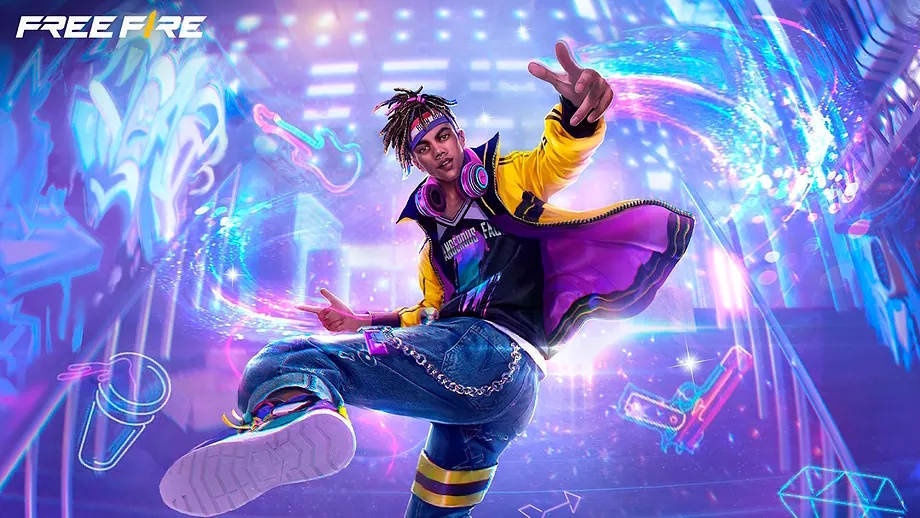
But Forrest Li's true global phenomenon is Free Fire, an online survival game. While Fortnite conquered the United States and Europe, the Chinese entrepreneur boosted Garena with a battle royale game designed from the start for all types of mobile phones.
The idea succeeded. In Free Fire, between 30 and 40 players parachute onto a remote island, where the priority is to kill the opponent while trying to collect different weapons. Many players compared it to the popular Hunger Games saga. It has over 100 million active users and has made a strong impact especially in huge markets like India, Indonesia, Brazil, or Mexico.
But Free Fire represents something deeper than just commercial success. For many experts, this is an example of how Asia stopped adapting Western video games and started designing them with a focus on an audience that the West barely understood. "The Chinese industry understood before anyone else that mobile was going to become the main entertainment platform on the planet," explains Daniel Ahmad, research director at Niko Partners and one of the sector's most prominent analysts. "While many Western companies continued to rely on consoles, Asian studios were learning how to keep millions of players connected for years through their mobile phones."
China was the laboratory where this model was born. Tech giants took advantage of the explosive growth of smartphones to perfect the so-called Games as a Service (GaaS), video games that never really end and receive updates, events, and new content permanently. The player stops buying a product to enter an ecosystem that can last for years.
This was added to the free-to-play model, free to access but supported by small digital purchases, and the gacha system, inspired by Japanese surprise capsule machines, where users pay to get characters, weapons, or abilities with different levels of rarity.
"While many Western companies continued to rely on consoles, Asian studios were learning how to keep millions of players connected for years through their mobile phones"
Honor of Kings, developed by the Chinese giant Tencent, has been topping global mobile revenue charts for years. Genshin Impact, created by the Chinese studio miHoYo, showed that a free title could visually compete with major Western productions. And projects still in development like Neverness to Everness show to what extent China is raising the technological bar.
The dominance does not end there. The so-called mini-games integrated into WeChat - the mother of all Chinese apps, which includes functionalities from WhatsApp and Instagram to PayPal - have experienced explosive growth in recent years. Millions of users access directly from this messaging application without the need to download additional software, creating an almost instantaneous consumption ecosystem that no Western platform has managed to replicate with the same success.
"China has managed to integrate video games, social networks, and digital payments into a single experience," says consultant David Cole, founder of DFC Intelligence. "That level of integration explains a good part of the competitive advantage of its companies."
For a long time, however, the rest of the world looked somewhat disdainfully at Chinese developers. They were associated with low-complexity mobile games or imitations of Western titles. The perception changed radically in 2024 thanks to the phenomenon Black Myth: Wukong, which broke historical records of simultaneous players and showed that a Chinese studio could produce a game capable of competing head-to-head with the biggest Japanese, European, and American blockbusters.
The Chinese industry no longer only dominates mobile. It also aspires to conquer computers and consoles. Much of this power is concentrated in just two giants. Tencent is now the largest gaming company in the world. In addition to developing its own hits, it controls Riot Games, responsible for League of Legends, holds a majority stake in Supercell, creator of Clash of Clans, and maintains strategic investments in numerous Western studios.
NetEase ranks second. It distributes major international franchises in the Chinese market, develops its own productions with a growing global impact, and collaborates with Japanese and American studios. Their financial muscle makes both conglomerates impossible to ignore for any international developer.
Spain also appears in this attraction field. Recently, the Economic and Commercial Office of Spain in Shanghai organized, under the brand Games From Spain, a reverse mission to bring the Spanish industry closer to Chinese companies. National studios showcased their projects to investors, accelerators, and major distributors in Madrid and Barcelona with the hope of finding partners in a market as immense as it is complex.
Because entering China remains an obstacle course. The government maintains one of the strictest supervision and censorship systems in the world. Every video game must undergo a lengthy approval process before being commercialized. Content considered politically sensitive or incompatible with official values is modified or outright rejected.
For Beijing, video games now represent both a strategic industry and a cultural product that must remain under state control. While exporting some of the biggest commercial successes in digital entertainment, it maintains constant surveillance over what it produces.