Since January, analysts and military personnel confessed that something was happening on the southern front of Ukraine, but the entire operation was under strict radio silence. Two assault units involved posted a couple of videos, but they were immediately deleted, leaving geolocation experts without data. On August 14, seven months later, President Volodymyr Zelensky revealed the extent of the advance: 745 kilometers liberated (25 kilometers deep), 26 towns recovered, and 10,000 Russian casualties. Translated onto a map: Ukraine has pushed the Z troops out of the Dnipropetrovsk region, something that seemed impossible.
In a war where the fronts have hardly moved for months, any progress is significant and provides valuable information about the state of both armies. Why has Ukraine been able to liberate that territory in this war of killer drone swarms? Kiev has taken advantage of several negative circumstances for Moscow and capitalized on them: the cutoff of Starlink signal for the Russians within Ukraine opened a window of opportunity, as hundreds of isolated Russian positions were left without communication.
The occupying troops had entered the Dnipropetrovsk oblast in June 2025, trying to open a new front to surround the city of Zaporizhia and threaten important towns like Pokrovske or Pavlograd. For months, the Russians advanced through a territory full of rivers. But they made the mistake of not consolidating these advances or their logistics.
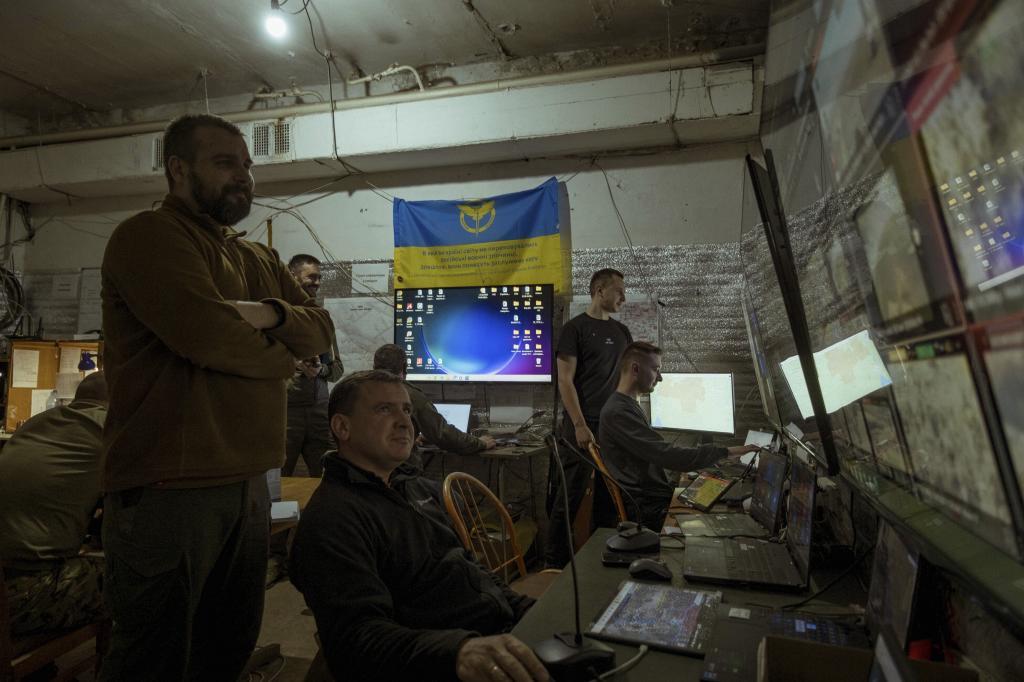
In February, from the city of Pokrovske (not to be confused with Pokrovsk in the Donetsk region), already semi-destroyed by Russian guided bombs, the Russian advance was met with panic. At that moment, with the Russians within reach, a handful of neighbors remained holed up in their basements. Ukrainian troops, especially members of the 92nd Brigade from Kharkiv, saw that the Russians were overextending. An officer confessed to this reporter in a bunker full of screens: "There are villages where there may be one or two Russians planting a flag, but the entire territory is a gray area, and we will reclaim it."
The operation is significant because it removes the Russians from one of the regions they planned to advance through. Currently, the invading troops occupy the entire Crimea and Luhansk regions, parts of Donetsk, Kherson, and Zaporizhia, and a small strip in Kharkiv, but not Dnipropetrovsk.
Another reason explaining this land liberation in a context of paralysis and general exhaustion is that Russia has sent all its reserves for the definitive conquest of Donbas, but it may be depleting fronts considered secondary like this one. Vladimir Putin has ordered his generals to accelerate the capture of the rest of Donetsk by the end of this year, a remote possibility given the slow pace of advance (and the huge losses) suffered by the Russian army on this front, the most defended.
Moscow has been trying to close its jaws around the Ukrainian strongholds of Sloviansk and Kramatorsk for many months, two cities increasingly uninhabitable due to the presence of drones and the launch of Russian guided bombs. The fall of Siversk months ago seemed to anticipate that conquest, but once again, Russian soldiers are facing line after line of defense. In the south, they have been stuck for several months in Konstiantinivka, a large gray area where both armies have underground positions, sometimes isolated from the rest and supplied by drones. In the north, the situation is the same in Liman. In this context, thinking of total conquests of a territory is a fantasy.
The problem, since 2024, is technological: there is no weapon that can eliminate the risk of enteringthe so-called "annihilation zone", which is a strip of land about 20 kilometers wide where kamikaze drones operate. Not even electronic warfare is entirely effective in confusing and diverting most of these devices. More and more analysts believe that Putin is running out of options. One of them remains to make a second major mobilization of around 800,000 soldiers due to the decline in volunteers with the current recruitment system. But even that measure is not guaranteed to succeed. On the contrary, in an imminent context of drones trained by artificial intelligence, more soldiers are just more active targets.