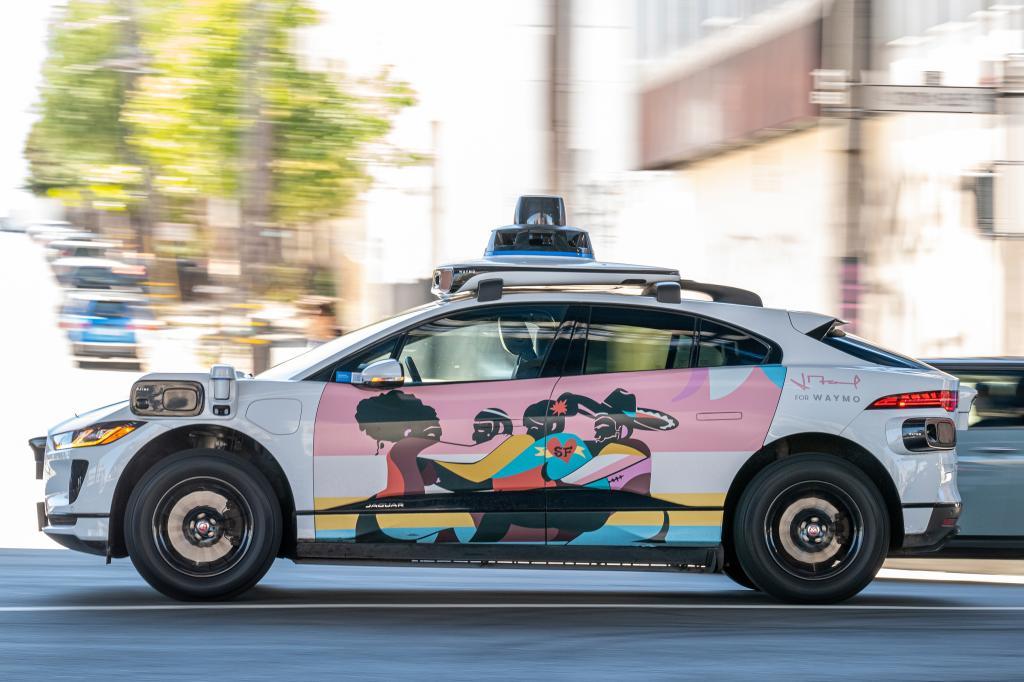
Autonomous cars are already a reality in the United States and will soon begin testing in Spain. Therefore, Google, one of the major players in the sector, has wasted no time and established Waymo Iberia SL this summer in Madrid, which is expected to not only provide services in the country but also in Portugal based on the chosen name. The company was officially registered on July 14, according to documents accessed by EL MUNDO and the registration request that was discussed in some specialized forums.
The establishment of a new subsidiary in Spain is part of a larger strategy, as companies have also been created in various European countries such as the Netherlands and France, as well as in other regions like Asia, where the group has also established companies in Tokyo and South Korea. Waymo's representatives in Spain are Steven Hahn, the company's deputy secretary, and Francis Kelly, one of its financial executives, who also appear in the records of the other countries where the Google-owned company plans to land.
The company's headquarters in Madrid is located in an office on Serrano Street and has been established with a capital of 100,000 euros, so its launch does not seem imminent. However, the arrival comes amidst the international boom of these services and the ongoing competition between Google and Uber, which had played a key role as a partner in the deployment of Waymo's robotaxis.
Madrid will host one of the first tests of Uber's autonomous cars in Europe before the end of the year. While the details of the test are still pending, which will require coordination among different regional governments and approvals from the DGT, Uber has confirmed that it will use WeRide's autonomous driving technology in Spain, a competitor of Google.
The third part of this alliance will be Avomo, the autonomous vehicle unit of the Spanish company Moove, which already has partnerships in Austin and Atlanta (USA) with Uber and has been tasked with maintaining a potential fleet of hundreds of robotaxis in the Spanish capital. This is because the American tech company plans to start with a pilot program but gradually expand it as more areas become available for autonomous driving and commercial adoption by users progresses.
Therefore, Google's options include participating in the new testing space, the framework of which has not yet been published, either independently or seeking some form of alliance with Cabify or Bolt, the other two major operators in the Spanish market. This would accelerate their ability to compete with Uber in this field or with a potential entry by Tesla, as Elon Musk's company also sees robotaxis as one of its potential business lines.
In preparation for this possible alliance, Google has secured itself with its new Spanish company, as it can both "provide transport services through autonomous vehicles" and "participate in providing services that support the commercial offering of such services by third parties," opening the door to this collaboration. The Americans have operated with Uber in several cities in the United States and continue to do so in Atlanta and Austin. The model allowed renting a Waymo through the urban mobility app just like opting for a traditional driver service or a taxi, for example.
However, as the deployment progresses, Waymo has opted for solo deployments and booking trips through its own app, straining the relationship with Uber. The parties had signed an alliance until 2028, but it has already been broken, for example, in the city of Phoenix, and each is now considering their international expansion independently. While Uber prepares deployments in Munich and Dubai, in addition to Madrid, Waymo has already announced a confirmed expansion to London, where it would compete with its former partner, or Tokyo. It is also in the midst of a major deployment in the United States, where it already operates in 11 cities and plans to open in another 18 soon.