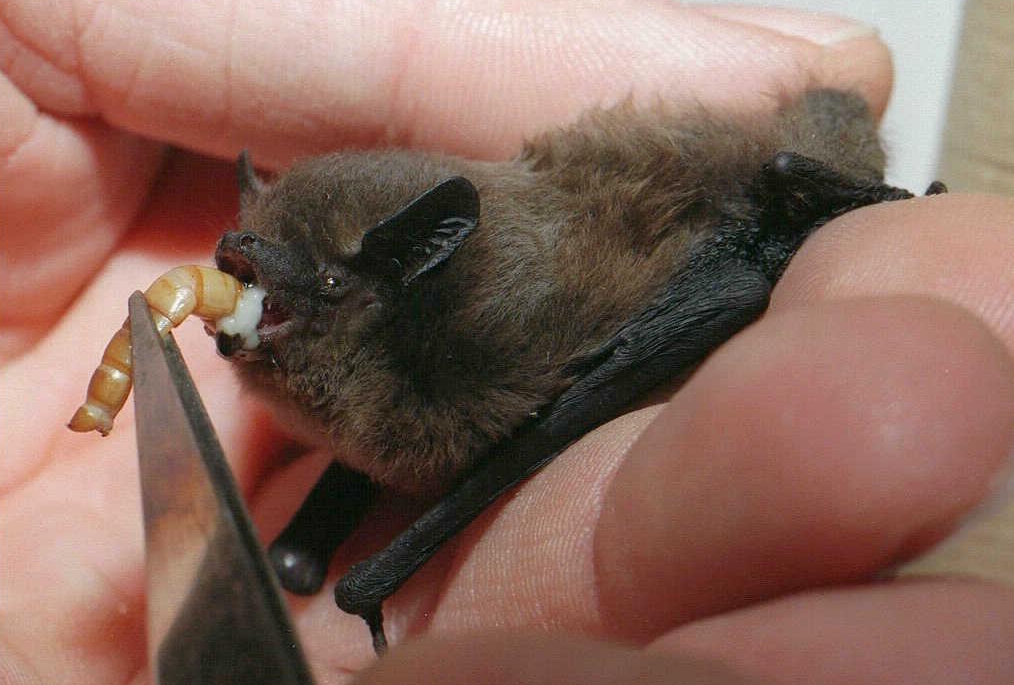
The bad reputation of bats is unjustified. They play an important ecological role as pollinators, seed dispersers, and controllers of diseases and pests. They are not the patient zero of viruses like SARS-CoV-2, but rather hosts that do not get sick and, therefore, possess valuable information for fighting infections. Various research groups are working to understand the keys to their longevity - some species can live up to four decades, equivalent to about 180 human years - in order to harness them someday. A study published this Wednesday in Nature reveals new data on the genes involved in their long existence, adaptation to viruses, and cancer resistance.
These small animals - of which more than 1,400 species have been described worldwide (at least 35 present in Spain) - are peculiar for multiple reasons, one of them being very prominent: they are the only mammals that can fly. One hypothesis is that this ability may be one of the pillars of their long life: flying requires adapting to rapid increases in body temperature, sudden metabolic boosts, and molecular damage, and these adaptations can also contribute to resistance to infections. Additionally, they can live in almost any place and eat almost anything.
The new study, led by researchers from the University of Vermont and Penn State University (United States), reveals that the key to their longevity and their minimal cancer incidence lies in their DNA. Specifically, in how they encode genomic changes after exposure to viruses in their environment.
As explained in a statement by Elise Lauterbur, a professor at the University of Vermont and co-lead author, adaptation to pathogens, longevity, and cancer resistance are three intimately linked aspects. "Many of the genes for adapting to viruses are also involved in their long life and cancer resistance", she explains.
The researchers sequenced the genomes of eight bat species from the Myotis group and identified, through cell cultures, when they first came into contact with pathogens in the distant past and how this influenced their evolution. They searched the genome for signs of positive selection (in this case, adaptation to viruses) to detect structural changes such as gene duplication or deletion, and found significant differences in how these bats have adapted to DNA and RNA viruses compared to humans and other primates.
While humans show positive selection of proteins that interact with RNA viruses, such as SARS-CoV-2 and influenza, bats exhibit a disproportionate selection of proteins that respond to DNA viruses, like hepatitis B and herpes. This disparity would increase the vulnerability of both species to potential disease transmissions between them.
The team also discovered that bats have a unique gene duplication mechanism for DNA repair, an essential process for longevity and resistance to age-related diseases, such as cancer. This phenomenon, known as copy number variation, results in changes in the number of copies of a particular DNA sequence in an individual's genome. These can be insertions, deletions, and duplications of segments and explain a significant proportion of genetic variability among individuals. "One of the things that copy number variation allows is the diversification of gene function," says Lauterbur. The result of this diversification is a strengthened immune system, allowing bats to respond to multiple viruses or increase their longevity using new molecular pathways.
The research focused especially on the gene encoding protein kinase R (PKR), which is present in all mammals and is essential for the proper functioning of the immune system. Typically, there is a single copy of this gene, but some Myotis bat species have two or even three copies, which would allow them to enhance their defenses and, thus, live longer.
The researchers inserted extra copies of PKR into cell lines of different species to see how they reacted to infection by a poxvirus and their tolerance to drug treatment. Brown long-eared bats (Myotis emarginatus), which are the longest-lived in the group, reacted differently to high doses of the chemotherapeutic agent, which can cause greater cellular damage. Specifically, they activated mechanisms to eliminate cells. "Our hypothesis is that they get rid of those cells that cannot be saved," says another author of the study, Juan Manuel Vázquez, from Penn State University.
This adaptation could be crucial in halting cancer spread. As organisms age and cellular processes deteriorate, some especially long-lived species develop specialized responses ranging from repairing damaged cells and isolating damage to eliminating cells upon detecting alterations. "It seems that these bats are very effective at repairing and eliminating damaged cells", confirms Vázquez.
The researchers believe it is still early to find clinical applications based on the immune adaptations of bats, but they are confident that in the future, they will be used to develop strategies that promote healthy aging.