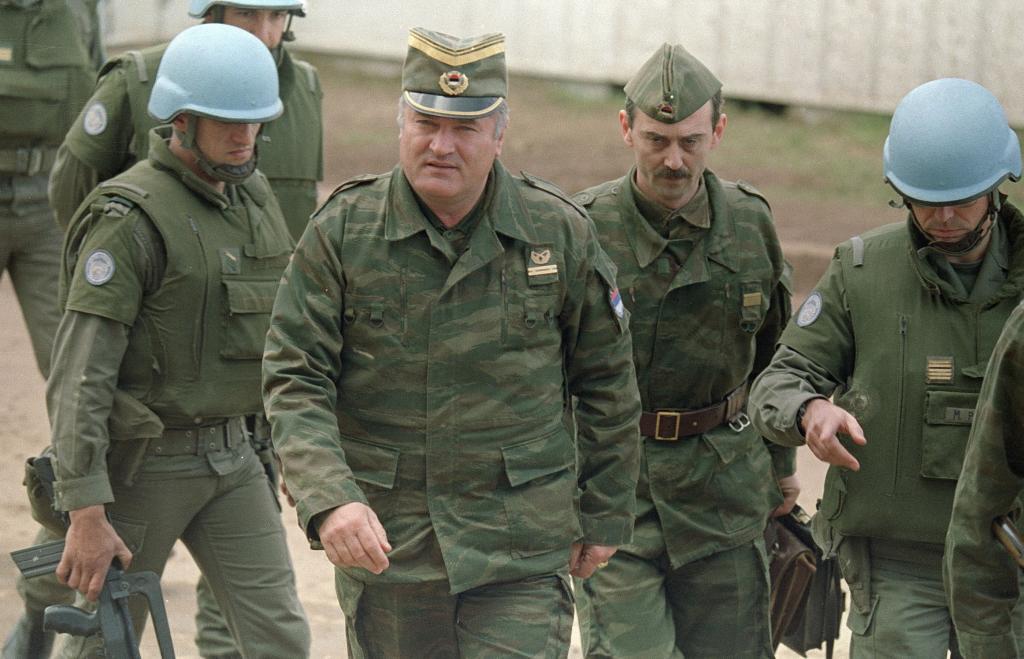
Several strokes have ended the life of the former Serb-Bosnian general Ratko Mladic, who was serving a life sentence for genocide in the bloody Bosnian war (1992-1995), as reported by Serbian channel RTS. He was at the UN detention center in The Hague.
Mladic, aged 84, was nicknamed the Butcher of the Balkans for his role in the Srebrenica massacre of 1995. On July 11 of that year - although the massacre lasted for several days - Serb-Bosnian forces, led by this general and by Serb-Bosnian leader Radovan Karadzic, shot and killed 8,000 Muslim men and boys from the enclave they had just captured, which was under the protection of the UN.
The town housed over 40,000 people, many of whom were displaced by the Bosnian war. Karadzic, aged 81, also serves a life sentence for genocide and war crimes.
The International Criminal Tribunal for the former Yugoslavia in The Hague (ICTY) found Mladic guilty on November 22, 2017, of genocide, crimes against humanity, and war crimes, sentencing him to life imprisonment, a verdict the former military officer appealed, and the final sentence was handed down on June 8, 2021. Karadzic had received the same sentence a few months earlier, on March 24, 2016, and was sentenced to 40 years in prison, a sentence that was later increased to life imprisonment in the final ruling of March 2019.
"The dead do not return, the mass graves remain, and every verdict issued in The Hague stands. None of that changes because Ratko Mladic has died. His death does not resolve anything or absolve anything. It cannot erase what the court determined about him, nor will it turn a convicted war criminal into a historical figure," says Bosnian Adnan Cerimagic, a senior analyst at the European Stability Initiative think tank in Berlin.
"What his death does do is leave the living with an unfinished task. For Bosnia and Herzegovina, and especially for those born after the massacres ceased, the work remains the same: to stand firm in truth, accountability, and memory," adds Cerimagic. "Serbia shares that responsibility. It supported Mladic while the crimes were being committed, kept him out of reach of justice for years, and supported him throughout his imprisonment. In death, just as in life, its government, media, and much of its public opinion will likely resort to old fiction and try to portray a criminal as a hero," says this researcher.
On the other hand, Miguel Roán, director of the Balcanismos project and author of the book Belgrado Brut, explains that "his figure will be remembered for his responsibility in the crimes committed against the Bosniak population, the siege of Sarajevo, and the Srebrenica genocide." "It is paradoxical," Roán adds, "that Serbian nationalism claims his figure when his role exacerbated the massacres on Bosnian territory and stained the reputation of the flag he claimed to defend."