The cat-and-mouse game from Tom Clancy's novel and subsequent movie starring Sean Connery, "The Hunt for Red October," with NATO planes and ships chasing Russian - formerly Soviet - submarines around Iceland continues with the same intensity as when the book was published 42 years ago.
And its nerve center is Keflavik Airport, where 2.24 million tourists arrive in Iceland each year, a country that is currently holding a referendum to decide whether to start negotiations to join the European Union. Visitors come to see waterfalls, volcanoes, glaciers, and Game of Thrones settings in a country that has no Armed Forces but arguably the most egalitarian society in the world.
However, tourists are unaware that their passenger planes share the runway at Keflavik with highly sophisticated P-8 naval reconnaissance aircraft from the United States Air Force, patrolling the North Atlantic in search of Russian submarines leaving their bases on the Kola Peninsula in the Arctic heading south. Nor with fighter-bombers from other NATO countries that regularly visit Keflavik.
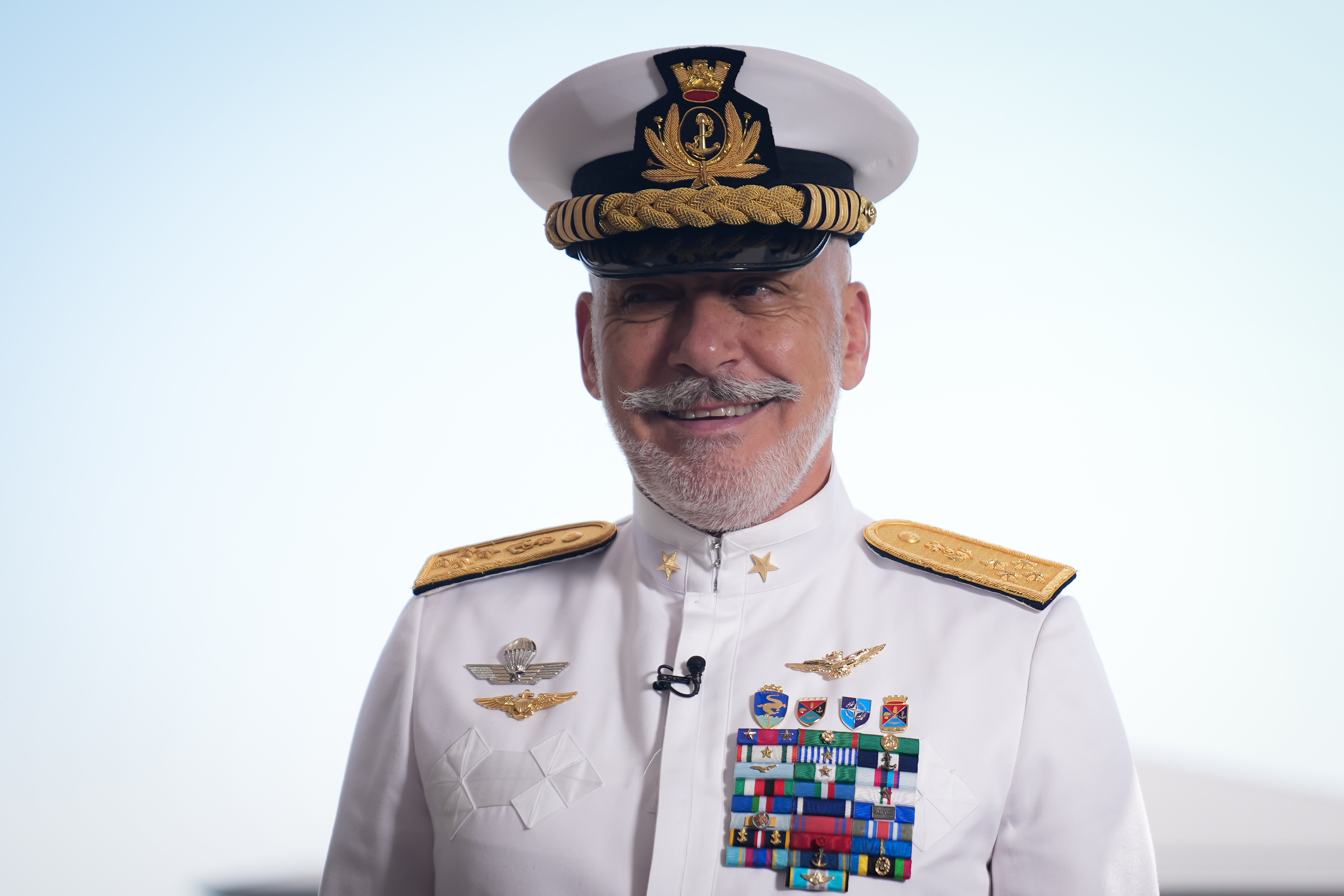
They all patrol the so-called GIUK Gap, which stands for Greenland, Iceland, and the United Kingdom. This is the bottleneck through which Russia - and now its ally, China as well - enters the Atlantic. The ultimate military authority behind all this action is Italian Admiral Giuseppe Cavo Dragone, who is the chairman of the Military Committee of the Atlantic Alliance, in other words, the top military authority of the Atlantic Alliance.
Today's referendum is taking place amidst the Northern Viking maneuvers, with US forces and six other NATO allies (Spain not included) rehearsing the defense of Iceland and the North Atlantic. It is a purely calendar coincidence reflecting how security and geopolitics have entered the debate on Iceland's relationship with Europe.
QUESTION. Have recent events in the Arctic made that region even more strategically important for NATO?
ANSWER. What is changing is the density of activity in the region. Routes that were once considered mere theoretical possibilities are now becoming strategically viable. Resources that were seen as unattainable are starting to be valued as accessible. As a result, the region is beginning to attract very distant actors, including China, which has been very explicit about its ambitions for access to Arctic maritime routes, energy, and critical minerals. At the same time, Russia has increased its military activity in the region by establishing an Arctic Command, opening bases, and using the region as a testing ground for new weapon systems.
But the European Arctic (High North) has never been a peripheral region for the Atlantic Alliance. NATO has had a presence in the Arctic since its inception, and five of our founding partners - Canada, Denmark, Iceland, Norway, and the United States - are countries in that region. Today, seven of the eight Arctic nations are NATO allies.
Q. Does this mean that the Arctic can be considered a theater of confrontation?
A. None of this means that the Arctic is automatically destined to become a theater of confrontation, and it is not in anyone's interest for that to happen. But what it does mean is that the region is not, from a strategic point of view, peaceful.
Q. What are NATO's major concerns regarding the region?
A. Our concerns are very honest and clear: transparency, respect for International Law, and the freedom and security of maritime communication lines, which increasingly include submarine infrastructure (cables). NATO's task is to clearly see what is happening in the European Arctic, be prepared and vigilant, and be able to act when necessary. Q. And what role can Iceland play in the future of the Alliance, especially in the context of these changes and the GIUK Gap?
A. One thing that does not change is geography. Iceland's position is strategic. It is at the heart of naval communication routes, making it both valuable and valued. The GIUK Gap is not a relic of the Cold War but a critical maritime and submarine corridor for the shipment of reinforcements and supplies from the United States to Europe. As the Arctic becomes the scene of more and more activity, that 'bottleneck' is gaining relevance.
Q. But Iceland has no Armed Forces.
A. But it contributes very valuably to the security of the Allies through Keflavik base, its Coast Guard, its airspace control and maritime reconnaissance operations, and as a nation that hosts forces from other countries.
And that is what the Northern Viking maneuvers are about: allies training together in anti-submarine warfare, mine countermeasures, and crisis response, both for the defense of Iceland and the maritime routes around it. The knowledge that this country has of the Arctic is a real asset in all our planning. And looking ahead, I hope that Iceland's role as the Alliance's 'eyes and ears' will increase in terms of surveillance and control of the maritime environment, in protecting critical submarine infrastructure, and ultimately as the nerve center of Alliance activity in the North Atlantic.