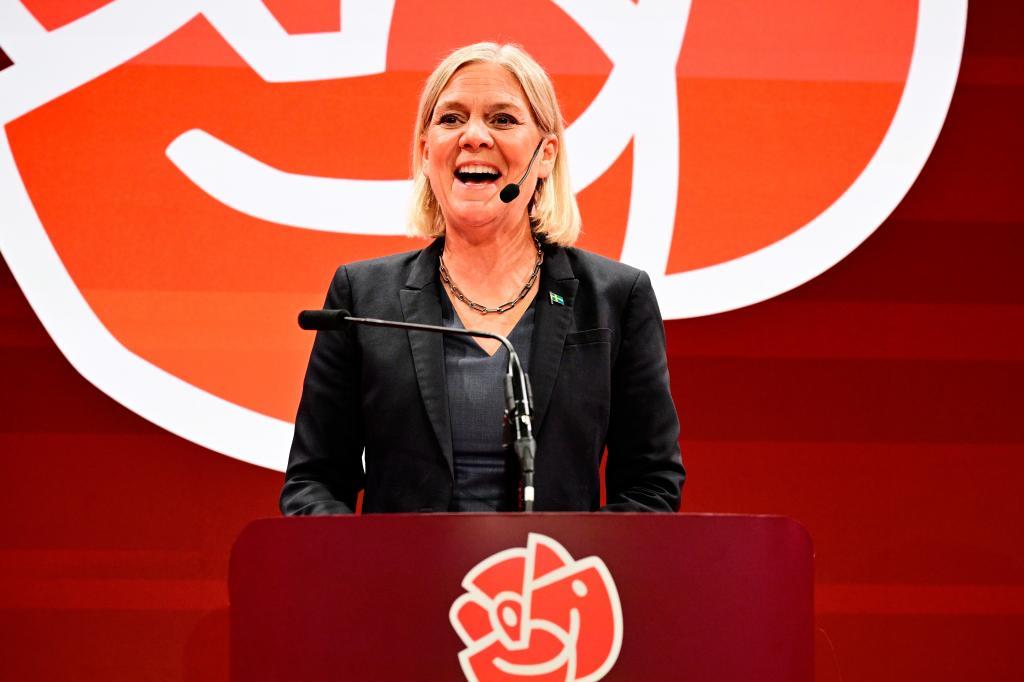
With over 90% of the districts tallied, the center-left opposition bloc led by the candidacy of the Social Democrat Magdalena Andersson is leading the tally with a three-seat advantage over the conservative coalition of outgoing Prime Minister Ulf Kristersson. Specifically, the progressive alliance would secure 176 seats compared to the 173 of the right-wing bloc in a Parliament composed of 349 seats, just above the absolute majority threshold set at 175 parliamentarians.
Faced with these provisional results, Andersson declared to her supporters: "At the moment, we are in the lead. And if this is confirmed, then Sweden will have a new government." However, the extreme closeness in the votes prevents officially proclaiming a definitive winner until several days later, when the provincial administrations complete the final count and include the early ballots and votes cast from abroad.
One of the main surprises of the electoral event in the Nordic nation of 10.6 million inhabitants has been the setback of the far-right Sweden Democrats, losing eleven seats and yielding the second position to Kristersson's Moderate Party. The far-right party falls to 17.6% of the votes, experiencing its first electoral decline since entering Parliament in 2010. Meanwhile, the Social Democratic Party remains the country's leading force with 28.1% of the votes—or 28% according to other counts—although registering its lowest result in over a century.
The Moderates reach 19.9% of the support, while the biggest rise in the left-wing bloc corresponds to the Left Party, accompanied by advances from the Green Party and the Liberals, the latter with 5.4% enabling them to surpass the parliamentary threshold of 4%. Despite the center-left advantage, Kristersson told his supporters: "The question of who will govern Sweden in the coming years remains open." The outgoing Prime Minister argues that deep differences on taxes and energy between progressive parties could hinder the formation of an operational government.
The electoral campaign has been characterized by an electorate voting more on the economy than on immigration. However, the legislative imprint of the anti-immigration program promoted by the far-right sectors during the four years of conservative government will remain in Swedish politics. Even the Social Democratic Party and other opposition sectors have shifted towards tougher stances on immigration and security, embracing some of the restrictive proposals against foreigners.
Magdalena Andersson, who became the first woman to be Prime Minister of Sweden between 2021 and 2022, advocates for maintaining a restrictive migration policy and strengthening police efforts, while rejecting the expulsion of integrated youth. The Social Democratic leader now faces the task of negotiating a common program with the Greens, the Liberal Center, and the Left Party to consolidate a governing majority.