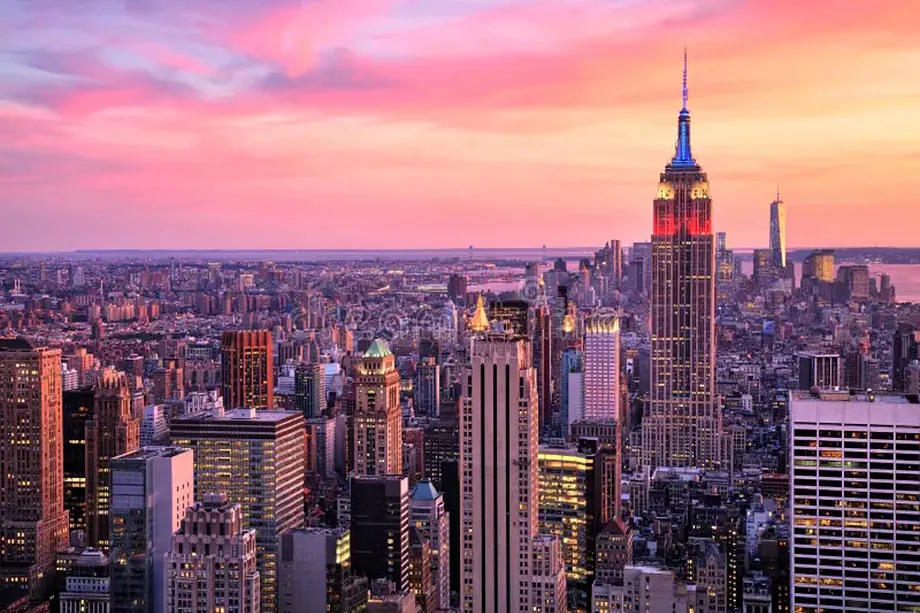
Which city is the world capital of technology? The answer is quite obvious, right? San Francisco, obviously. Well, it turns out that's not the case. The world capital of Silicon Valley is... the capital of Wall Street. In other words, New York. According to the real estate company CBRE, which also tracks the labor market - especially well-paid individuals like techies - New York already has 4.9% more workers in the technology sector than San Francisco. This transformation seems to be continuing, in part because the tech industry is becoming more decentralized every day, and also because the financial sector is starting to hire more and more engineers, programming experts, and now, experts in Artificial Intelligence (AI). In fact, among the North American cities with the most tech workers, there are some surprises, such as Washington (the fourth, after New York, San Francisco, and Seattle) or the Canadian cities Vancouver and Toronto.
From Vaca Muerta to ChatGPT: Argentina seduces Silicon Valley
Argentina is a magnet for Silicon Valley. First, it was Peter Thiel and his husband, who moved to Buenos Aires, although they did so out of fear of a literal rebellion of the masses in the developed world (apparently, they think Argentinians are more peaceful). Along with them come the data centers, but not to the capital, but to Patagonia. Vaca Muerta, the oil field expropriated from Repsol in 2012, will supply energy to a data center that the local electric company Pampa Energía is planning to build. OpenAI (the company behind ChatGPT) already has an agreement with the electric company Sun Energy for a 21.5 billion euro investment in Patagonian data centers. At a time when opposition to these structures is growing in the US and Europe, Argentina, led by Javier Milei, with its abundant energy and a government that is not concerned about the huge water consumption of these facilities, is the perfect place for data centers.
What future do we want? The one of Texas or the one of Spain?
"The future is Texas," proclaimed The Economist in its special Christmas issue of 2002. It had been eight years since the Democratic Party lost control of that state - to George W. Bush, then President of the US - marking the beginning of a political and economic evolution that the British magazine considered exemplary. Now, with his flair for the spectacle, Donald Trump has just held a political convention in Texas to try to revitalize the Republican base ahead of the November legislative elections. It is a good time to wonder what kind of future Texas has had compared to, for example, Spain. One possible answer is presented in the graph on this page. Texas excels in economic growth and GDP per capita. But its figures on issues such as the purchasing power of salaries and maternal and infant mortality are, quite simply, African, and are also deteriorating at a dizzying pace.
AI, the equivalent of nuclear energy in the Cold War
In 1953, the US program 'Atoms for Peace' included, among other initiatives, the sale of over 30 nuclear reactors to developing countries. It was not a commercial sale, but a way to establish political and strategic ties. In 2026, Donald Trump is inadvertently creating his 'Microchips for Peace' program by offering Artificial Intelligence (AI) microprocessors from Nvidia to Armenia to reach a pre-peace agreement with Azerbaijan, and to Saudi Arabia and the UAE to reduce tensions between these two key allies in the Middle East. So AI increasingly seems like the nuclear energy of the 21st century (for better or for worse, given the fear that this technology may eventually cause some unpredictable catastrophe), as confirmed by the possible 'summit' on this technology between China and the US next week, reminiscent of the ones Washington and Moscow had on atomic weapons during the Cold War.
Trump undermines his own critical minerals access strategy
In English, saying "I don't get mad, I get even" sounds much better than in Spanish because it's a play on words: "I don't get mad; I get even." That was the expression of the Canadian Minister of Natural Resources (meaning mining, energy, and forestry) Tim Hodgson to refer to the US. Both countries are embroiled in a trade war in which Ottawa, in a unique case since Donald Trump took office, has decided to respond to Washington, quite literally, blow for blow, bringing to the forefront a fundamental issue in today's global economy: critical minerals, essential for any technology. Canada's Prime Minister, Mark Carney, has hinted that he does not rule out limiting cooperation with the US in these raw materials in the future. If Trump sees his access to critical Canadian minerals cut off, he will have scored an own goal of epic proportions.
The Panama Canal joins the Strait of Hormuz to complicate the world economy
One day it's the Houthis in the Bab el-Mandeb Strait. Another day, it's the Iranians or Americans in the Strait of Hormuz. And now, it's 'El Niño' in the Panama Canal. The meteorological phenomenon that starts in Chile and Peru and ends up disrupting the climate worldwide. By 2026, it has already caused a 34% decrease in rainfall in the Panama Canal, which relies on rainwater to operate. As a result, on Thursday, the number of ships crossing that waterway decreased from 36 to 34 daily. The day after tomorrow, Tuesday, it will drop to 32. This represents a combined decrease of 11%. It is likely that traffic will drop to 27 vessels, 25% less than usual. This would mean that more than 1.25% of global maritime traffic would need to be diverted, which could have consequences on global inflation, especially in the US, given that 70% of the Canal's traffic originates or ends in that country: higher inflation in the US could affect the Federal Reserve and global debt.