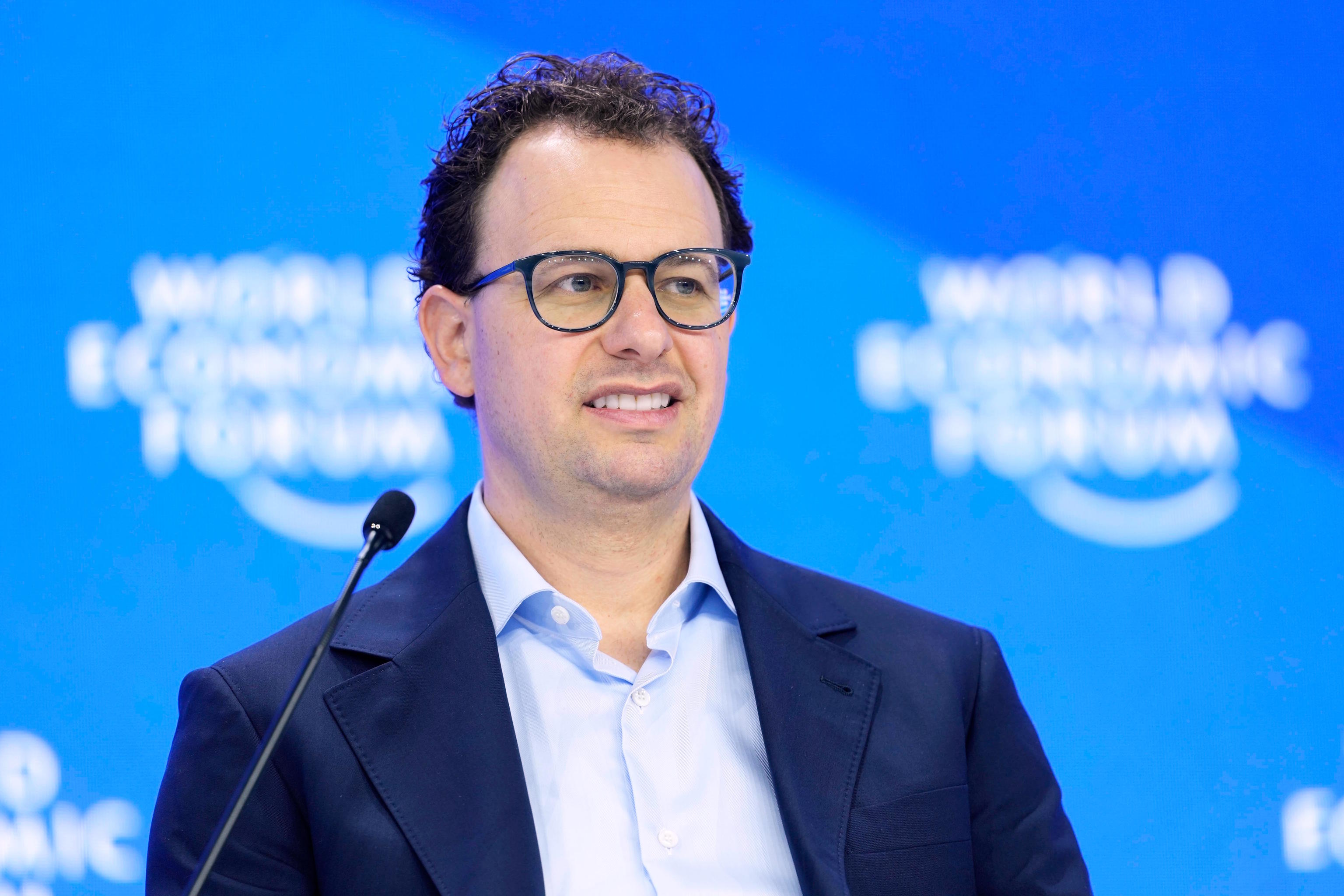
To understand the dilemma facing Dario Amodei, the almighty CEO of Anthropic, it is worth knowing two dates from his biography.
The first is 2006. Amodei was a promising student of Theoretical Physics at Princeton University when his father Riccardo, a leather craftsman, died from a variant of Hepatitis C. Sadness turned to anger just four years later when a new drug - called sofosbuvir - was approved, curing over 95% of patients. "That loss was a crucial driving force for the rest of his life, as it showed him how transformative scientific progress can be," said journalist Alex Kantrowitz, founder of the influential newsletter Big Technology and author of one of the most reliable profiles about our protagonist.
That trauma led Amodei to shift from the abstraction of Physics to the pragmatism of Biology. As a doctoral student, he joined a team at Stanford University researching metastasis detection through protein analysis. The lab work was so cumbersome that he sought a shortcut in machine learning, a branch of Artificial Intelligence that was beginning to emerge and became his new obsession. "I feel a personal responsibility in the development of AI," he said in an interview with CBS, just before citing his father as the driving force behind his eagerness to exploit all the advantages of new technologies.
The other key date is 2020. That spring, with the entire planet confined by the pandemic, Amodei led the launch of GPT-3, the third version of OpenAI'schatbot. While the AI community was fascinated by the advances of a still nascent technology, its main creator felt increasingly uncomfortable. Not only was he alarmed by the potential of his creation, even greater than he had imagined, but he was also angered by the lack of awareness of the risks he perceived in the company's leadership, led by Sam Altman.
Once again, Amodei chose to change course. In January 2021, he led the rebellious faction of OpenAI, dubbed "the pandas," which founded an ethical alternative: Anthropic. Their mission was ambitious: to create the best model on the market, apply the highest security standards, and thus compel all competitors to imitate them. "Let's lead a race to the top," repeated their CEO, who, against the predictions of his detractors, achieved his goal. Or at least, it seemed so.
The dilemma that now corners Dario Amodei, on how to harness the full power of AI while avoiding the existential risks of its accelerated development, arises from the tension between these two dates. "I have faced this duality between risk and benefit since the beginnings of Anthropic," he admitted in the astonishing 3,800-word essay he published this Saturday. "Not building this technology would deprive humanity of its benefits or simply put AI in the hands of authoritarian powers, while building it too quickly would be a reckless idea."
The solution he proposed in his text, a halt in the advancement of new models until more security measures are developed, only superficially resolves his dilemma. None of the proposals in his essay would be effective if the rest of the AI sector players - both major tech companies and the governments of the most powerful states - do not follow all his steps.
The immediate support he received from his major US competitors - Sam Altman, Elon Musk, and Demis Hassabis - lent some credibility to his proposal and prevented complete uncertainty from taking over the business. However, his text has also received various criticisms: some, like those from China, were already expected; others, like those from President Trump, were less predictable but no less damaging.
Among the detractors of his proposal, one of the most common reproaches is that, beneath his apparent concern for security, Amodei is simply seeking to create a regulatory environment that protects his company from competition. This strategy would make sense at a time when Anthropic's revenues still do not justify its colossal infrastructure expenses.
"As sensible as the leaders of his company are, they have not been able to understand that the only thing they can control is how they act," wrote Tim Higgins, a technology specialist at The Wall Street Journal. "They cannot prevent their rivals from destroying the world, but they can decide not to participate in the race."
These criticisms, however, overlook one of the foundational traits of Anthropic: the conviction of many of its engineers that they, and only they, are qualified to achieve General Artificial Intelligence (GAI) safely. Therefore, a unilateral halt would not be sufficient for Amodei's followers; they must ensure that all their competitors do the same.
"They believe that no one else will act responsibly, so they must do it, despite the risks involved," denounced Jacob Coxon, a former Anthropic employee, in the ultra-viral Twitter thread where he explained why he was leaving the company last Tuesday.
According to Alex Kantrowitz, the chances of Amodei achieving his goal of slowing down AI are "almost nil." Even if he managed to get all the US giants on board, he sees "no scenario" in which China could join this slowdown. "Still, I do not rule out that Amodei does believe it is possible or, at least, feels that his obligation is to voice his idea aloud."
Meanwhile, Dario Amodei will continue to face a dilemma reminiscent of one of F. Scott Fitzgerald's most famous quotes: "The test of a first-rate intelligence is the ability to hold two opposed ideas in the mind at the same time and still retain the ability to function."
If the author of The Great Gatsby was right, the coming days will subject Amodei to the ultimate test.