There are tiny mites living on our skin called Demodex. They are usually found in hair follicles and sebaceous glands of many people without causing any problems. These microscopic beings are part of the ecosystem of microorganisms that accompany us in our lives.
The problem arises when their quantity increases uncontrollably; thus, if the population density exceeds five mites per square centimeter of skin, diseases in the eye area emerge, specifically due to the increase in members of theDemodex folliculorumfamily, which reside in the eyelash growth area.
As a result, according to Trinidad Montero, a dermatologist from the Contact Dermatitis and Cutaneous Allergy Group (GEIDAC), "inflammation of the eyelid margin occurs, known as blepharitis by Demodex." Or even a painful skin reaction known as demodicosis, as revealed in a recent study presented at the Congress of the European Society of Cataract and Refractive Surgeons.
Cosmetic risks: a 30% increase in reports of adverse effects
This research also reveals that many women experience symptoms of eye irritation and tear duct obstruction, as most have issues with the tiny glands located near the eyelashes (known as Meibomian glands), which produce an oily substance that prevents the eyes from drying out.
What causes the alteration of the tiny mite's ecosystem?
The abuse of adhesives (even with inappropriate components) for false eyelashes and improper use of mascaras (including waterproof ones), not removed at night and whose residues remain for days due to not performing deep and thorough cleansing.
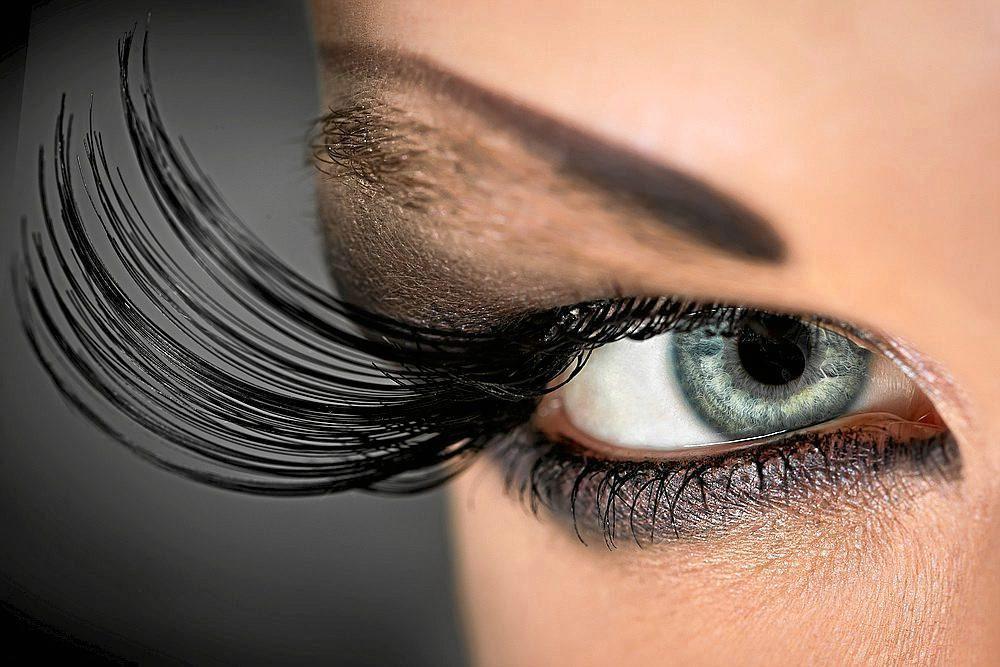
Tetiana Zhmud, from the Department of Ophthalmology at the Pirogov National Medical University of Vinnytsia (Ukraine), presented the study's data at the medical conference. "Eyelash extensions are a highly popular cosmetic procedure among young women, as they offer the appearance of longer and fuller lashes without the need for mascara," she justified their use in a statement.
At the same time, Zhmud makes it clear that "there is increasing evidence that this procedure can cause problems on the ocular surface, such as irritation, dry eye symptoms, and Meibomian gland dysfunction. However, the relationship between eyelash extensions and demodicosis is not yet well understood."
Zhmud and her team surveyed 345 women aged 16 to 28 years. They found that almost a quarter of them had worn eyelash extensions at some point. More than half (58%) wore them every three to four weeks. Nearly half of the women using extensions (47.6%) reported having felt discomfort, redness, tearing, or itching after the procedure.
Among women who had undergone eyelash extensions at least 10 times, researchers found that the majority (85%) showed signs of Meibomian gland dysfunction. This was because these glands were either blocked or not producing the right oil to keep the eyes hydrated.
How do infection problems originate?
The spokesperson for the Spanish Academy of Dermatology and Venereology (AEDV) details the damage caused by glue in the eye area: "In the case of eyelash extensions, one of the mechanisms that could promote this proliferation is precisely the difficulty in performing proper hygiene of the eyelid margin."
The glue, on the other hand, "can cause other independent problems, mainly irritation. The cyanoacrylates present in some adhesives act as sensitizers and cause allergic contact dermatitis," adds the dermatologist.
Montero emphasizes that cleanliness is key: "Some users avoid rubbing the area for fear of the extensions lasting less or coming off. This leads to the accumulation of sebum, dead cells, and makeup residues around them, creating favorable conditions for the excessive growth of Demodex."
Regarding waterproof mascaras, the dermatologist warns that since they are harder to remove, they may require more friction or specific makeup removers. "It does not mean they are necessarily more dangerous, but incomplete or excessively aggressive removal can promote eyelid and ocular surface irritation," Montero points out.
To avoid all this, the AEDV spokesperson lists a series of basic recommendations: "Proper hygiene of the eyelid margin, correct makeup removal before sleeping, not sharing mascaras, replacing them periodically, and maintaining hygiene when wearing extensions are simple measures that can reduce problems."