The possible slowdown in the development of the most advanced AIs in the midst of apocalyptic fear will have major repercussions throughout the technology sector. While waiting for more details on these measures or the resistance that Donald Trump and the White House will put up, there are already actors being singled out in the market, both for the opportunities this halt represents for them and those with the potential to be most affected.
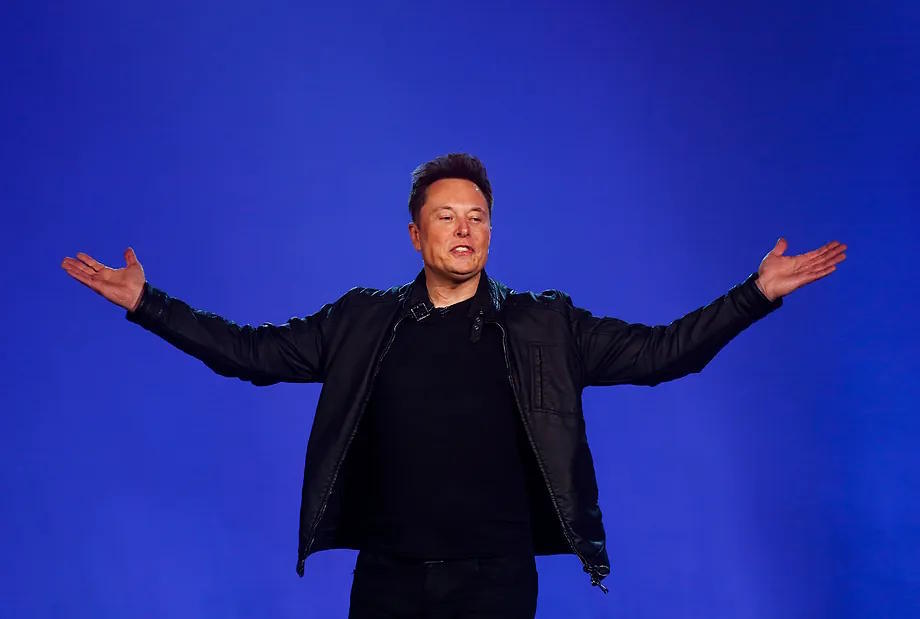
One of the first people to speak out in favor of a more cautious approach, as proposed by Dario Amodei, was Elon Musk. The proposed scenario could benefit him as it gives SpaceX and its xAI division, strengthened by the acquisition of Cursor, more time to catch up in model development.
The former founder of OpenAI who also led a significant legal battle to try to keep the company as a non-profit foundation, clearly outlined the roadmap for his company.
"Grok 4.7 should be on par with Opus 5.0, not 5.1. Better in some aspects and worse in others. We need to improve our multimodal performance. Grok 4.8 will be a significant improvement and Grok 4.9, at the level of Astra and Fable probably. Grok 5 maybe better than any. We'll see," stated the tech mogul, who tends to be wrong in predicting the future of his businesses.
One of the few tech companies that has distanced itself from Anthropic's request is Meta, which has been advocating for open-source models from the start and also plays a role as a follower in this AI race.
In fact, the tech company's stocks were among the few that rose last Monday amid the uncertainty surrounding AI. This is due to the launch of Muse, its new assistant, which has become one of the top five downloaded apps in the United States. This new product highlights the company's ability to reach the 4 billion users of its other applications and reinforces the role of Alexandr Wang, the very young AI chief hired through the billion-dollar acquisition of his startup's staff last year.
Another unexpected winner is the European Union. The German Ministry of Digital Transformation has emphasized that the option of delaying AI development "is not viable" for Europe. This conclusion is easy to reach given the lack of continental models among the most advanced in the world. In this regard, Mistral, Europe's great hope in the field, has just raised 3 billion euros in fresh funds to grow and maintain its commitment, a round closed at a providential moment, just before the panic broke out.
As for the losers, Anthropic and OpenAI if they decide to move forward in a more controlled environment appear to be in jeopardy, but more than their future, it is their investors' future that is concerning. Investors are worried about the amount of money that investment funds have leveraged in these companies and throughout their value chain.
Just this year, OpenAI and Anthropic have raised $150 billion in new capital from the deepest pockets of the global economy.
The now delayed IPOs of both giants were seen as an opportunity to start unwinding positions, and now the horizon is much more uncertain. And if the big players are hesitant to go public, it is unlikely that other emerging companies around them will do so, making the situation even more complex.
Among the most exposed funds is a16z, led by Marc Andreessen and Ben Horowitz, two of the investors closest to Donald Trump who have shaped their AI investment and also donated to his political campaigns. Other Silicon Valley giants like Thrive Capital, Sequoia, or Lightspeed are also highly active in investment, but one stands out above all.
Nvidia is by far the most exposed company to a possible AI expectation breakdown. The company has been very aggressive in using huge amounts of cash to invest in companies in its value chain, making it the most active entity in rounds of over $100 million this year in the United States.
In addition to massive chip purchase agreements in exchange for shares with Anthropic, Open AI, and the well-known neoclouds (Nebius, Coreweave, Nscale), which will fill data centers with Nvidia chips pre-financed by the tech company and with star clients being the creators of Claude and OpenAI.
This model, dubbed by critics as the circular economy of AI, could falter if the demand for advanced chips declines, leading to a chain of defaults among the three parts of the triangle that would seriously damage the balance sheets and operations of all parties.