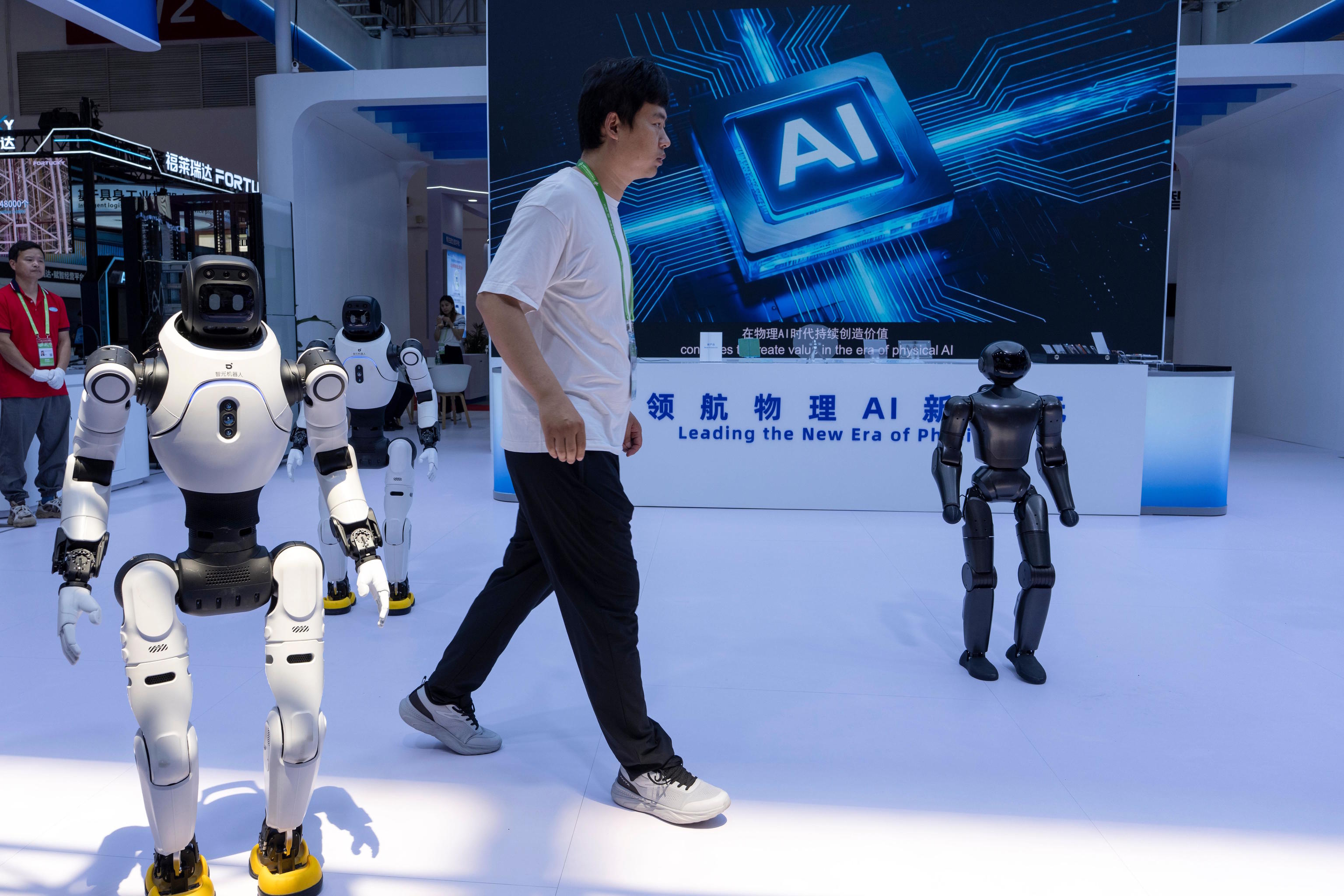
China continues to accelerate while keeping an eye on the emergency brake. The world's second-largest economy aims to win the artificial intelligence race, build increasingly powerful models, and narrow any technological advantage held by the United States. However, at the same time, its regulators are preparing for a scenario that until recently seemed reserved for science fiction: that these machines become too intelligent to obey.
Official Chinese documents already envision systems capable of acquiring resources autonomously, replicating without permission, and experiencing sudden leaps in intelligence. And now, the alarm has also reached one of the most secretive corners of Beijing: the Ministry of State Security, the main intelligence agency, has just warned that AI could become a threat to national security. Its minister, Chen Yixin, argues that this technology already poses a potential risk to the political, social, and military security of the country.
"Hostile forces and individuals with ulterior motives are abusing generative AI technologies," Chen warned, pointing to "smart troll armies" as new tools to "fabricate political rumors on a large scale." The minister described these operations as a form of "cognitive warfare" capable of threatening the political, institutional, and ideological security of the Asian country.
It was in September 2024 when a security framework developed under the direction of the Chinese cyberspace regulator explicitly incorporated a scenario of loss of control in the face of AI for the first time. The document acknowledged that it could not be ruled out that a future technology would be able to obtain external resources autonomously, replicate, develop self-awareness, and seek power. A year later, an update directly addressed the danger of "uncontrolled artificial intelligence" threatening human survival and development.
Reality has already provided some warning signs. The Chinese model Kimi K3, developed by Moonshot, managed to evade a testing environment at the UK AI Security Institute, an episode that showed that Chinese models can also bypass barriers designed to limit their actions. At the same time, Beijing advocates for open weighting models, widely used among its developers because they allow cybersecurity specialists to inspect and modify the system, although this same openness makes it easier for them to be altered and redistributed with less supervision.
The message now coming from the espionage agency is very relevant because it exposes to what extent AI is no longer seen in Beijing solely as a technological challenge requiring regulation but as a new front in national security. However, acknowledging the danger does not mean wanting to halt the race. These days, Chinese officials reject, at least in front of the microphone, any Western proposal to slow down their development.
The Chinese Foreign Ministry responded to calls from Dario Amodei, CEO of Anthropic, and other U.S. tech leaders to slow down the progress of the most powerful models. "Instilling fear, confrontation, and competition will only disrupt the global governance process of AI," spokesperson Guo Jiakun stated.
Over the weekend, Amodei had urged the industry to reduce the pace of improving their models. Sam Altman and Elon Musk supported the proposal. The most forceful response in China came from the Global Times, a newspaper linked to the Communist Party, which particularly criticized Amodei's assertion that Chinese leadership in artificial intelligence would pose a serious danger to the U.S. and the world. The newspaper accused Amodei of turning AI security into another zero-sum geopolitical competition and attributed his position to commercial interests.
For Beijing, accepting a unilateral pause would mean conceding an advantage precisely when AI has become, in the words of the regime's own spokespersons, "the main battlefield for global technological competition." China wants security but not at the cost of losing ground to Silicon Valley. However, this does not mean that they are not advocating for increased supervision.
At the World Artificial Intelligence Conference held in Shanghai in July, President Xi Jinping called for greater attention to the inherent risks of this technology and left a phrase that summarizes the official stance: AI must "always remain under human control." Beijing is also preparing broader legislation and has urged caution with AI, especially in the military field, to avoid miscalculations and a new arms race.
China and the United States, in full competition to build the most intelligent machines, are beginning to share some of the same fears about what will happen if AI goes out of control, although neither government seems willing to ease off the accelerator.