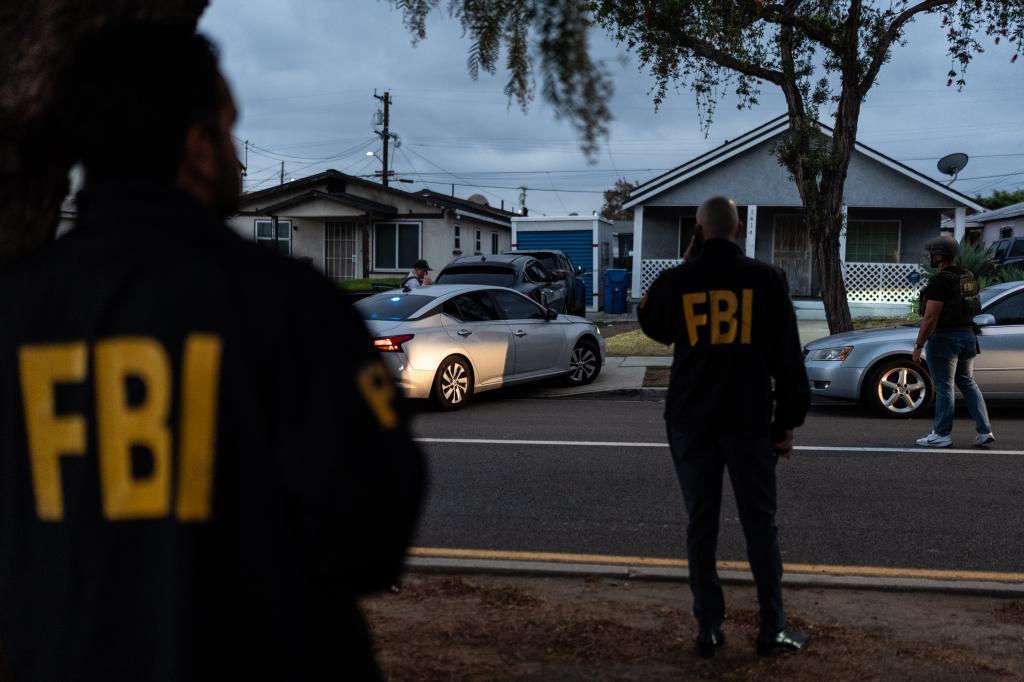
Russian Intelligence has crossed a red line that for decades was considered insurmountable. For the first time in the documented history of the covert conflict between Moscow and the West, the US Department of Justice has revealed a formal indictment against a network of Russian Intelligence services planning to assassinate dissidents and opponents directly on American soil. Not in London, not in Salisbury, not in Berlin or the Baltic countries: in Washington D.C.
Attorney General Todd Blanche announced it yesterday at the Rose Garden of the White House with a phrase that summarizes the scope of what was uncovered: these accused operated as part of "a global assassination network that reached the United States", attempting to recruit American and foreign citizens "to carry out Kremlin's commissioned executions".
What the FBI has dismantled in recent months is not a classic intelligence operation with agents trained by Russia and fake passports. It is something more disturbing: a decentralized network that subcontracts political assassinations as if they were commercial services, with set prices, local recruits, and chains of intermediaries designed to keep Moscow as far away from the crime scene as possible. It is, on an even more concerning scale, what the Kremlin is already doing in Europe with its hybrid sabotage campaign.
Investigator Christo Grozev, co-founder of Bellingcat and one of the world's leading experts on Russian covert operations -who identified the GRU agents responsible for poisoning Sergei Skripal in Salisbury-, describes it as: "It's a market with investors from Moscow". The instructions given to their recruits sum it all up: "You need to approach it creatively".
According to the indictment revealed in the Southern District Court of New York, the network operated with a chain of intermediaries of various nationalities. Russian Intelligence officers used Cuban and Venezuelan citizens based in Russia to recruit a Venezuelan based in the US to surveil and prepare the assassination of a Russian opposition figure living in Washington, as described by Grozev. The operative recruited to carry out the assassination was Venezuelan Ángel Eduardo Castro, who in late July contacted a compatriot residing in Brooklyn and tasked him with surveilling the properties associated with the Russian dissident they intended to kill, promising him between $1,000 and $1,500 for filming the properties and a confirmation gesture on video: a thumbs-up.
Once the images were received, the price went up: $40,000 to eliminate or make the target disappear. When the recruit declined to personally carry out the assassination, their Russian handlers asked if he could find someone willing to do it, mentioning they had contacts in Mexico who were delayed.
This is a different system from the "illegals" Russia has used in the US for decades. An illegal is an agent operating abroad with no diplomatic cover and under a completely false identity built from scratch over years. Unlike agents under official cover (diplomats and embassy officials with immunity), illegals have no safety net: if caught, Moscow can completely deny they are their agents. They are the most expensive and valuable investment of Russian intelligence services.
In this case, to avoid FBI surveillance, the operatives used a code in their communications. Grozev, who had access to the documents, simply points out that it was the word "unbreakable".
The indictment identifies five men, all missing. The three main ones are Yuri Khrameev, a 63-year-old former colonel of Russian Intelligence services, nicknamed Combat Yuri in intercepted communications -who according to Grozev boasted of having worked with Vladimir Putin when they were young-; his son Kiril Khrameev, an active officer of the Russian FSB, heir of the Soviet KGB; and the Cuban Oemis Romagoza Durruthy, an influential member of the Cuban diaspora residing in Russia. The other two accused are the Cuban Yaidel Delgado Suárez, described by the Department of Justice as an expert recruiter, and Venezuelan Ángel Eduardo Castro, who was supposed to become the executor.
Grozev points out the most serious element of the whole case: this is the first fully documented attempt by Russian intelligence to assassinate someone on American soil. With all due respect to the famous TV series The Americans, there has always been an unwritten rule not to carry out assassinations on each other's territory. Clearly, the old rules no longer apply in the current world.
This breach is not an accident but a pattern. The same logic that has led Russia to attack European airports with drones, to systematically bomb Ukrainian civilian infrastructure, or to use drones against civilians in Kherson is behind this operation: the rules that structured the conflict between powers have disappeared one by one, and no one is replacing them.
The network also prepared a separate plot against a Russian anti-war activist residing in Vilnius, Lithuania, with a price of $25,000, according to Grozev. The market for political assassinations commissioned by the Kremlin has different rates depending on the location and profile of the target. What does not vary is the method: outsourcing, decentralizing, and keeping Moscow far enough away to be able to deny everything.