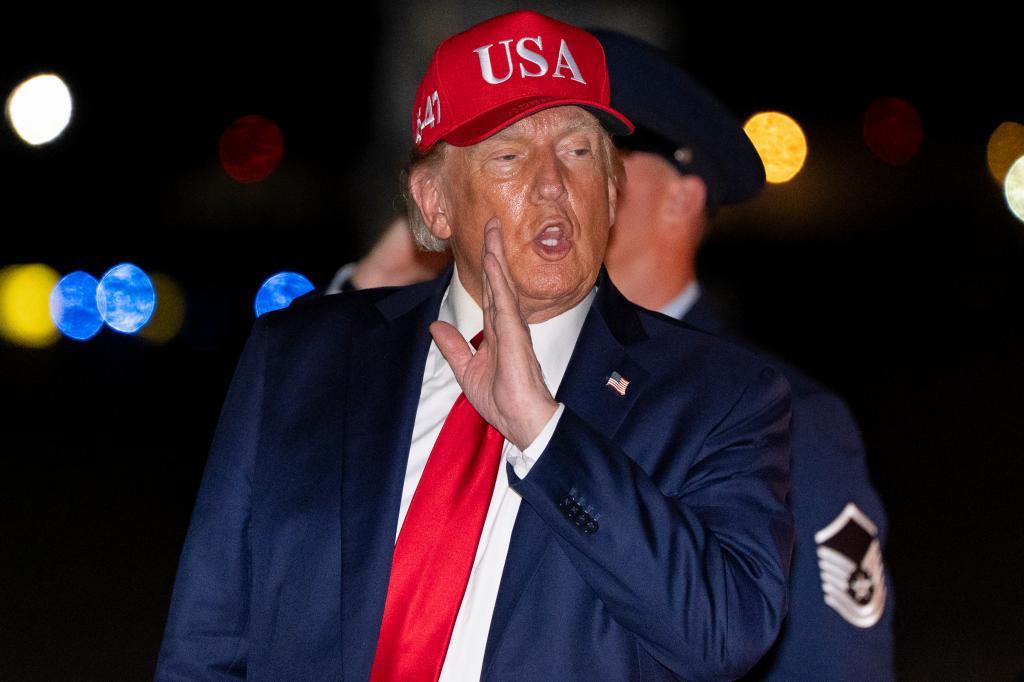
Trump described the EU's proposal as "ridiculous" and warned that, if he sees it as a "hostile act", he will apply "very high tariffs or stop trading with Europe". Although he mentioned that if done "in good faith, it's fine", he reiterated the possibility of "imposing very strong tariffs on Europe" if the intention is "bad".
The President of the European Commission, Ursula von der Leyen, was the one who raised this significant possibility to the Canadian leader, Mark Carney, in his presence, who became the first non-European head of government to attend the annual "State of the European Union" address. Von der Leyen expressed her desire to work with Carney to "open the door for Canada to become the first associated member of the EU", prompting applause in the European Parliament. The proposal includes closer cooperation in technology, defense, and energy, aiming to move towards a "future alliance" that takes the bilateral relationship "to the highest possible level". Other areas mentioned for collaboration include smart manufacturing, critical minerals, batteries, artificial intelligence, cyber and economic security, and the Arctic as a joint flagship project.
This strategic move comes at a time when Canada is in the midst of a trade war with the Trump administration and is seeking new partners. Europe, on the other hand, whose relations with Washington are also tense, is seeking support for its strategy of rebalancing between the two superpowers, China and the United States. The European leader emphasized that "this alliance is not directed against anyone, but towards our common strength". It is worth noting that Canada and the EU are already economic partners thanks to a trade agreement that has increased their trade by over 75% in less than a decade, according to Von der Leyen. From Mark Carney's office, it was stated that "in a more dangerous and divided world, Canada is strengthening its relationships with trusted partners". Carney's visit aims to catalyze an upcoming EU-Canada summit in Montreal.