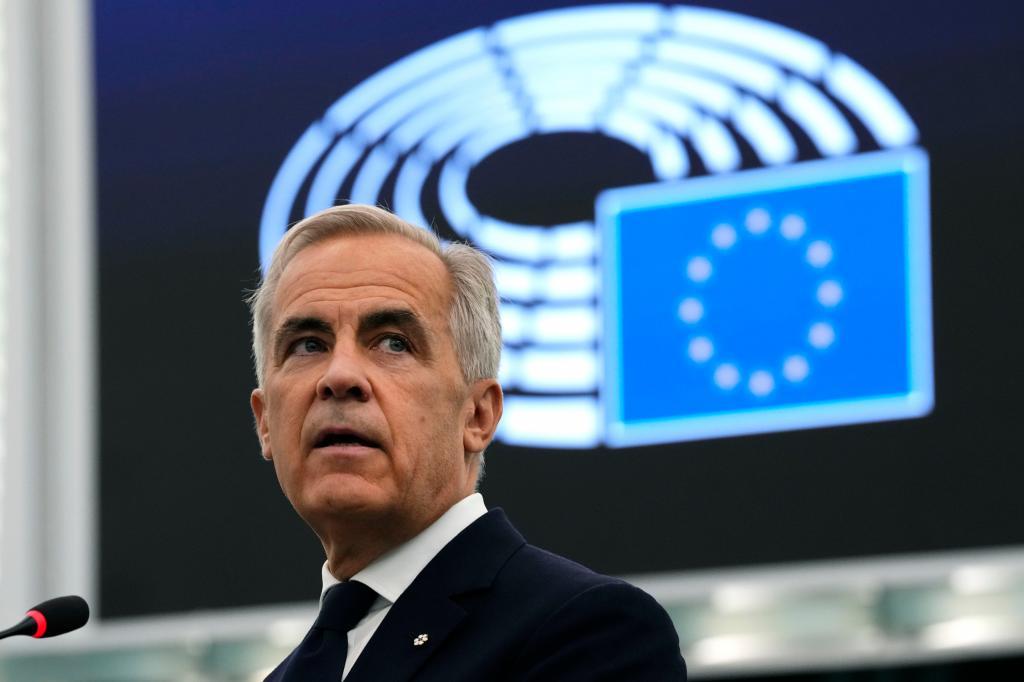
Someone inside the Eurochamber shouted "USA, USA!", we don't know if in a comedic manner, and Carney smiled amidst the lamentations of the MEPs. This situation occurred after Trump's threats of new tariffs and trade restrictions with Europe following Von der Leyen's display of great interest in expanding economic ties with Canada.
Following this anecdote, Carney began his speech and welcomed the prospect of his country becoming the first "associate member" of the European Union (EU), a proposal aimed at strengthening Canadian resilience against external pressures. This initiative arises in a context of growing global tensions, especially after the threats from U.S. President Donald Trump, who considered the agreement a possible "hostile act" and warned of imposing heavy tariffs on the EU if intentions were not friendly.
Carney, who received applause in the European Parliament, expressed his clear goal: deeper integration in trade, defense, critical minerals, artificial intelligence, energy, space, research, and financial services. His aim is for Canada and Europe to be less vulnerable to economic and geopolitical pressure, ensuring that no country can control Canada's markets, undermine its sovereignty, or dictate its decisions. The Prime Minister emphasized that this alliance is "not proposing a third bloc to become a rival of the major powers".
The proposal by the President of the European Commission, Ursula von der Leyen, to elevate the bilateral relationship to the "highest possible level" through a "Alliance for the Future" comes at a crucial moment. The policies and rhetoric of the Trump administration, including tariffs and economic demands, have pushed Ottawa to reduce its historical dependence on the United States. Canada, which dispatches around 70% of its exports to the U.S., seeks reliable partners to avoid "negotiating from a position of weakness."
Experts like Daniel Béland, a political science professor at McGill University, point out that Trump's actions are "clearly pushing both Canada and the EU to envision a world without strong U.S. leadership and to act accordingly". Nelson Wiseman, professor emeritus at the University of Toronto, highlights that "Carney's shrewdness in dealing with Trump has caught Europe's attention," increasing interest in Canada as a partner that understands the U.S.
Although the status of "associate member" is not yet defined in EU treaties and would require its creation, Canada has already advanced by joining Brussels' SAFE defense acquisitions program. The bilateral summit in Montreal on October 29 and 30 will be crucial for discussing this new and strategic relationship.