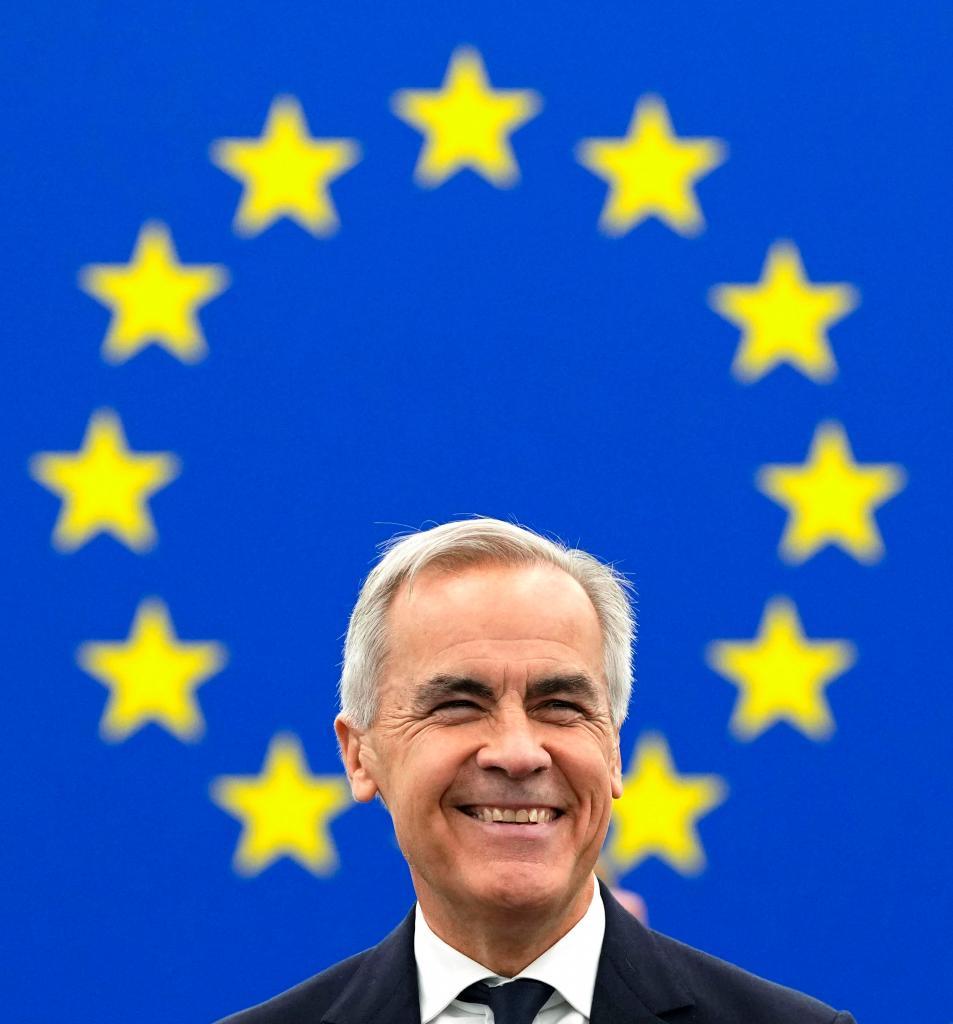
During his speech in the hemicycle, Carney responded to the proposal made by the President of the European Commission, Ursula von der Leyen, to go beyond CETA and open the door for Canada to become the first associated member of the EU.
In response to the European proposal, the Canadian leader was firm in the parliamentary headquarters, stating that "no one will tell us what language to speak, no one will dictate our culture, or with whom we can reach international agreements." Carney also highlighted the broad similarities between both powers, arguing that "we share common values that we have always fought for and must always remain vigilant in defending," while emphasizing that "Europe and Canada are stronger together."
The geopolitical move prompted an immediate reaction from U.S. President, Donald Trump, who described the initiative as "a hostile act" and threatened to impose tariffs or disrupt trade with Europe. The American president openly criticized the agreement, stating that "It seems ridiculous to me. Canada has been a terrible trading partner."
In response to these warnings, European diplomacy sought to reduce international tension. The European Commission's Trade spokesperson, Olof Gill, clarified that "The proposal to strengthen our partnership with Canada is not directed against anyone." Meanwhile, the Canadian Prime Minister chose to ignore the direct threats from the White House, stating that "We welcome this ambition: surveys show that an overwhelming majority of Canadians support much closer ties." Carney defended that "An alliance between Canada and the EU would create a beacon for other democracies. An alliance defined not by what we oppose, but by what we stand for: freedom, solidarity, prosperity, and sustainability."
The proposal put forward by Brussels aims to enhance cooperation in industry, technology, defense, and energy. In the energy and raw materials sector, Carney highlighted the key role his country can play, detailing that "Canada can provide LNG and hydrogen on a large scale to strengthen Europe's energy security, among other things through the development and utilization of new port infrastructures in the far north and on our east coast. In turn, we can benefit from their leadership in numerous clean energy technologies." Additionally, the American country holds deposits of over 34 critical minerals and ranks among the top global producers of the ten most essential materials for the global energy transition.
In terms of international security architecture, the European Commission has suggested integrating Canada into a future European Security Council alongside the UK, Norway, and Ukraine. Although Carney did not explicitly refer to this security body in his speech, he unequivocally supported the new model of alliances promoted by the EU Executive. Finally, the Canadian leader emphasized the non-hegemonic nature of the alliance, stating that "We do not seek power to dominate others. On the contrary, we seek resilience so that no one can control our open markets, undermine our sovereignty, threaten our territorial integrity, or undermine our freedoms, democracies, or rule of law. These motivations, combined with our latent hard power, mean that we can contribute to creating the next fair, stable, and prosperous world order."