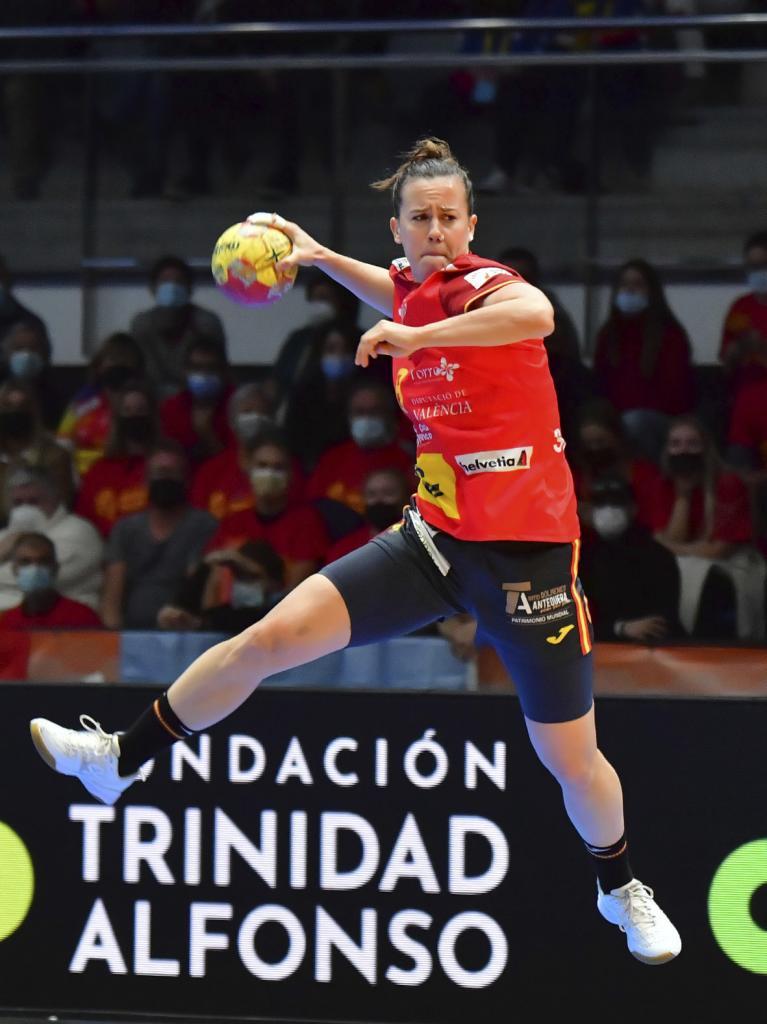
The debate originated in the United States five years ago. In the latest negotiation of the WNBA agreement, players demanded more support for motherhood and succeeded in expanding maternity leave, benefits, childcare, and also incorporating fertility treatments, including egg freezing, in vitro fertilization, adoption, and surrogacy. This summer, the controversy has reached Spain.
Footballers like Alexia Putellas, Olga Carmona, and Patri Guijarro requested assistance from the RFEF to preserve fertility, and the Federation responded with an agreement with the Tambre Clinic to cover these treatments. "It is a huge step forward because the Federation understands that you are serving your country against your biological clock, that you cannot stop and cannot become a mother because you need your body to work," defended Putellas. Jumper Ana Peleteiro disagreed and described the measure as "profoundly sexist."
The discussion is now on the table: is it a tool that expands options for a female athlete or a way of telling her that it is best to postpone motherhood? Does elite sports adapt to women or are women the ones who have to adapt to sports?
"It's Not in Favor of Work-Life Balance"
"The Federation's proposal is not in favor of work-life balance, it is to delay motherhood outside of the sports career. And it can serve to say: hey, if you delay motherhood, you have fewer problems during your sports life," argues Marta Pérez, Spanish record holder in the 1,500 meters, Olympic finalist, and recent mother. The athlete points out, however, that freezing eggs can be a useful option if motherhood is truly protected.
In the same vein, handball player Silvia Arderius, 2019 world runner-up and currently on maternity leave, states, "The focus should not be on how to postpone motherhood, but on how to help athletes who want to be mothers during their careers. It's good that the option exists and it can be useful for some players, but there is a risk that the possibility of egg freezing becomes a form of pressure."
"I don't think we should normalize that the solution for women is to postpone motherhood. The solution should be that a female athlete can decide to be a mother whenever she wants and that the system is prepared to support her," emphasizes water polo player Maica García, Olympic champion in 2024, who recently saw her club, Sabadell, not renew her contract after becoming a mother.
"There is a Strong Sense of Guilt"
Her case summarizes the paradox that female athletes are experiencing these days. While tools to delay motherhood are increasing, the conditions for being a mother during a sports career are still far from ideal. Despite growing assistance, in many sports, scholarships and contracts are lost, returning to competition remains challenging, and there is a lack of specialists with specific training to support athletes during pregnancy. Brands like Nike or Adidas have changed their maternity policies, but performance-related benefits are still lost. In tennis, players have a protected ranking to facilitate their return after giving birth, but this measure does not exist in other sports.
The Spanish Sports Council is creating the Women Athlete Health Unit to provide Spanish athletes with doctors, physiotherapists, and fitness trainers with specific training in maternity, but the project is still in development. Many, many buts.
"Among female athletes, in addition to a very clear awareness that there is a biological clock, there is a very strong sense of guilt. They feel obligated to justify that they want to be mothers, and the offer of these types of treatments can deepen that guilt," says Beatriz Martínez, a Health Sciences researcher at the European University, who a decade ago studied 20 Spanish elite athletes who had become mothers and returned to competition.
"All female athletes who want to be mothers demand more support in the process, there is no doubt about that," adds Beatriz Mañas, a sociologist at the National Distance Education University (UNED), who in 2023 conducted a survey of 201 high-level athletes to compare their views on pregnancy with those of the general population. Regarding egg freezing, she explains that there is a lack of knowledge. Among the respondents, there was no outright rejection: around 60% considered it a possible option, but 19% stated they were unfamiliar with the treatment.
The break is two weeks long
Information, in this case, is essential. The egg freezing process begins with hormonal stimulation lasting between eight and 12 days, and the substances used can trigger a positive result in an anti-doping test if a therapeutic use exemption (TUE) is not requested beforehand.
"I would advise all athletes to request an informational visit," comments gynecologist Lola Gómez Roig, director of the Gómez Roig Institute at the Corachán Clinic in Barcelona, who assures that in recent days she has seen two Spanish athletes interested in her practice. "During the process, the ovaries form cysts, grow, and in that phase, before the egg retrieval puncture, it is recommended to reduce the intensity of training and not engage in sports for a few days. But the break is no more than two weeks," she explains. The difference with maternity leave, which can mean around a year and a half without competing, is significant.
The professionalization of women's sports and the extension of careers have placed athletes in a dilemma that until recently barely occupied public debate. While they continue to demand guarantees for pregnancy, maternity support, and specialized care, new tools are emerging to preserve fertility.
Egg freezing can expand options for a female athlete. But it also raises a more uncomfortable question: if sports offer women more tools to delay motherhood, is it doing enough to allow them to exercise it when they decide?