In 1985, Xi Jinping slept in the room of a teenage Star Trek fan in Muscatine, Iowa. He was 31 years old, a local leader of the Communist Party in the Chinese county of Zhengding, and had traveled with a delegation interested in pig farming and corn uses. The US and China had only six years of diplomatic relations. No one in that house could have known that the guest observing memories of a series about future travels would return as the president of the power that competes with Washington for that future.
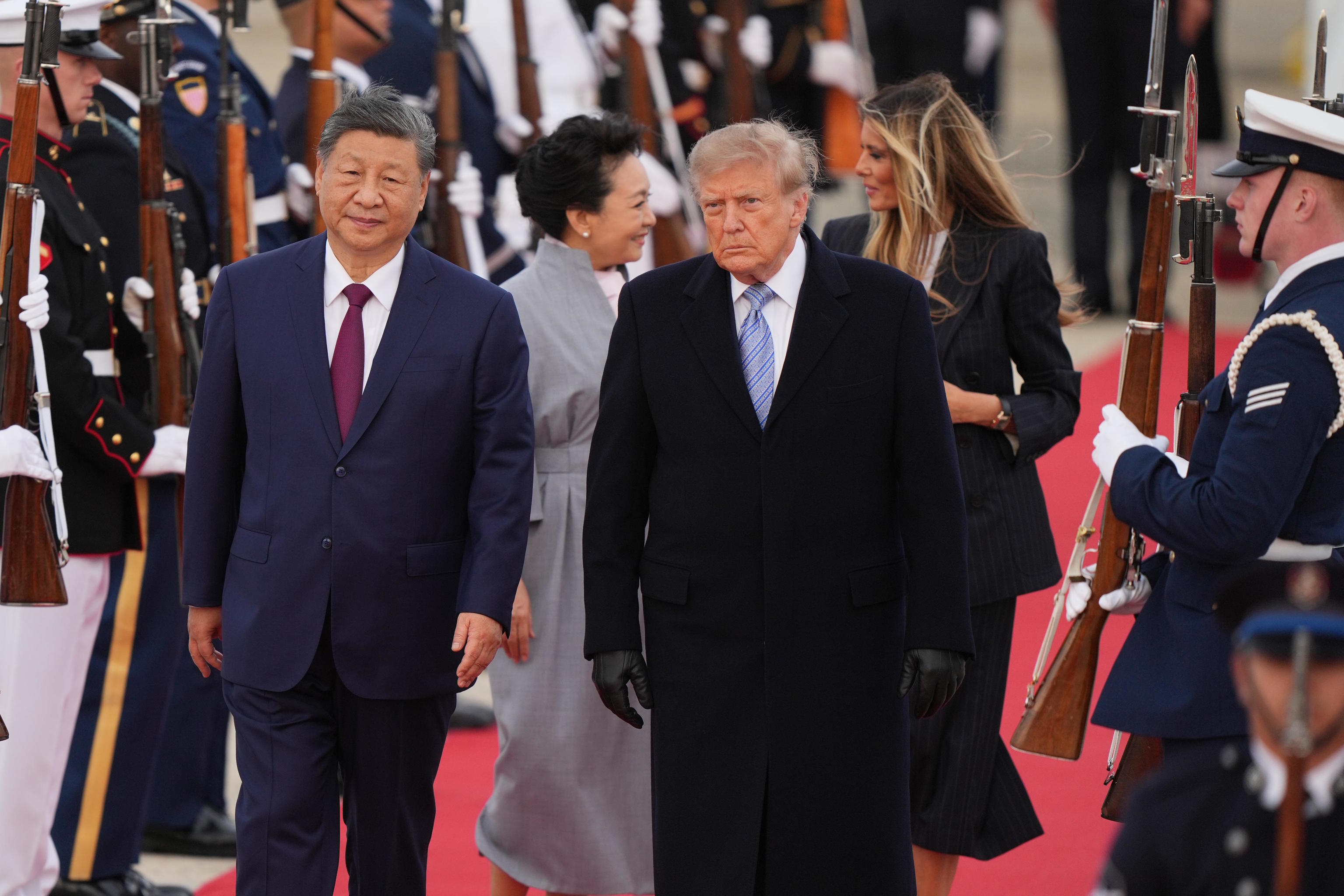
Forty-one years later, the journey led on Wednesday to another scene that would have been hard to imagine back then. Xi's plane landed at Joint Base Andrews, outside Washington, and Donald Trump went to greet him at the foot of the stairs. Melania Trump was also there to welcome the Chinese first lady, Peng Liyuan.
The two couples greeted each other on a red carpet laid out on the tarmac; a military band played, salutes were fired, and a B-1 bomber flew over the ceremony. The roar made Trump grimace. Xi remained impassive.
A US president usually receives guests at the White House, not at the airport. In fact, Xi did not go to the tarmac when Trump traveled to Beijing in May. The difference in protocol is deliberate. Trump reserved an attention for the leader of his main rival that he rarely grants to the rulers of allied countries. This Thursday, he will add a State ceremony, a military review, and a dinner with major US tech entrepreneurs.
"President Trump is a master of the art of spectacle," wrote Graham Allison, former dean of the Kennedy School of Government at Harvard University, on social media, who opined that the warm welcome demonstrated the "unprecedented respect" of the US president for the Chinese leader.
The majority of international analysts argue that Xi arrived at his first State visit to Washington in 11 years with more leeway than Trump would have wanted to grant him. China retains a decisive lever in critical minerals; the US maintains its own in advanced semiconductors and the equipment needed to produce them. Trump needs to show results before the November legislative elections and governs under the pressure of a war with Iran that has raised energy costs.
Beijing is also not experiencing its best internal moment: household consumption remains weak, and the real estate crisis weighs on its economy. Although Xi, supported by the political stability of his regime, can afford a longer negotiation.
The focus these days is on artificial intelligence. It is not just about which country will develop the most powerful models or sell more chips. Both governments also consider the risk of cyberattacks, failures of advanced systems, and incidents with consequences for national security. In preparatory talks last Sunday, Bessent proposed to his Chinese counterpart, He Lifeng, a mechanism to alert each other when an AI-related incident reaches that level of severity.
Washington seems to want to discuss with Beijing the dangers of a technology whose strategic advantage it intends to preserve. But Chinese state media point to the distrust that dialogue will serve to limit its development while the US maintains controls over the most sophisticated chips. The teams of both countries already discussed in May opening consultations on AI and never formalized them. A communication channel would be a step forward; an agreement capable of stopping the competition seems much less likely.
Also on the summit table are Chinese purchases of US agricultural goods and aircraft, and fentanyl precursors. Trump aims to end with announcements that he can present as trade victories. Xi seeks for Washington to reduce restrictions without giving up the pressure that has allowed him to get this far.
Taiwan, as on other occasions, is the most delicate conversation. Beijing claims the island and closely monitors US arms sales. Its leaders hope to obtain from Trump a more favorable language towards their positions. However, any significant change would alarm US allies in Asia. The Iran war adds another friction: Washington looks to the largest buyer of Iranian oil for help in containing Tehran, while Beijing shows no signs of wanting to meet US demands.
On Thursday, much attention is focused on the State dinner. Among the guests, leaders of companies such as Apple, Nvidia, and OpenAI are expected, a demonstration of how much the technological dispute has become central to the relationship. The Chinese president, on the other hand, arrived without the delegation of major Chinese entrepreneurs that had been considered for the trip.
No one expects Trump and Xi to leave Washington announcing the end of the rivalry between the two superpowers. The most realistic goal is to prevent a new round of tariffs, a military incident, or an AI crisis from pushing them to the brink of rupture again.