The so-called "city war" in which Russia and Ukraine are embroiled continued its escalation on Wednesday with a spectacular onslaught of drones from the first country against Kiev, after Moscow suffered one of the most significant aerial assaults since 2022 last Sunday.
The Russian Ministry of Defense had already threatened hours after the Ukrainian attack to "intensify" its aerial harassment against Kiev, which has been hit almost daily by UAVs and rockets from its antagonist for weeks.
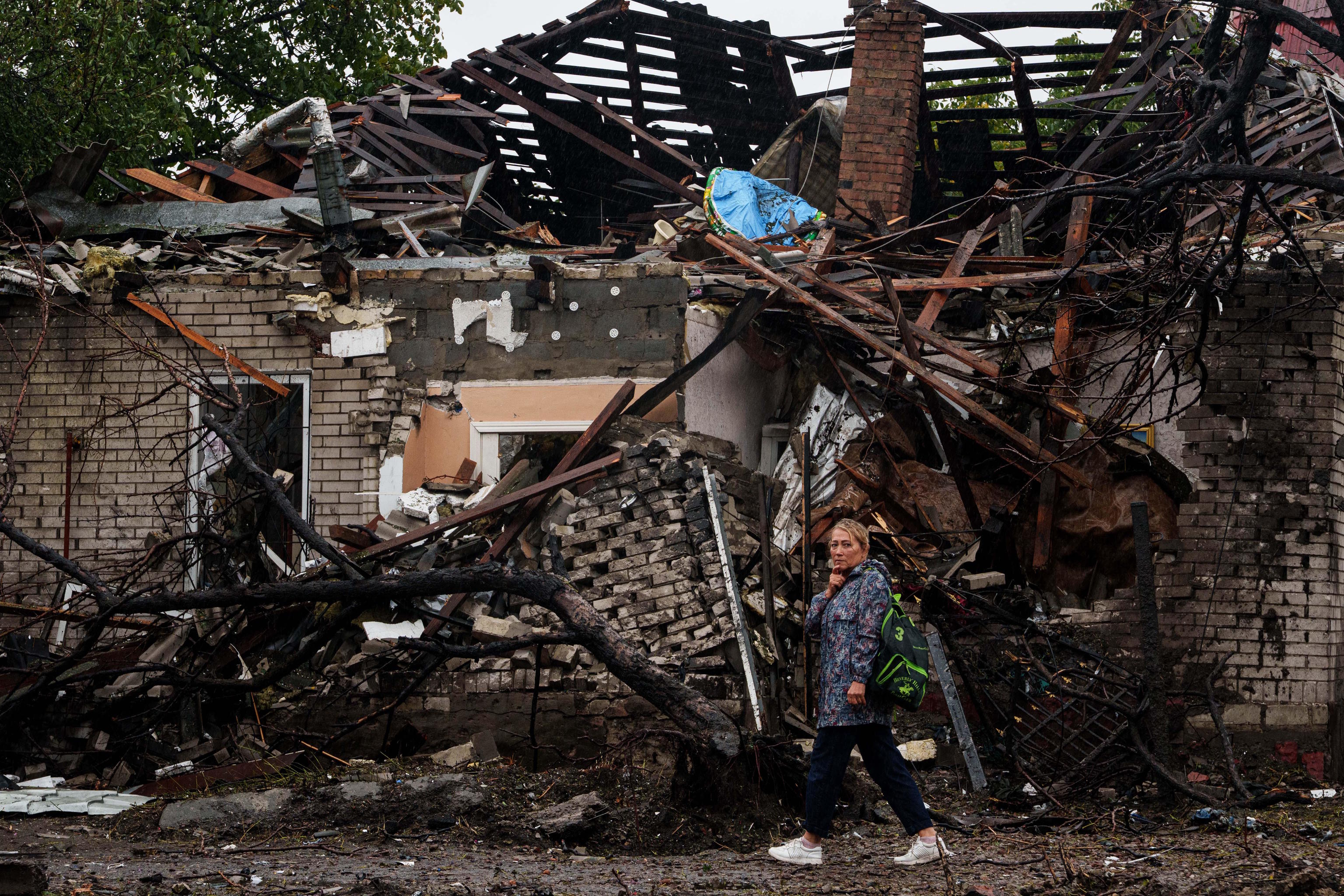
The same images of huge columns of smoke rising to the sky from the main Russian city - an event in which the mayor of that metropolis, Sergei Sobyanin, said that hundreds of drones had participated - were replicated today in Kiev, where jet UAVs targeted gas stations, shopping complexes, and the most central streets of the city.
The Russian aircraft also damaged a pharmaceutical company, warehouses, and a data center, something that could imply restrictions on internet services, as warned by the affected company.
The Mayor of Kiev,Vitalil Klitschko, stated in the afternoon that at that time at least two people had been killed and several dozen injured.
Videos recorded by passersby show how the unmanned aircraft and Russian rockets generated huge fireballs in the urban core districts, causing panic among pedestrians. One of the recordings, made near a capital university, clearly shows a missile streaking through the sky to impact a few hundred meters from the educational institution.
Another building hit was the headquarters of the Diprosvyaz Institute, a center dedicated to communication research. A video of the site after the attack by a "Geranium-5" - the feared UAVs with reactors whose speed exceeds the capabilities of most local air defense systems - shows the devastated facade and several rooms being consumed by flames.
The initial air assaults focused around Kiev's most important train station. The railway company asked the thousands of passengers who pass through there daily not to approach the facilities. "It is dangerous to even be near the train tracks", warned the company's director, Oleksandr Pertsovsky, on social media.
"The enemy has massively attacked Kiev. The capital's railway stations have not been damaged yet. Right now, the capital is paralyzed. We ask passengers to stay in shelters. If they cannot reach their train due to air alarms, we will change their ticket," the company added in another statement issued at noon.
One of the impacts caused a large fire in the well-known Railway Market, built in 1973 and an example of the metropolis' modernist architecture. Several buildings and businesses in the vicinity also suffered explosions.
Ukrainian President, Volodimir Zelenski, referred to this violent onslaught on his Telegram channel and explained that the adversary country used "a large number of drones, many of them jet-powered."
"Russia continues to attack civilian infrastructure: pharmacies, gas stations, railways, communications, and shopping centers. Attacks were also recorded against cities and communities in eight regions," he specified before once again calling for more sanctions against Moscow and its allies.
The Russian aerial offensive comes after Kiev launched up to 1,000 drones against the neighboring country's territory over the weekend, coinciding with the parliamentary elections held by that nation, which predictably saw President Vladimir Putin's party win by a wide margin, as the regime had eliminated many of the most prominent opponents.
The Russian Ministry of Defense announced on Sunday that its forces had shot down a total of 1,110 Ukrainian drones in its territory, as well as over the annexed Crimean peninsula and the Black Sea waters.
Moscow's municipal leader, Sobyanin, acknowledged that the city had faced an "unprecedented attack." Russia's initial response focused on the Ukrainian towns of Zaporiya and Dnipro on Monday - where it caused several deaths - before continuing throughout the night from Tuesday to Wednesday in the capital, Kiev.
A well-known Ukrainian expert, Anatoliy Khrapchinsky, admitted that the Russians are "learning to bypass Ukraine's air defenses" by taking advantage of this country's shortage of rockets to intercept ballistic missiles and suitable means to counteract the action of the latest generation Geraniums, whose speed can only be countered by the meager local fighter aircraft fleet or projectiles with exorbitant costs.