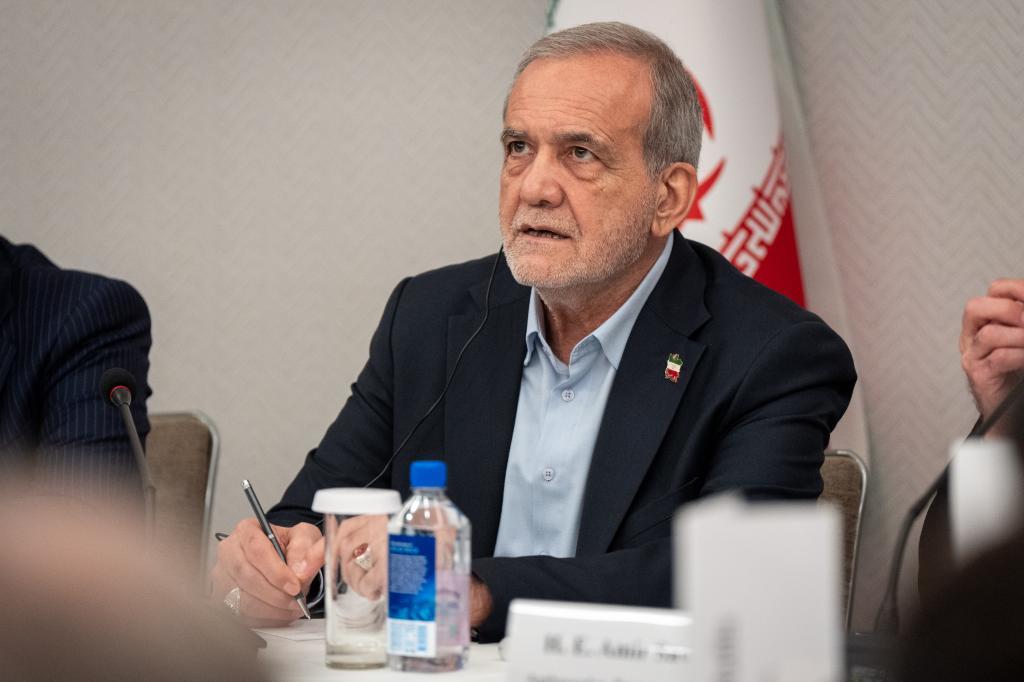
Pezeshkian stated that Iran has been a victim of terrorism and made it clear that Tehran will not kneel or yield to Washington's pressure. As the US representative left the room during his speech, the Iranian leader displayed a photo of the late Supreme Leader Ayatollah Ali Khamenei, whom he claimed was assassinated by Washington without legal basis. Pezeshkian also showed images of children affected by bombings on schools and denounced the US attack on a sports center in Lamerd where minors were playing. He emphasized that Iran has only defended itself and not targeted civilians, stating firmly: "We have only defended ourselves. We are not terrorists."
Geopolitically and economically, the Iranian President warned that his government will not allow the Strait of Hormuz to be used for aggression against Iran. In response to attacks on February 28, Tehran blocked this key maritime passage for international oil trade, causing financial market turmoil and widespread inflation due to rising oil prices. This situation poses a significant threat to Trump's Republican Party in the upcoming midterm elections in November, where control of the US Congress is at stake. Pezeshkian defended the strait's closure, stating: "We cannot allow some to have free access and pursue their interests through that navigation route while using it to impose aggression on us."
Pezeshkian challenged the Western narrative blaming Iran for regional chaos, asking delegates: "Are we the source of instability?" He criticized powerful countries for supporting destruction and argued that "Iran must be strong to prevent its future from being threatened." He also highlighted the situation in Palestine as "an open wound," specifically mentioning the crisis in Gaza. After pointing out that "Nuclear weapons are in Israel's hands" despite ongoing international inspections in Iran, Pezeshkian stated that they are not afraid of a defensive war and pledged to "continue the resistance" to ensure the Iranian people's security.