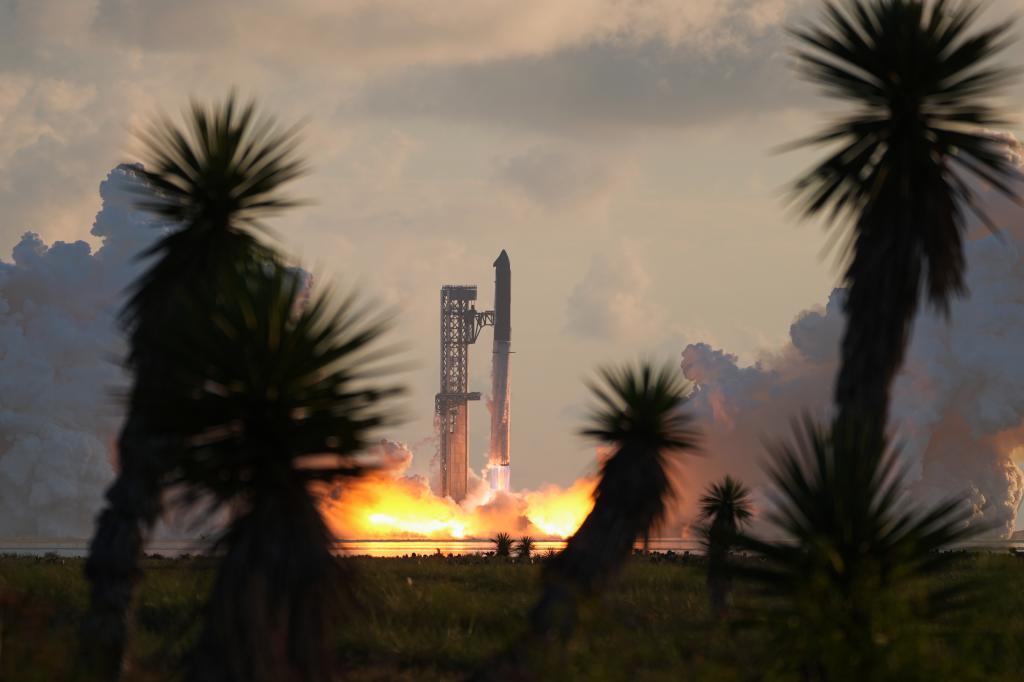
NASA's mission to return to the Moon is now a step closer: SpaceX's Starship Megarocket, owned by Elon Musk, has finally reached Earth's orbit, positioning itself about 300 kilometers away from Earth. This achievement is a significant milestone for the most powerful spacecraft developed, alongside NASA's Space Launch System (SLS), making it operational for transporting payloads into space.
This milestone was achieved during the fourteenth test, conducted on Monday from SpaceX's Starbase complex launch pad in Texas, located near the Gulf of Mexico.
The start of the 14th test was filled with excitement. During the live official broadcast, SpaceX spokesperson Dan Huot initially stated that Starship would not reach orbit due to an engine shutdown earlier than expected. However, minutes later, after receiving an update from engineers confirming that the spacecraft could still attempt a crucial ignition to successfully propel itself into orbital space, he corrected his statement.
The objective is for the spacecraft to complete six Earth orbits during which it must deploy the first operational batch of Starlink satellites, making it by far the most ambitious and longest Starship mission to date, expected to last 10 hours. At 15:54 (Spanish peninsular time), the company confirmed the successful deployment of the satellites and established communication with all 26 devices.
The spacecraft measures over 120 meters in total height and consists of two parts or stages - the reusable SuperHeavy booster, which returns to Earth in a controlled manner, and the Starship capsule. Elon Musk plans to use it for missions to the Moon and Mars. NASA selected SpaceX to develop a version of the Starship capsule to transport astronauts to the lunar surface as part of the Artemis 4 mission, scheduled for 2028.
Prior to that, in 2027, Artemis 3 is planned, a test mission where the Orion spacecraft will orbit Earth practicing docking with SpaceX's spacecraft and another being developed by Blue Origin, Jeff Bezos' company.
Both vehicles are in a race against time to have their spacecraft ready for Artemis 3. Achieving Earth's orbit was a crucial step in that direction.
Once it completes the six orbits, the spacecraft is expected to splash down in the Pacific Ocean, west of Chile.
In his initial forecasts, Elon Musk predicted this milestone would be reached in 2022, followed by operational satellite deployment in 2023. However, it was not until April 20, 2023, that the first test flight of the vehicle was conducted. The previous 13 test flights were limited to suborbital space. An estimated $15 billion has been invested in this program. Despite the delays, Musk remains committed to launching hundreds or thousands of Starships annually in the future.