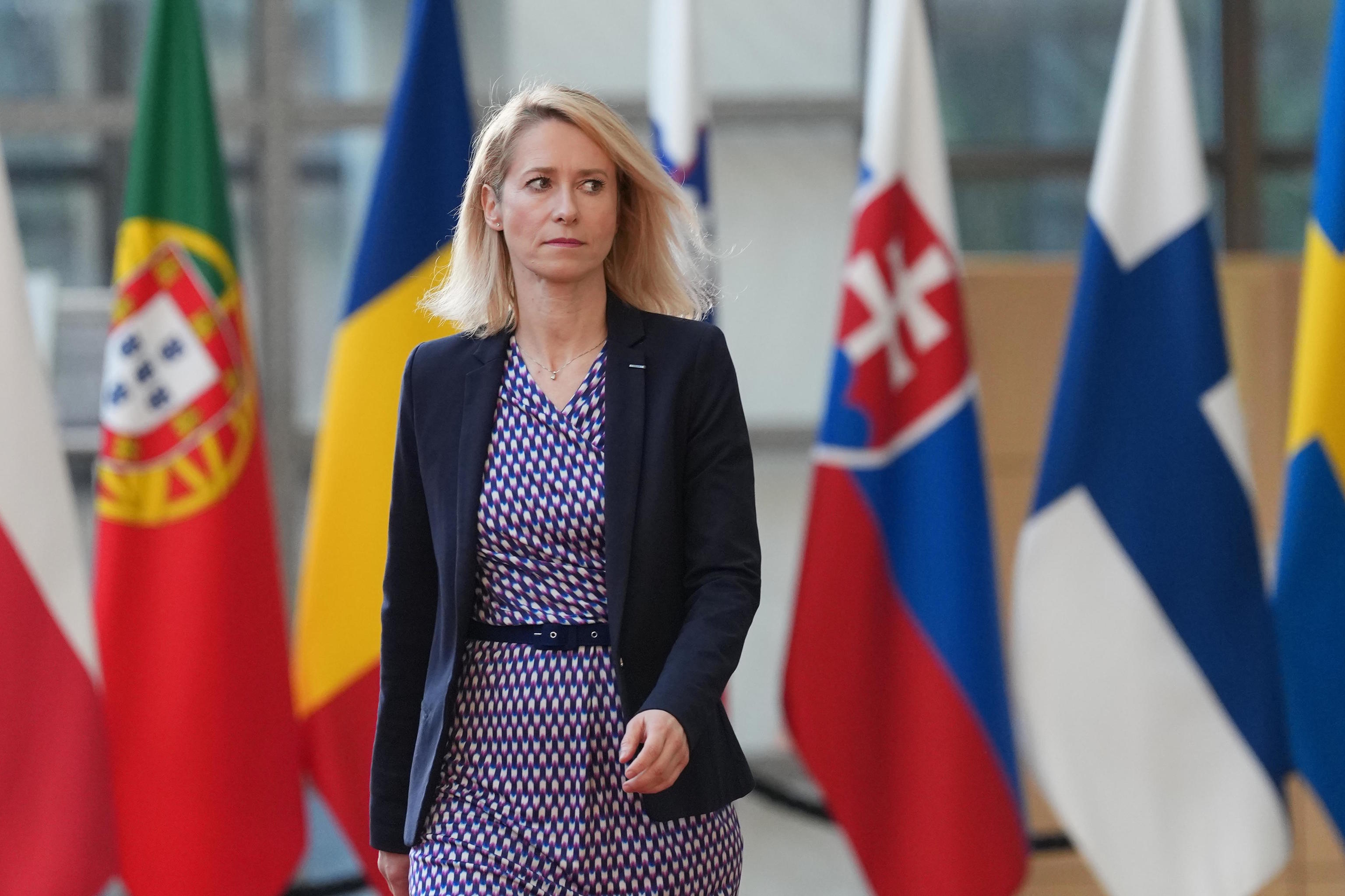
The EU's foreign policy chief warns that Russia is preparing more attacks against Europe. Intelligence reports confirm this. This comes just days after EL MUNDO reported that the CIA warned that Vladimir Putin's regime is capable of attacking Spain, France, or Italy from ships and through drones.
"But we must be vigilant because, according to Intelligence data, Russia is planning more acts of sabotage and attacks against our democracy to divide our society and intimidate us so that we do not help Ukraine," said the EU High Representative for Foreign Affairs, Kaja Kallas, before participating in the Defense Ministers meeting held in Brussels yesterday.
The Russian threat has grown in recent weeks. It is undeniable. Based on reports from US and European Intelligence services and also by recent events. For example, with the attempted drone attack on Leipzig airport for which German authorities blamed Russia.
Last week, officials from these two countries met within the framework of the UN General Assembly in New York. The German Foreign Minister, Johann Wadephul, asked his Russian counterpart, Sergey Lavrov, to abandon "the dangerous escalation" against Europe. Lavrov not only ignored the German's request but in a speech shortly after, attacked Berlin: "Chancellor Merz claims that Germany must once again become a leading military power in Europe. Do you understand where this can lead? Have they not learned the lessons of World War II?," he stated.
This shows that "Russia is really not interested in peace at all," Kallas summarized in reference to that meeting. After the ministers' meeting in the EU capital, the EU's foreign policy chief explained that she presented a "Emergency Protocol" to the capitals to address Russia's hybrid threats and attacks.
This measure is what the President of the European Commission, Ursula von der Leyen, presented a few weeks ago during her State of the Union address. It would be a sort of Article 5 of the Washington Treaty for NATO, which states that all members will respond to an attack as if they had suffered it themselves, and at the same time, a variant of Article 42.7 of the EU Treaties.
"A mechanism that provides a coordination framework to respond to attacks in the gray zone," complementary to the aforementioned figures, and that would provide the EU with "a stronger response to Russia's hybrid attacks," as explained by Kallas.
In Brussels, there are still many doubts about how this measure would be implemented and if it would not end up overlapping with existing tools or even generating more confusion. But the "Commission President presented the Emergency Protocol in her State of the Union address, and now we have to work with it," noted the High Representative, who also explained that yesterday's discussion was "a very preliminary one".
Apart from the Russian threat, the EU's foreign policy chief called for strengthening the naval mission in the Red Sea with more resources. "The advances of the Houthis have increased the risk to maritime routes, and the Aspides operation helps keep their vital waterway open. But we need to increase its number to make it more effective, if we assign a task to a mission, we must provide the means," Kallas stated.
Spain responded almost immediately to this request. The Defense Minister, Margarita Robles, stated that the country "will not in any case" send more ships to that mission. "We have already said it clearly, we respect Operation Aspides, we believe it is a very important operation, but Spain is committed to Operation Atalanta, which is also very important in the fight against piracy. Therefore, we will continue in Operation Atalanta," Robles affirmed.