A 3.09-carat rock, about the size of a kidney bean. It is one of the latest sizable raw diamonds found at Crater of Diamonds, an unusual natural space in the state of Arkansas, the southern state of the USA that saw the birth of former President Bill Clinton, poet Maya Angelou, and Sam Walton, the creator of the retail giant Walmart. It was a woman from Pennsylvania who discovered the small stone in the mud last May. Of course, she thought it was a common rock. Just in case, she kept it and continued digging. It was later, at the park's identification table, where she received the good news: the kidney bean was actually a white diamond. A stroke of luck? Certainly, but in this curious place, it is much more common than one might suppose.
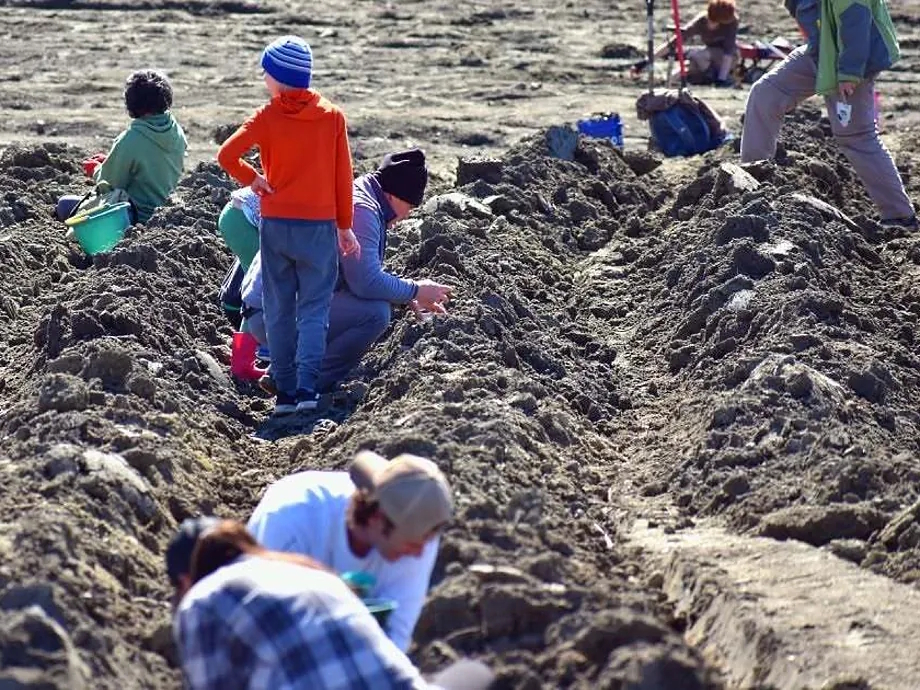
Crater of Diamonds can boast of two extraordinary things. Firstly, it is the only place in the world where anyone who visits can freely search for raw diamonds. According to official records, visitors have found "more than 37,377 diamonds since it became a state park in 1972" ("75,000 since the deposit was discovered in 1906"). The second rarity is that in this public mine, there is an unchanging and very popular rule: "finders, keepers." There is no trick. Park officials point out that visitors find about two diamonds a day.
Those over two carats are uncommon, it must be said. Most average around a quarter of a carat. But sometimes, one hits the jackpot. The 3.09-carat diamond found by the Pennsylvania woman, Keshia Smith, is the second largest found this year in the park, surpassed only by a 6.03-carat yellow diamond (pictured), according to the detailed archive kept by Crater of Diamonds on Facebook.
Not bad at all. The record, however, belongs to a rock discovered in 1924 known as Uncle Sam. Its weight? A whopping 40.23 carats. Today, it can be seen at the Smithsonian National Museum of Natural History in Washington DC. More discreet, but also with its role in the country's social history, is the so-called Kahn Canary, a 4.25-carat diamond, also found here in 1977. Former First Lady Hillary Clinton wore it in a magnificent ring at both of Bill Clinton's presidential inauguration ceremonies as a symbol of Arkansas. And not for its size, but for its story, the experience of a New Yorker who visited the park last summer ended up in the American media. Micherre Fox, 31, spent three weeks digging at Crater of Diamonds hoping to find a diamond for her engagement ring. She returned home with a brilliant 2.3-carat diamond.
Crater of Diamonds hides many more gems besides diamonds. Geologists explain that a violent volcanic eruption approximately 100 million years ago scattered the surface with minerals. The crater area covers about 15 hectares and is where visitors roam because that's where minerals and semiprecious stones abound. There is also the Center where park staff offer free services for identifying rocks and minerals found on-site, as well as diamond hunting demonstrations and other family programs.
There is the legend of John Diamond, the first and most famous diamond seeker in the crater. This farmer found two brilliant diamonds in 1906 that put this unknown place in Arkansas on the map. In fact, the discovery caused curious crowds to flock in feverishly at the prospect of getting rich. Today, about 120,000 people visit the park each year right on the grounds of John Diamond's former farm. If a diamond is found every two days as they say, many will return home happy, so perhaps one should seek fortune in Arkansas... Sam Walton, certainly, found it.