The threat from Russia to "use all the arsenal of forces and capabilities at its disposal, including nuclear weapons" against NATO has stirred deep fears in Europe and caused a real upheaval. The reason given is an alleged attempt by several allies to isolate the Russian enclave of Kaliningrad, and the North Atlantic Treaty Organization itself has acknowledged the warning by responding with a firm tone while trying to maintain "calm."
"I can confirm that Russia sent a non-paper [a letter] to NATO and that we have sent a response, in which we point out that NATO is a defensive Alliance and that none of our activities or exercises pose a risk to any part of Russia. We strongly condemn the threat of the use of force, including any irresponsible nuclear rhetoric. We urge Russia to end its unprovoked war in Ukraine," a spokesperson for the Organization stated when asked about the Russian threat.
"Russia's use of hybrid tactics is a sign of desperation. But it will not deter us from continuing to support Ukraine. We have the necessary means to defend every inch of allied territory and we remain strong, prepared, and capable of facing any threat," he added. Two very relevant paragraphs, in which there are several points that diplomatic sources analyze in conversation with EL MUNDO and that help to understand the true magnitude of the threat.
To begin with, the fact that it is a non-paper means that the threat is not signed. Not by the president, Vladimir Putin, nor by the Foreign Minister, Sergey Lavrov, nor by any other official of the Russian regime. "It is almost as if it were anonymous," explain diplomatic sources, indicating that it is not directed at anyone in particular, which is why NATO responds in kind.
"It is obvious that it is an attempt at propaganda, to convey that NATO is aggressive. It is also a message to the public opinion of the allies. They want to intimidate that public opinion, in Germany, in France... To the citizens of countries where elections are taking place or are being held and where there is a debate about what to do with Ukraine. About whether the country should continue to be supported or not," they add.
The clearest case is that of the AfD in Germany, a far-right force that is gaining very high levels of support in regional elections and clearly advocates withdrawing German support for the Ukrainian country. Marine Le Pen, on the other hand, has not been as categorical on this issue and has clearly distanced herself from Putin, but at the same time has advocated for reducing financial aid to Ukraine due to the complicated situation of French finances.
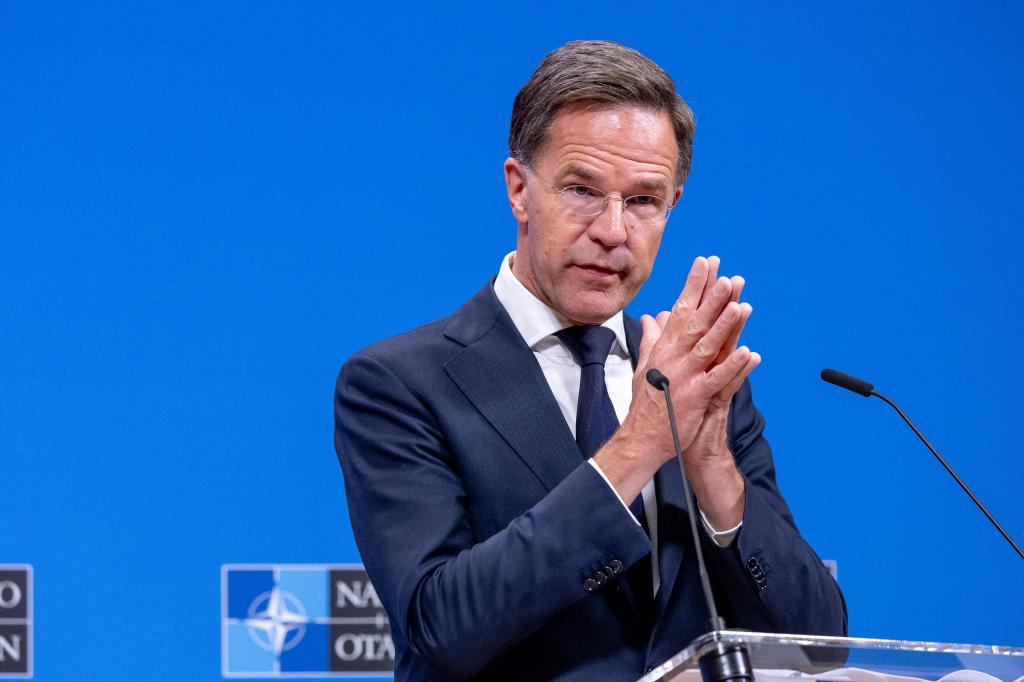
All of this seems to fit perfectly with the fact that NATO wanted to include a reference to Ukraine in its response when Russia's threat did not mention the country, and also that the Secretary-General of the Organization, Mark Rutte, emphasized this yesterday afternoon in Brussels during an event with Euronews. "We are a defensive Alliance, nuclear threats must cease. They are absolutely unjustified and do not help at all. We urge the Russian Federation to end its large-scale and unprovoked invasion of Ukraine. We urge the Russian Federation to refrain from adopting increasingly reckless behavior towards the allies and to end its irresponsible nuclear rhetoric," defended the former Prime Minister of the Netherlands, who made an effort to convey the need to maintain "calm."
"We take it very seriously, of course, and it is rhetoric that leads to escalation. No one is at all happy with this situation and they have been very irresponsible in issuing the threat. But we remain calm," insist diplomatic sources. "And Russia should not play with NATO, because NATO has the weapons and the ability to do more harm to Russia than Russia can do to NATO," they add.
Returning to that enclave on the shores of the Baltic Sea, Russia's threat would have been triggered by the alleged exercises that different countries of the Alliance would have carried out near Kaliningrad, as well as alleged intelligence and reconnaissance flights. It is a heavily militarized area, sandwiched between Lithuania and Poland and of great naval importance to the Russian regime. And those possible allied movements would have triggered Putin's nervousness.
"NATO is preparing an air and sea blockade of Kaliningrad. This is not a hoax, but a matter of great concern for Russia. The European political elite, irresponsible and short-sighted, is playing a dangerous game," Russian diplomatic sources emphasized in statements to the TASS agency reported by EFE. Although it could also be the excuse found by the Russian regime to initiate this process of intimidating European public opinion.