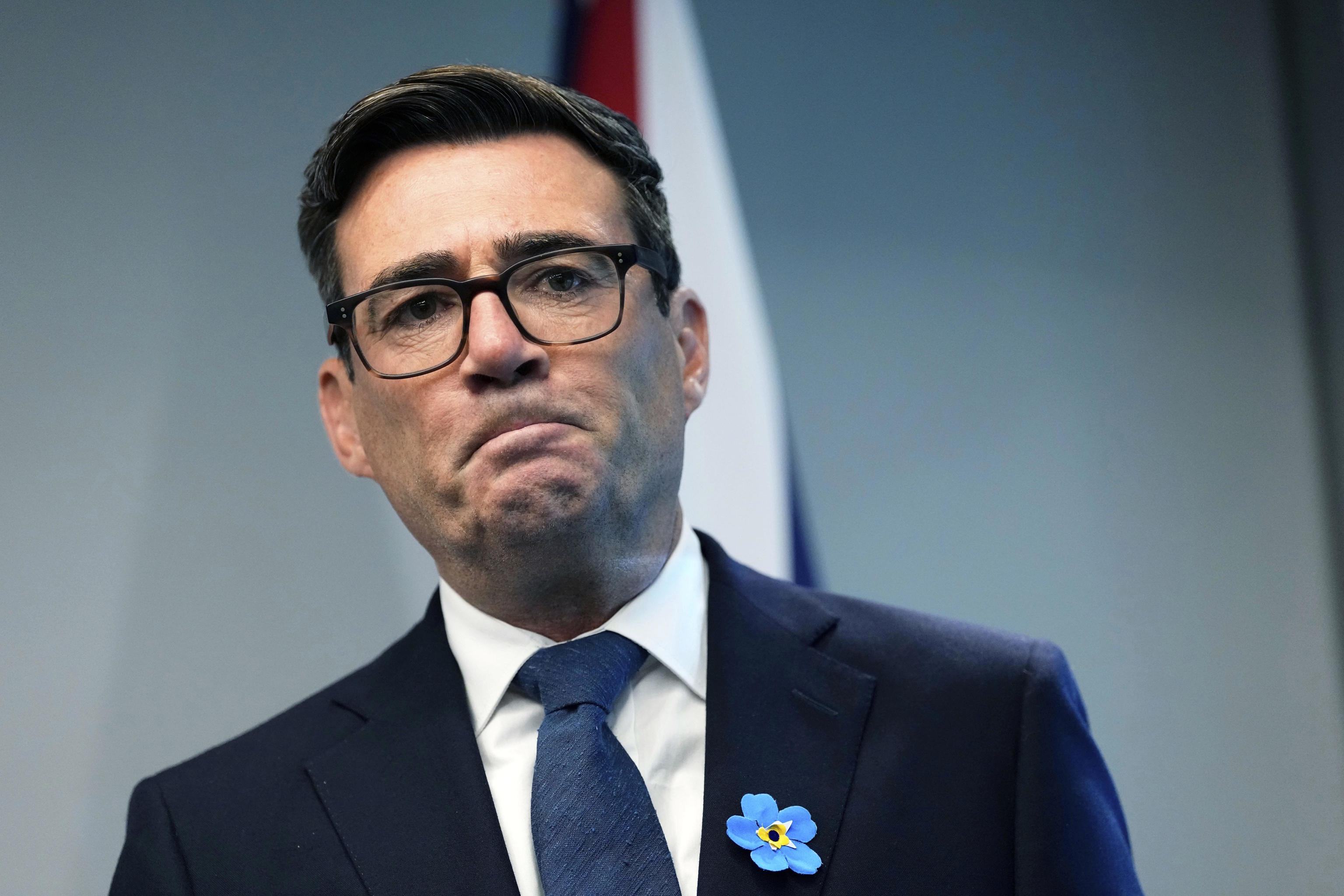
"A trade unionist, an environmentalist, and a businessman walk into a pub together, and the bartender says, 'How are you, Andy?'". That was one of the jokes at the Labour Party's annual conference that ended on Wednesday in Liverpool. "Andy" is Andy Burnham, the Prime Minister and Labour leader. Since leading the Government, Burnham has shown a chameleon-like nature, switching from 'red' to 'green' to 'blue' in a fraction of a second.
Perhaps that is one of the reasons why, in two and a half months, Labour has gone from almost reaching third place in the UK's voting intention. The feeling that they have chances of winning at the polls, after a series of electoral debacles with the previous Prime Minister, Keir Starmer, has brought hope back to the Labour Party. Added to this is a Prime Minister's programme as ambitious as it is vague.
The best example is Burnham's policy regarding the EU. In just four and a half months, he has gone from literally stating that the UK would not rejoin the bloc, to proposing the possibility of a new referendum. However, he has also clarified that this will only be considered after 2030, without ruling out other options, including everything remaining "exactly as it is now".
Furthermore, Burnham has not made clear what those options are. But one thing is clear: none of them - except for leaving things as they are - should be implemented in this term. The reason is that the Manifesto - which is more or less the electoral programme - with which his party won the 2024 elections explicitly states that "with Labour, the UK will remain outside the EU", and even goes as far as making it clear that there will not even be a "return to the single market, the customs union, or freedom of movement". Openly breaking with the Manifesto is a serious matter in the British Isles, where the idea of Madrid Mayor Enrique Tierno Galván that "electoral promises are made to be broken" is not well received.
Despite these constraints, London's options to approach Brussels are essentially four, from less to more union. The simplest would be joining the customs union, which would imply zero tariffs between the UK and the EU, but only for goods trade and also requiring London to adopt the EU's tariffs with third countries. Several European countries, such as San Marino and Andorra, and, paradoxically, three British territories, one of them being Gibraltar, operate under this system.
This relationship would benefit exporters, who have suffered greatly from losing free access to the EU market. A study by the London School of Economics suggests that goods exports to the EU fell by 13.2% after leaving the single market.
A more advanced step would be joining the single market. The difference from the customs union is that in this case, services are included, the UK accepts EU rules and regulations on what it exports, and there is also freedom of movement of capital - crucial for the City, London's financial center - and people, meaning EU citizens can work and live across the English Channel and vice versa.
For example, in the single market, the UK can manufacture a kitchen like those made in Telford and export it to Spain. If that kitchen meets the EU's technical requirements, it will enter without issues. But if its stoves do not have everything Brussels demands, it will not pass customs.
This is politically complex for three reasons. Firstly, because it opens the door for isolationists to claim that Brussels is imposing its criteria on the sacred principles of British sovereignty (in this case, regarding stoves).
Secondly, because it would leave the UK as a mere 'rule-taker' in regulations it has had no say in creating. In other words, it would be like, in terms of regulatory commerce, being in the EU but without any say in EU matters. And finally, the possibility of EU citizens returning to work in the UK could, at least initially, reignite the deepest Brexit sentiments.
London could also propose the Norwegian option. That is, being in the single market but not in the customs union, maintaining independence in trade policy. This would allow, for example, preserving its trade agreements with the US and India while still having access to the EU market. If the UK adopted this model, the kitchen manufactured in Telford according to single market standards could be sold in Spain without issues, but it would need to prove its British origin at customs and not Indian or American.
The third option is an "associated member" agreement with the EU, similar to what the President of the European Commission, Ursula von der Leyen, proposed to Canada last month. This is what Burnham would prefer. However, there is a small problem: as of today, "associated member" does not exist as an institutional category in the EU. Brussels can sign - and does sign - association agreements with third countries, but politically inventing and legally negotiating what this new status entails would be necessary.
The fourth option would simply be to join the EU. This would not be easy either, as the accession negotiations would be very tough, and above all, the Twenty-Seven would demand guarantees from London that, if it joins, it is to stay, which would further intensify the sovereignty debate in the UK.