A black Nissan parked near a house on the outskirts of Seattle. Inside, a real estate agent and a companion. Outside, an engineer returning home with his wife and son. The scene, reconstructed by the FBI, appears to be routine surveillance until the man they were recording is identified: Lai.
His father is the President of Taiwan. According to the U.S. investigation, the images of that family ended up in the hands of Chinese officials.
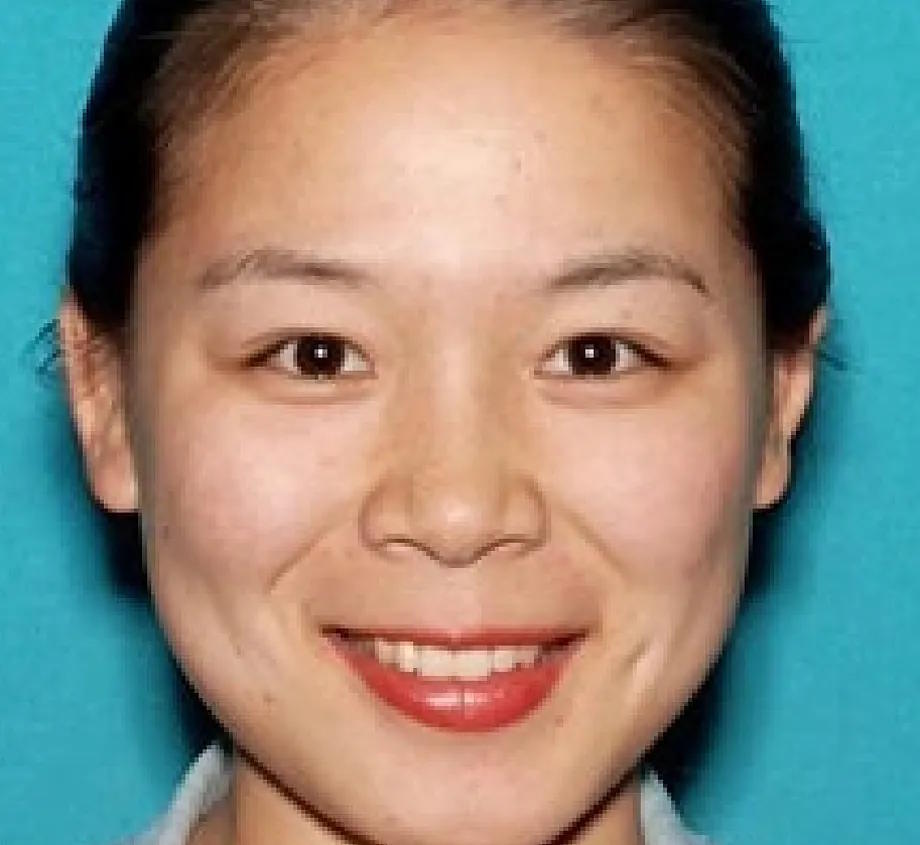
Zhang Wanying, known as Heather, 34 years old and residing in Irvine, in Orange County, California, was arrested on Sunday at Los Angeles International Airport as she was about to board a flight to Shanghai. She is formally charged with "acting as an agent of a foreign government without the required notification to U.S. authorities." The accusation points to an operation against the inner circle of Taiwanese leader Lai Ching-te, whom Beijing considers a separatist.
The main target was his son, Lai Ting-yu. This engineer works for Philips and lives near Seattle with his wife and young son, born in the United States. The complaint initially identified the subject under surveillance as a relative of a senior Taiwanese official. The FBI confirmed a few hours ago that the operation targeted the President's son and his family.
The surveillance allegedly took place on September 1, 2025. Zhang and a man identified only as "Individual 1" flew from Las Vegas to Seattle, rented a black Nissan Rogue, and drove to the residence. A neighbor's security camera captured them when, according to investigators, they appeared to be recording the engineer, his wife, and child's arrival. CBS compared the images with a property owned by Lai's son.
"I saw him. A young man. That young man," Zhang allegedly wrote to her Chinese contact. She then added: "I am recording on video", and sent two license plates. The WeChat messages, the Chinese equivalent of WhatsApp, are a central piece of the accusation. The FBI claims to have obtained them through a judicial order to search her iCloud account, showing contacts with at least two individuals whom Zhang seemed to recognize as officials of the People's Republic.
The assignment had been prepared months earlier, according to the sworn statement of FBI agent Kevin Holt. In June 2025, a former classmate from the Beijing University of International Relations reportedly introduced Zhang to a Chinese official. Holt links that institution to the Ministry of State Security, the Chinese civilian intelligence service. During that trip, the agent booked a private room in Changsha, where she allegedly received the mission.
"I can take care of this," she reportedly wrote later, according to the complaint. On August 26, she notified that work in Los Angeles would keep her busy that week and that she would likely travel to Seattle the following week. Her interlocutor responded thanking her for the effort.
Why would Beijing want those images? Holt poses a hypothesis: knowing the location of the President's relatives, their residences, and vehicles could provide China with leverage during a potential conflict.
The complaint does not establish a plan for kidnapping or aggression. It describes the collection of information that, in the investigator's opinion, could be used against a political leader through their family.
Taiwanese authorities described the episode on Monday as "transnational repression" and thanked Washington for protecting their citizens. Zhang is scheduled for her first court appearance on Monday in Los Angeles.
The shadow of Chinese espionage has reached the doors of power in Taipei on several occasions. In March 2025, a court sentenced four military personnel for selling secrets to China; three had served in the unit responsible for protecting the presidential building. They received sentences of up to seven years. According to the prosecution, they photographed classified documents and were paid for their sensitivity and for capturing colleagues.
Another investigation penetrated the Democratic Progressive Party, Lai's ruling party. Former employee Huang Chu-jung was sentenced last July to 10 years for developing a network for China aimed at obtaining classified information, including details of the then vice president's travels. It was a separate case from the leaking of secrets for which his sentence had been reduced to six years in June. In that proceeding, two other defendants had their sentences reduced, and a fourth was acquitted.
According to the latest available data, the Taiwanese National Security Bureau prosecuted 64 individuals for alleged Chinese espionage in 2024, compared to 48 in 2023 and 10 in 2022. Their report describes recruitment through debts, money, personal relationships, and front companies, with active and retired military personnel among the main targets. Taipei maintains that these networks aim to both steal secrets and prepare actions that would facilitate a potential Chinese offensive.
Beijing claims the island, governed autonomously, and keeps the option open to take it by force. Pressure can also advance far beyond the ships and aircraft surrounding it. The U.S. investigation now points to a front that crosses the Pacific and reaches a family home. In the FBI file, the strategic data is a license plate; the potential leverage, the President's son.