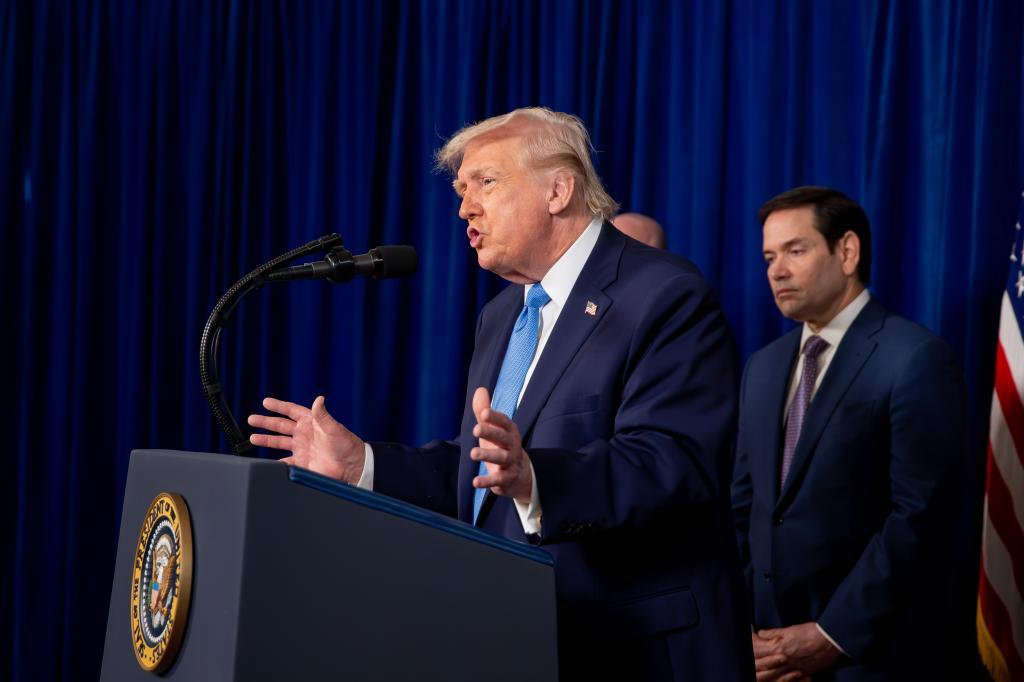
Unlike the usual actions against cartels or traditional criminals, these actions are directly targeting active judges and prosecutors. The initiative is part of the declaration by the leaders of the Shield of the Americas organization issued after meeting with Donald Trump in New York during the UN General Assembly, where they agreed to "coordinate sanctions, designations, and financial actions against terrorists and criminals who undermine security, the rule of law, and democracy."
In this new round of visa revocations led by the department headed by Marco Rubio, officials from Colombia, Ecuador, Peru, and notably from Bolivia have been affected. Among the figures subject to sanctions, the Bolivian Attorney General, Roger Mariaca, stands out, sanctioned "for his involvement in large-scale corruption cases." According to the official U.S. communication, Mariaca requested and accepted bribes to facilitate drug trafficking during his tenure as head of the Prosecutor's Office. The U.S. government's statement emphasizes that "President Trump's and Secretary Rubio's message is clear: corrupt officials —and the criminals they protect— are not welcome in the United States."
Less than 48 hours after the sanction announcement, Roger Mariaca was arrested at Viru Viru airport in Santa Cruz and handed over to the U.S. anti-drug agency, the DEA. The prosecutor strongly rejected the accusations, labeling the visa revocation as an act of "interference" and "political pressure" due to his investigations. Among the cases being investigated by the Bolivian Prosecutor's Office was a file opened for attempted murder, money laundering, and illicit enrichment against Argentine political consultant Fernando Cerimedo, a partner of Spaniard Javier Negre and a figure linked to the conservative political movement.
Since the beginning of his term in January 2025, the Washington administration has deployed a diplomatic style based on warnings, economic sanctions, tariffs, and the threat of the use of force to secure its geopolitical and commercial objectives. In this context, Trump has made imposing tariff barriers the central pillar of his foreign policy and a mechanism to intervene in the judicial systems or electoral processes of third countries. Likewise, the president has announced commercial agreements and interventions on energy reserves in countries such as Venezuela, Denmark, or South Korea to strengthen his country's energy dominance.
This ongoing pressure strategy has drawn severe criticism from international relations analysts regarding its impact on the superpower's global position. Researcher Sara Yerkes from the Carnegie Endowment for International Peace warns that "Most indicators show that U.S. soft power has decreased since the beginning of Trump's second term. In the past, this has been threatened on numerous occasions and has always recovered, at least to a large extent. The uniqueness of this Administration, however, is that it is unintentionally and intentionally destroying traditional sources and instruments of U.S. soft power, causing damage that could take decades to repair."