For several weeks now, the capital of Ukraine has been experiencing intense and continuous Russian bombardments, causing alarms to sound for hours on end and bringing many activities to a complete halt. Previously, Moscow would prepare large-scale attacks with swarms of hundreds of drones to overwhelm defenses and penetrate Ukrainian cities. Now, drones arrive in smaller numbers throughout the day, and they are harder to shoot down.
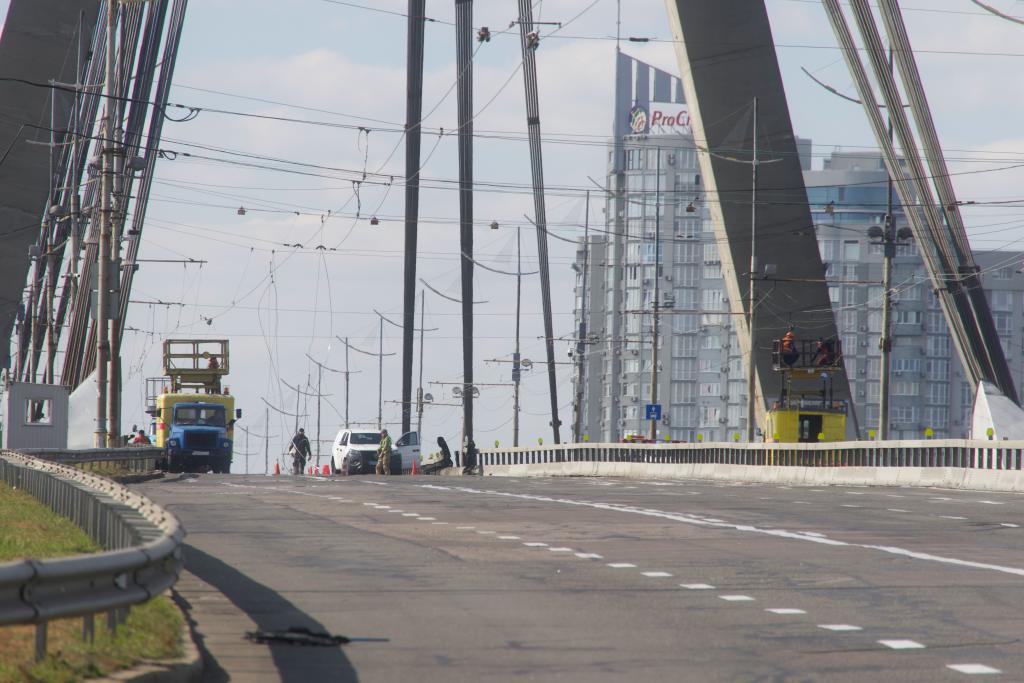
As a main strategy, Russia has attacked the bridges of Kiev over the Dnipro for four consecutive days, something that had not happened since the start of the large-scale invasion. This is an attempt to split the city in two, not by destroying these structures, which withstand drone impacts, but by instilling terror. If several drivers are burned alive in their vehicles every day, as has already happened, the route will become impassable, and Ukraine will have to seek alternatives like pontoons and barges, none of which are quick or efficient, as they too can be targeted. Many Kyiv residents work on the right bank but live on the left, and vice versa.
Traffic on both bridges is continuous. If the Kremlin succeeds in rendering the bridges unusable, Kiev will face an extremely challenging problem, similar to the situation with trains traversing the country or the food warehouses supplying the capital's supermarkets. Everything that helps Ukrainians resist is being bombed by Putin's Russia.
Between Thursday and Friday, jet drones targeted the South Bridge -Pivdennyi- five times, leading to its closure for traffic and the metro due to damages to a pillar, the roadway, and protective barriers. On Saturday and Sunday, the focus shifted to the North Bridge -the old Moscow Bridge-, where the attacks damaged the pavement and the trolleybus lines, leaving two injured, according to Mayor Vitali Klitschko. "The Russians have once again hit the North Bridge of Kiev with a drone," President Volodymyr Zelensky stated on Sunday.
The payloads of around 50 kilograms from these drones are not enough to bring down the structures, according to Ukrainian analysts, who believe the objective is to force closures, disrupt traffic in a city divided by the river, and wear down its inhabitants. With at least two of the eight bridges in the capital rendered unusable, Mayor Vitali Klitschko asserts that the campaign is "splitting Kiev in two."
The reality is that all these bombings are a result of the creation of two new technological terrors by Russia that Ukraine has not been able to counter yet. One of them is the Shahed 5 drone (or Geranium 5 in Russian designation), which is similar to the original imported from Iran but has replaced its propeller engine with a jet turbine, allowing it to fly higher and faster. Therefore, it is much harder to shoot down.
The other technological advancement is the Banderol cruise missile, a weapon halfway between a drone and a cruise missile. It is inexpensive to produce but forces Ukraine to spend the same amount to shoot it down as against a non-low-cost cruise missile. It has been used in 80% of the attacks on food infrastructure in Odesa in June and July. Since May, it has carried out around 60 attacks in the Kharkiv region. Furthermore, it has been integrated into large combined attacks against Kiev and has already targeted its bridges.
How does Ukraine plan to reverse the situation? Currently, there are several ways to shoot down these drones, although none are perfect. In recent days, Kiev has deployed for the first time robotic gun turrets enabled by Artificial Intelligence to shoot down the Shahed-5. These are 12 armed domes spread throughout the city perimeter, proving to be very accurate against these drones, but with a limited range. Many more would be needed across the country to shield its cities.
Additionally, Ukraine uses its F-16 fighters to shoot down these drones with their cannons or air-to-air missiles, although again, this is only a partial solution as the fleet of these fighters is stretched thin, with many aircraft undergoing repairs in places like Belgium due to the demands and wear and tear of warfare of this nature.
The Institute for the Study of War (ISW) states that "Russian developers are actively expanding production, improving speed and maneuverability, and diversifying launch platforms in an effort to increasingly deploy these weapons in 2027, before Ukraine can implement large-scale countermeasures."
Ukraine is dedicating significant efforts to industrially develop one of the five projects currently being tested for fast and inexpensive interceptors against these threats. It seems to have found one that works, but it still needs to produce it on a large scale, which could take weeks at best. With winter approaching, this Russian advantage could be deadly for the civilian population of Ukraine, which has already endured four harsh winters.