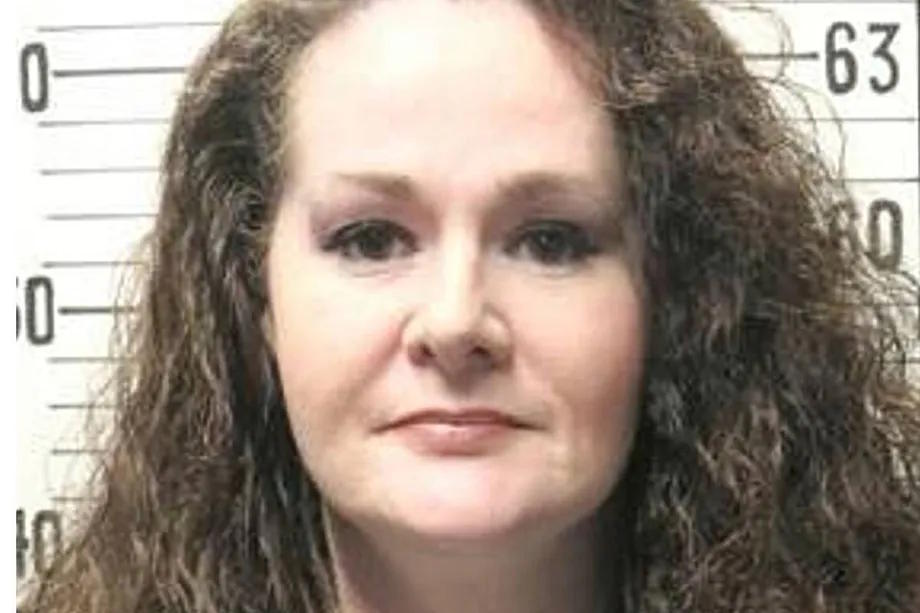
Christa Pike, the woman who survived a failed lethal injection execution in Tennessee, has regained consciousness and can speak, as reported by her lawyers on Tuesday who plan to go to court on Wednesday to obtain more information about what went wrong.
"Her recovery is medically unprecedented. Her prognosis remains uncertain but, at a minimum, we anticipate a lengthy recovery," her lawyers, Randy Spivey and Kelly Gleason, stated in a release.
Pike, 50 years old, survived two doses of pentobarbital as the execution officials attempted to end her life on September 30 for the 1995 murder of her classmate Colleen Slemmer, whom she beat and stabbed. Pike is believed to be the only person to have survived after being administered drugs for a lethal injection execution.
Pike's lawyers are scheduled to appear in court on Wednesday to request more information from the Tennessee Department of Corrections. Chancellor I'Ashea Myles has called for a follow-up hearing in Nashville on Wednesday morning regarding the case.
"Against all odds, Christa Pike is conscious, speaking, and continues to receive critical medical care," her lawyers stated in a release. Pike's prognosis remains unclear and, at a minimum, she faces a lengthy recovery, they added. According to her lawyers, Pike suffered burns and blisters on her arms during the attempted lethal injection and remains handcuffed to the hospital bed.
Pike's lawyers have requested a court order compelling the prison system to preserve information related to the execution attempt, including drug batch numbers, needles, execution logs, and other data.
Tennessee's Attorney General's lawyers stated in a filing on Tuesday that such an order is unnecessary because the prison system is "required to preserve this evidence in other cases and must ensure that it is preserved." They also stated that state authorities have taken "necessary steps for Pike to receive medical care and to determine what happened."
Republican Governor Bill Lee called the incident "deeply disturbing" and ordered a "thorough and independent investigation to determine exactly what happened." The governor postponed the state's only other scheduled execution for this year.
Photographs of Colleen Slemmer, the woman murdered by Pike in 1995, around the prison on the day of the execution.George Walker IVAP Photo
Medical experts and specialists in lethal injections have focused on the possibility that a problem with the intravenous line caused the drug to accumulate in Pike's tissues instead of entering her bloodstream. Pike's lawyers wrote in their court filing that "apparently, at no point did any member of the execution team realize that the intravenous lines were not properly placed or that the veins had collapsed."
Pike's lawyers had previously warned that her medical history and anatomy — including thrombocytosis (a blood clotting disorder) and small veins — posed the risk of her experiencing unnecessary pain and suffering during the lethal injection. Pike has suffered, according to her lawyers, numerous arm injuries.
Dr. Joel Zivot, an anesthesiologist advising Pike's defense team, stated on Tuesday that the likelihood of recovery after the lethal injection was low. "Most people who receive the lethal injection die from it," he told the BBC. "In fact, almost everyone, except Christa. So, the fact that she survived... was unusual."
However, there is still much uncertainty and many unknowns, he added, including the amount of pentobarbital that entered her system, what her blood levels were after the injection, and how her recovery will be. "At this point, I wouldn't say that all significant risks have passed," he noted. The execution attempt began around 7:30 p.m. on September 30, when Pike was given the opportunity to speak her last words. About five minutes later, Pike raised her head and said her arm hurt. At some point, she appeared to lose consciousness, but her breathing could be heard until journalists were escorted out of the witness room at 8:53 p.m. An ambulance arrived at the prison at 9:14 p.m. to transport Pike to a hospital.
In 2022, more than a third of executions in the United States were botched or faced serious issues, according to the Death Penalty Information Center, which collects information on these cases.
Regarding lethal injections, these incidents often stem from the difficulty in obtaining reliable intravenous access to veins, although the underlying cause varies from person to person. In the cases documented by the center, all failures occurred before the lethal substance could be administered.
The last recorded failed lethal injection took place earlier this year, also in Tennessee. The execution of Tony Carruthers, convicted of kidnapping and murdering three people in 1994, was postponed in May after staff could not find a vein for the lethal injection. The governor granted him a one-year reprieve.