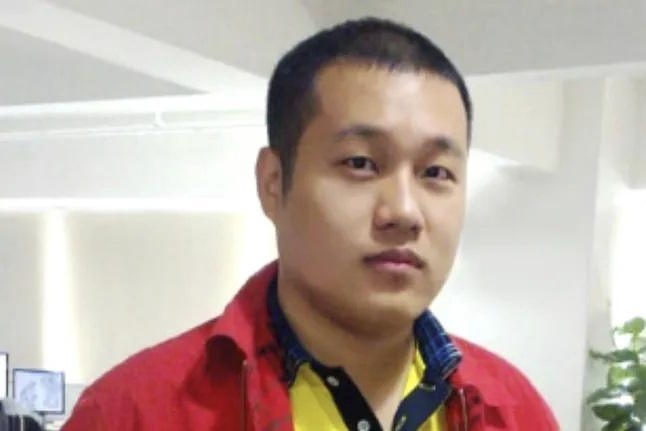
In the video, there are so many children that it's hard to count them. They occupy several rows of chairs, all with a similar haircut, while a small squad of nannies tries to get them to look at the camera. The man recording asks for order, but the kids jump, push each other, and run towards the phone calling it "dad" in Mandarin. The images, shared on social media, seemed like a nursery school end-of-year party. In reality, they showed the family portrait of Xu Bo, one of China's most eccentric billionaires.
Xu, founder of the gaming giant Duoyi Network, doesn't hide his aspiration: to create a lineage. He and accounts linked to his company have claimed to have over 100 children, the vast majority born through surrogacy in the United States. The magnate publicly proclaims himself as the "first father of China," talks about forming an "army," and claims he hopes to have at least 50 "high-quality" sons from that offspring. In his dynastic fantasy, some would end up marrying the sons of Elon Musk.
The story would sound like just another madness born on social media if it hadn't ended up in a court in Los Angeles. In 2023, Judge Amy Pellman noticed that the same name appeared in several prenatal filiation requests, the procedure through which future parents secure their rights before the birth of a baby carried by another woman. Xu appeared in simultaneous records. Appearing via video conference from China, he explained that he wanted dozens of American children, preferably boys, who could one day inherit and lead his empire.
Many of the already born children were living with their nannies in Irvine, Southern California. Xu admitted that he hadn't met them yet because he was too busy. Judge Pellman reproached him, stating that the surrogacy system was designed to help form families, not to produce serial heirs. The trial exposed the scheme of a family organized like a multinational corporation: embryos, surrogates, lawyers, caregivers, and babies on both sides of the Pacific.
Xu is 48 years old and, according to the 2025 Hurun list, has a fortune of around 27,000 million yuan, about 2,800 million euros at the exchange rate. He founded Duoyi in 2006 and enriched himself with virtual worlds of warriors and clans. He then applied that logic to real life: the more descendants, the more chances of finding the perfect successor.
China, the country that was tied to the one-child policy for four decades and then tried to revive larger families, now observes an unusual trend: magnates like Xu turn natality into a power display, resorting to surrogacy in the US to build XXL families and design their own dynasties.
The one-child policy, applied with varying degrees of severity since the late 1970s, resulted in forced abortions and sterilizations, crippling fines, and officials intruding into the privacy of millions of households. It also created the 4-2-1 structure: four grandparents and two parents concentrating money, care, and expectations on a single descendant. That child, surrounded by six adults and burdened with all family ambitions, received a nickname from sociologists that quickly became popular among the population: xiao huangdi, the little emperor.
The pendulum swung when Beijing realized that the country was aging too rapidly. In 2016, all couples were allowed two children. And in 2021, the limit was expanded to three. Then came campaigns to increase natality, extended paternity leaves, housing assistance, and a flood of subsidies for each child. The same apparatus that for decades asked women why they were pregnant began asking them why they were not. But none of this has worked. In 2025, 7.92 million babies were born in China, the lowest since the founding of the People's Republic in 1949. There were 11.31 million deaths, and the population decreased for the fourth consecutive year. Behind the numbers are young people delaying marriage, increasingly expensive housing, insecure jobs, endless workdays, and women who know that motherhood can still close the door to a promotion. The YuWa demographic institute estimates that raising a child to 18 years old costs the equivalent of 6.3 times the GDP per capita, one of the highest ratios in the world.
This is where the crack that the very rich are exploiting opens up. While a middle-class couple in Shanghai calculates if they can afford a second child, a magnate can initiate several simultaneous pregnancies in California. They can buy eggs, send their genetic material from China, hire lawyers to secure filiation before birth, and host the newborns in a mansion attended by nannies. The process can exceed $200,000 per child. For those who have billions, biology ceases to be a limit and becomes another outsourced service.
"In China, family planning was much more than a demographic policy: it was a way to govern the population," summarizes anthropologist Susan Greenhalgh, one of the leading scholars of China's one-child policy. "The State not only regulated how many children should be born; it also aspired to shape their quality and, with it, the future of the nation." Xu Bo's case now twists that old logic: where Beijing applied demographic engineering to society as a whole, the magnate applies it to his own surname.
The modern-day emperor father syndrome updates the old patriarchal clan with in vitro fertilization, Californian contracts, and catalog donors. Confucius meets Silicon Valley.
Another businessman named Wang Huiwu, president of the educational empire XJ International Holdings, starred in another story that mixes market eugenics and matrimonial strategy. According to an investigation by The Wall Street Journal, he allegedly used eggs from American models and women with outstanding backgrounds to conceive at least 10 girls. His supposed project was to educate them to marry political, financial, or business leaders.
In California, a darker version of this fever for XXL families emerged. The trail began in May 2025 when a two-month-old baby was admitted to a Los Angeles hospital with an intracranial hemorrhage and possible signs of abuse. The police went to a mansion and found there another 15 babies and children under three years old, all with shaved heads and cared for by six nannies. The investigation led to six more minors scattered across different homes in the city. Silvia Zhang, 38, and Guojun Xuan, 65, both born in China, claimed to be the parents of the 22 children, born in different parts of the US and with very few months apart. The birth certificates recognized them as such.
The mansion was not only the home of that family. It also served as the headquarters of Mark Surrogacy, the agency run by Zhang that had organized many of the pregnancies from a room in the house. Several surrogates told The Wall Street Journal that they had been recruited by Facebook with a similar story: they would help a Chinese couple struggling with infertility and few children. Vanity McGoveran, an esthetician who then lacked stable housing, was offered $55,000 and free accommodation during the pregnancy.
The U.S. offers the perfect ecosystem. There is no uniform federal law, and each state sets its own rules. California recognizes commercial contracts and allows for obtaining filiation orders. Clinics, egg banks, agencies, and lawyers form a chain capable of working for clients who don't even set foot in the country. Traditionally, this has been added to by birthright citizenship, although Donald Trump's attempt to restrict it opened an ongoing legal battle.
In February of this year, Republican senators Tom Cotton and Rick Scott asked the Department of Justice to investigate surrogacy agencies controlled by Chinese citizens in the U.S.. In their letter, they warned that in Southern California alone, more than 107 companies owned by Chinese nationals were operating, with each surrogate potentially receiving payments exceeding $50,000. The senators presented this business as a potential gateway to abuses, fraud, and exploitation of birthright citizenship.
In China, regulations from 2001 prohibit medical institutions from practicing surrogacy, but a comprehensive law is lacking, and the business continues underground. In 2024, news of a 22-year-old woman recruited to carry a child and then abandoned by an agency sparked national outrage. In the giant Asian country, the intended creation of dynasties is not just seen as a whim of the nouveau riche.
The most consistent criticism focuses on the commodification of the female body. A publication from the state news agency Xinhua described egg donors and surrogates as women displayed "like products on a shelf." Jurist Zheng Xueqian, from the Chinese Hospital Association, summed it up as: "Those who pay for a surrogacy turn women into tools of human production, into incubators."
Magnate Xu Bo says he is looking for heirs capable of extending his empire. Perhaps one will lead the video game company, another will marry a Musk descendant, and a third will completely reject the script written before their birth. That is the element that no genetic catalog or business plan can control. The children of the emperor father will grow up. And one day they may ask why they were conceived: to be children or to become assets of a dynasty.