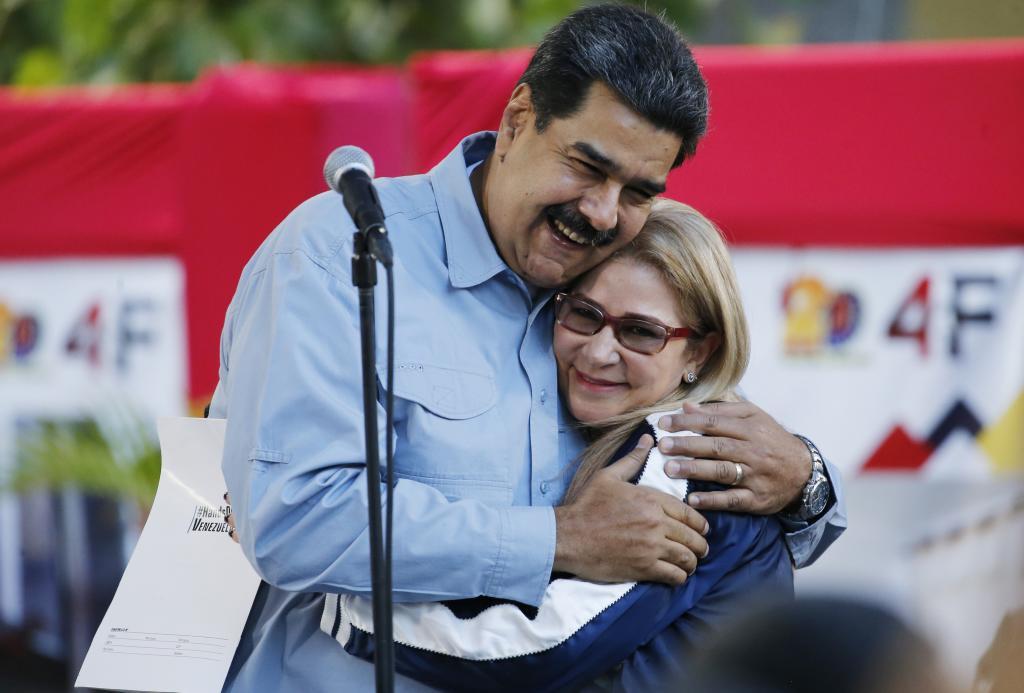
The US Attorney's Office has filed a new set of charges against the ousted Venezuelan president Nicolás Maduro and his wife, Cilia Flores, adding torture to the drug trafficking crimes the couple was already facing, in prison in New York since they were captured by US special forces in an operation in January in Caracas.
Maduro and Flores have been accused of conspiracy to commit torture according to the document presented this morning in a federal court in Manhattan. Prosecutors provide specific cases and evidence, such as that of a Venezuelan military officer who was arrested in 2013 on suspicion of planning a coup. According to the document presented, members of the Venezuelan Military Counterintelligence Directorate interrogated the officer by applying electric shocks with a high-voltage cable about 20 times and hanging him by hands and feet for several minutes.
Similarly, New York authorities cite the case of an American citizen detained in 2020 upon entering Venezuela accused of conspiring to assassinate Maduro and who, according to the document, was also tortured by counterintelligence officers through beatings and electric shocks to arms, legs, and genitals.
The charges come on the same day that Flores, who faces the possibility of 40 years in prison for drug trafficking offenses, is scheduled for another hearing to formally request bail for health reasons while awaiting her drug trafficking trial, which is not expected until at least 2027. The couple's lawyers will ask veteran judge Alvin Hellerstein for permission for the former first lady to undergo a cardiac procedure and recover in a private home. The legal team argues that Flores has lost 11 kilos during her imprisonment at the Metropolitan Detention Center in Brooklyn. She suffers from "persistent dizziness, lightheadedness, and difficulty breathing," and may have even suffered a mild heart attack in July. Additionally, they say she has permanent scars from being thrown against a wall or dresser during the operation that led to her capture.
Her lawyers have requested the case be dismissed citing immunity as the leader and first lady of a foreign country. But in the meantime, the proposal is to move to a private villa, with a tracking device and permanent security guards. The government of Delcy Rodríguez would cover the costs, just like the expensive legal defense of the former president.
However, the Manhattan Attorney's Office strongly opposes Flores' release, who was Venezuela's attorney general, due to the "extreme" risk of flight, given the couple's connections, especially with countries that do not have extradition treaties with the US. They argue that Flores is receiving appropriate medical care and that her release would endanger the accusers and potential witnesses in the case. In their arguments, officials have also criticized the overall approach, pointing out that there is enough court precedent that has rejected requests from wealthy defendants as it would be discrimination against those who cannot afford something similar. Flores argues that she is not a flight risk because she is "determined to support her husband with her constant presence."