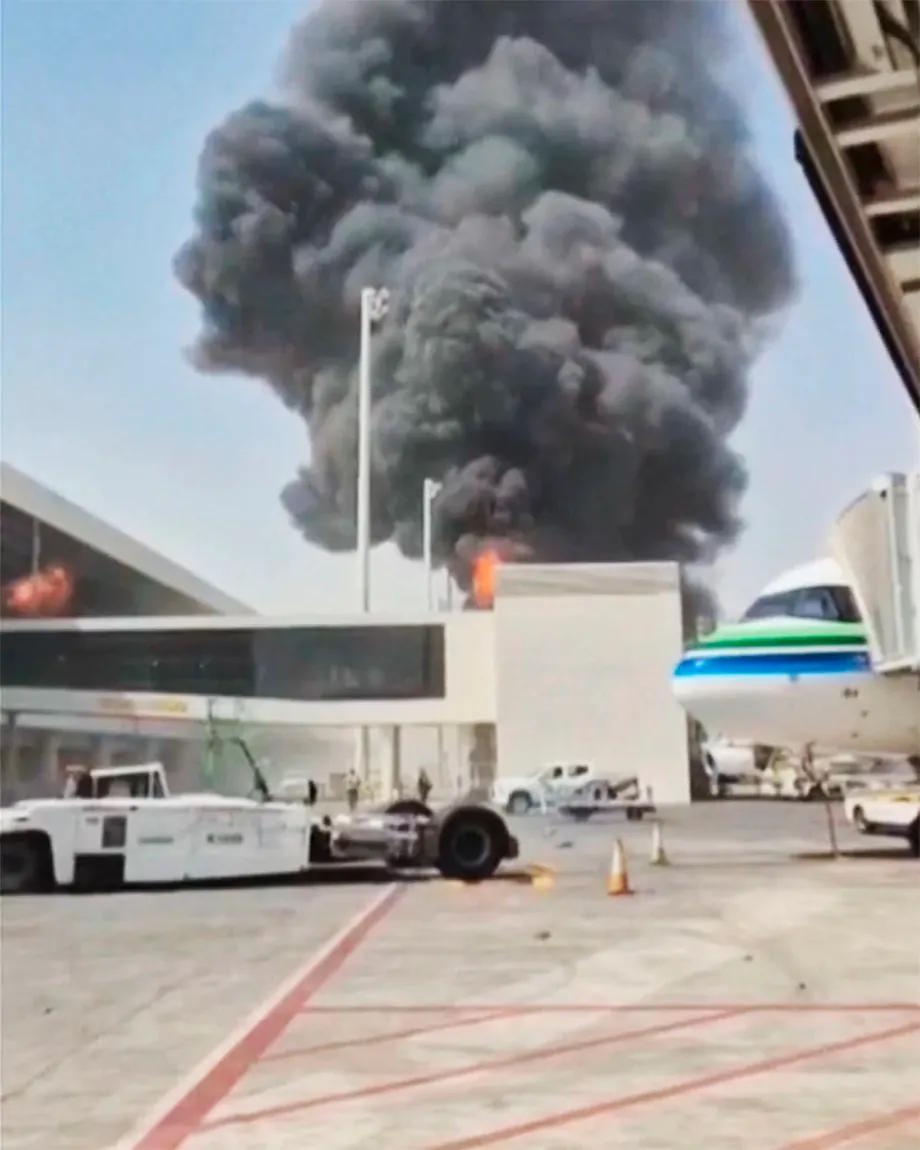
The Crown Prince and de facto ruler of Saudi Arabia, Mohamed bin Salman, has more than enough reasons to be deeply concerned about the blows being inflicted by the Houthi rebels on the Desert Kingdom. Yemen has been, in recent decades, the graveyard of Saudi ambitions, as Middle East experts point out how Riyadh has been suffering its most humiliating defeats in its backyard, in a highly impoverished country slightly larger than the entire Spanish geography. The current escalation of Houthi attacks on critical Saudi facilities, such as the missile strike on Saturday at Riyadh International Airport, which left 12 dead and around thirty injured - just 48 hours after another attack on the same facilities that had already claimed three lives, including an airplane pilot - followed by another projectile launched yesterday to continue targeting the besieged airport, now tightly closed, projects an image of great weakness of the main Arab Petro-monarchy, increasingly cornered by the Yemeni insurgents.
The rebels argue that their attacks on targets such as airports, military and energy facilities are in response to Saudi Arabia's bombings of their positions in Yemen, in support of the internationally recognized government forces, which have also targeted civilian sites like Sana'a airport in recent days.
The entire regional stability is once again seriously compromised by the clash between Saudi Arabia and the Houthis - allies of Iran, although not mere puppets of Tehran as they are sometimes portrayed. However, the situation is progressing in a way that also questions Bin Salman's leadership if he continues to show incapacity in effectively responding to the enemies who are currently causing the most harm in an absolutely asymmetric and, therefore, even more maddening conflict for Riyadh.
The powerful Crown Prince must surely be haunted by episodes such as the disastrous Operation Scorched Earth in 2009, which buried the prospects of the also very ambitious Prince Khalid bin Sultan - who many saw as a possible candidate for the throne after becoming the hero of the international mission that liberated Kuwait. The mentioned operation was a large-scale intervention, mainly promoted by Riyadh, to try to crush the Houthi insurgency. However, it ended with a more than humiliating retreat of Saudi troops and the loss of hundreds of soldiers, despite the Desert Kingdom's narrative trying to conceal the monumental failure. The Houthi movement had emerged as an insurgency against the Sana'a regime in the 1990s. But it was three years after the Arab Spring, in 2014, when they managed to overthrow the government and take control of the capital and much of the north of the country, followed by a terrible civil war that has turned Yemen into the epicenter of one of the world's largest humanitarian crises, according to the UN.
King Salman ordered a large-scale offensive against the Houthis again in March 2015 with the first bombings on Sana'a and other locations where pro-Iranian proxies had fortified themselves. That operation lasted, in phases, for many years. And not only did it fail to defeat the Yemeni rebels, but once again, it left an image of Saudi Arabia as a giant golden paper tiger, a giant, but a paper tiger after all. And with a surprisingly poorly qualified army, highlighting the inefficiency of its middle management. Riyadh's allocation of around 5.72% of its GDP to Defense, an annual investment of about 62 billion euros, and boasting modern military equipment, is of little use.
With Bin Salman already at the helm of power, given his father's fragile health, in 2022 a ceasefire was signed that defined the current political landscape of Yemen, deepened Riyadh's fragility, and magnified the Houthis who control much of the country, despite having Arab powers and the West against them. The ceasefire was broken last July, as another consequence of the disaster that the entire Middle East has been plunged into since the US and Israel's military intervention against Iran. Since then, the Houthis have made significant advances on the strategic western coast along the Red Sea, become a new threat to global maritime transport by dominating the Bab el Mandeb Strait, and are showing fierce resistance against the Saudi counteroffensive in support of the weak internationally recognized Yemeni government, which barely has real control beyond the Aden region.
Bin Salman has been holding back for weeks and has tried by all means to avoid a total war against the Houthis. To a large extent, because although at first glance it might seem like a David versus Goliath struggle, as has been said, the Houthis have demonstrated exceptional ability over the years to hold their positions and cause significant harm to their enemies. Bin Salman fears that an open conflict will further hinder the already serious difficulties in oil exports, with coffers severely affected since the closure of the Strait of Hormuz. At a time when Bin Salman is already being questioned due to the great failure of his megalomaniac projects framed in the so-called Vision 2030. His aura as a visionary and capable leader is fading rapidly, and internal struggles and conspiracies are never lacking within the Saudi Monarchy.
Furthermore, Riyadh is struggling to get its allies to support its efforts to confront the Houthis. On Tuesday, Saudi Arabia, Turkey, and Pakistan activated their defense pact for the first time, sealed in the summer due to the rebels' actions, but both Ankara and Islamabad show clear signs of not wanting to be dragged into a fully open war front. However, the great disappointment for Bin Salman is Donald Trump. Despite Riyadh being Washington's key regional ally and the good rapport that the Republican and the Saudi Crown Prince have conveyed since the latter's return to the White House, the United States is reluctant to assist the Kingdom and join the attacks against the Houthis. Trump does not want to further destabilize energy markets and is finding the countdown to the midterm elections very challenging. Nevertheless, the fierce escalation by the Houthis is also cornering Trump.
In this regard, after calling the attack on Riyadh airport "unacceptable" - one of the dead is American - Trump, for the first time on Saturday, hinted at considering and "deciding very soon" whether to join the coalition fighting against the Yemeni rebels. While the White House buys time, both Arab and European countries strongly condemned the attack on King Khalid Airport yesterday. Particularly significant was the message of support from the United Arab Emirates to the Saudi government. It should not be forgotten that Yemen is one of the arenas where Riyadh and Abu Dhabi clash as two antagonistic actors, as the latter became a sponsor of a third player in the territorial dispute in Yemen, the so-called Southern Transitional Council (STC), a secessionist faction that once controlled much of the southern strip, posing a major challenge to the Saudi regime. The two Petro-monarchies are fighting their own war in many spaces, including in another country in turmoil like Sudan. Too many fronts open for a Bin Salman who is not going through his best moment.