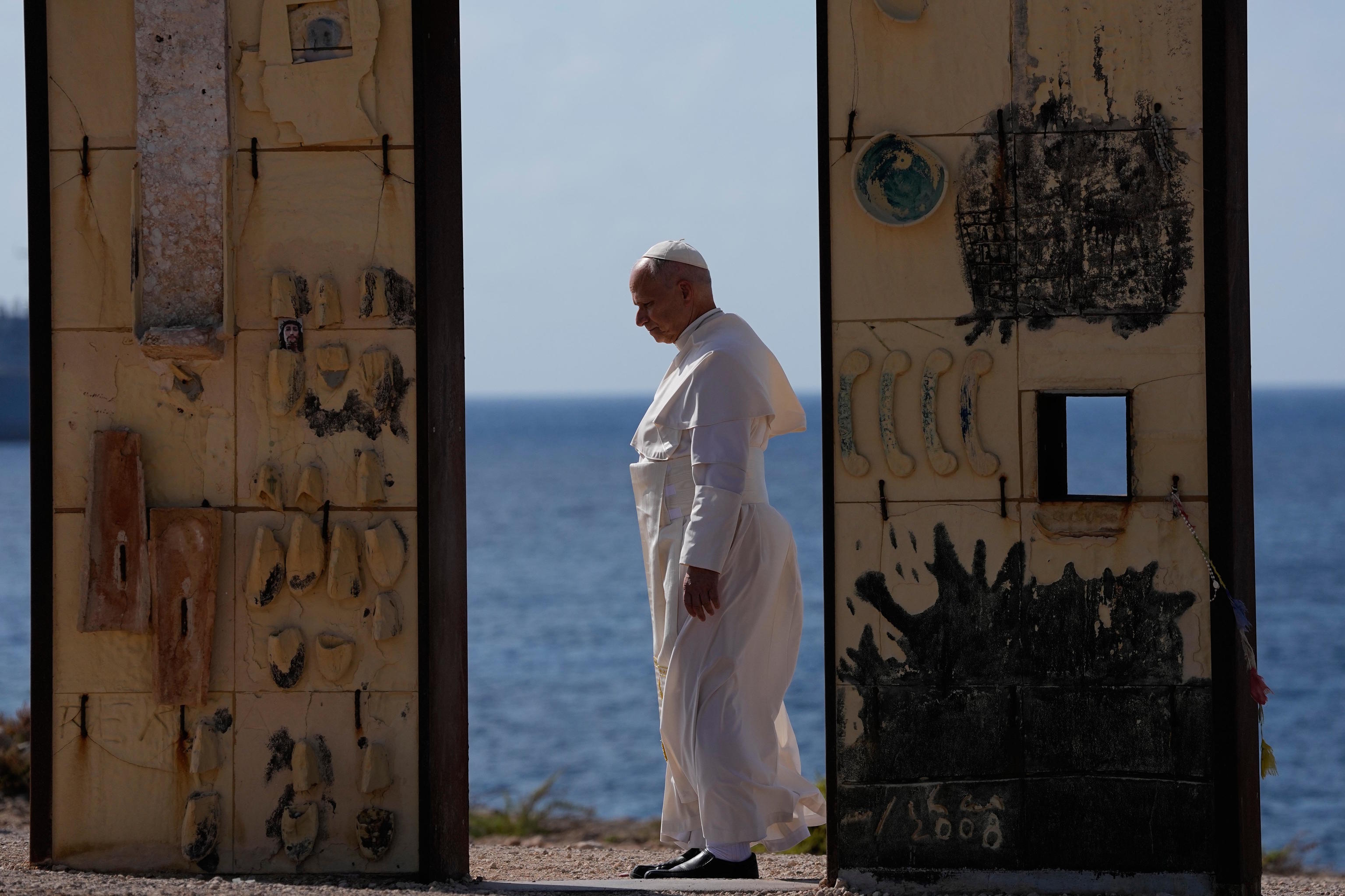
This afternoon, Pope Leo XIV is undergoing surgery for a lung nodule, as he announced himself on Sunday after the traditional Angelus prayer.
"Recently, during some check-ups, doctors found a circumscribed module in the lung. It has been detected at a very early and well-localized stage," explained the Pontiff to the faithful gathered in St. Peter's Square in the Vatican.
According to him, the attending doctors have deemed it necessary to intervene. "Following their advice, I have decided to undergo surgery to remove it," he added. He also thanked all the faithful for "their spiritual closeness." "I entrust myself to your prayers," concluded the Pope.
Matteo Bruni, the director of the Holy See Press Office, specified that the intervention is scheduled "for the first days of next week" and that the postoperative hospitalization time is "around a week," he explained in response to journalists' questions.
The solitary lung nodule is the accumulation of cells of a different origin than normal lung cells. This nodule can be benign or malignant, as explained by the University of Navarra Clinic.
What are the symptoms of a lung nodule?
The lung nodule is usually asymptomatic. Therefore, in patients with certain risk factors, it is advisable to undergo periodic check-ups with a Pulmonology specialist.
Early detection of a lung nodule increases the chances of treating lung cancer in early stages.
What risk factors increase the likelihood of having a lung nodule?
Lung cancer is primarily caused by smoking; however, cases of lung cancer have also been found in non-smokers, but they are a small minority.
Not all smokers have the same risk, but it is unknown what factors influence this difference. Respiratory diseases, such as COPD or emphysema, significantly increase the risk of lung cancer.
Another risk factor for a lung nodule is having a family history of cancer. Occupational risk factors, such as prolonged exposure to asbestos, are also not ruled out.
How is a lung nodule diagnosed?
The lung nodule is diagnosed through early diagnostic programs, which consist of a chest CT scan to look for lung nodules and respiratory function tests.
Does a lung nodule necessarily mean lung cancer?
A lung nodule can be cancerous. However, most lung nodules are non-cancerous, as reported by the Mayo Clinic. Most lung nodules are scar tissue from past lung infections and are quite common.
If a lung nodule is small and does not grow, it is unlikely to be cancer. It probably does not require treatment.
What is the treatment for a lung nodule?
Once the biopsy is obtained and the diagnosis of lung cancer is confirmed, it is necessary to determine the extent of the disease to decide on the appropriate treatment. The treatment plan will be established based on the risk of malignancy and the size of the lung nodule found.
If the lung nodule is small (< 5 mm solid appearance or between 5-9 mm non-solid appearance), annual monitoring with a contrast CT scan will be sufficient.
If the lung nodule is larger (> 10 mm) or grows rapidly, a biopsy will be performed, and it will be surgically resected.