It all started with a small bottle of reddish-brown liquid that looked like an innocent cough syrup. In late June 2024, a retired chemistry professor sent the bottle by mail to a former lab colleague. There was nothing particularly striking about that container, except that the Chinese police had been monitoring the movements of its recipient for weeks.
The agents intercepted a sample and sent it for analysis. The result revealed that it contained a chemical compound precursor to a potent substance used as an anesthetic and converted into a new trendy drug in Asia.
That bottle was the first evidence of a plot that would end up spreading across four countries, with clandestine laboratories, specialized scientists, transporters, smugglers, and millions of yuan in cash.
It took investigators two years to piece together the puzzle. When they finally did, they discovered that behind that operation was a retired university professor who had put his scientific knowledge at the service of a criminal organization. Chinese social media quickly dubbed the case as the "Breaking Bad of China."
The media parallel with Walter White, the chemistry teacher who becomes a methamphetamine manufacturer in the famous American series, was irresistible. But the Chinese protagonist did not work in an RV lost in the New Mexico desert. He had leveraged his old academic contacts to secure laboratories within chemical factories scattered across five Chinese cities.
There, according to the police investigation, he designed and perfected a procedure to manufacture etomidate precursors, an anesthetic also illegally consumed in electronic cigarettes known as "zombie vapes."
The investigation began in Zibo, an industrial city in the Shandong province. A pharmaceutical company had purchased suspicious quantities of various chemicals. The company was legal, and the substances remained virtually untouched in its warehouses. The strange part was the employee who had ordered their acquisition.
His last name was Huang, he was just over 30 years old, had a master's degree in chemistry, a wife and children, and a promising career. He had abruptly left his job, after just three months, claiming he wanted to thrive in the southern part of the country.
Investigators found that his new company was much smaller than the previous one. Additionally, Huang constantly traveled between the Shandong province, Shenzhen, Vietnam, Thailand, and Cambodia. When he was in Zibo, he spent entire days locked in a laboratory with Wu, a former chemistry professor from a local university.
According to the agents, Wu was the scientific mastermind of the business, and Huang was its main organizer. Together, they had developed a system to produce high-purity compounds in China and complete their transformation into the final drug outside the country.
The strategy was a legal calculation. China had subjected etomidate to stricter control after its recreational consumption began to proliferate. But the suspects thought they could make it harder for law enforcement by separating the different production phases. If the police only found certain precursors in the Chinese laboratories, it would not necessarily be enough to prove they were manufacturing an illegal drug.
The business began to grow, and the network expanded. They managed to build a cross-border chain that started in Chinese laboratories and ended in markets as far away as Malaysia, Indonesia, and Australia. The components traveled in small shipments, with removed labels, false customs declarations, or hidden among other legal products. Once processed, the drug could even be disguised as Vietnamese camellia oil.
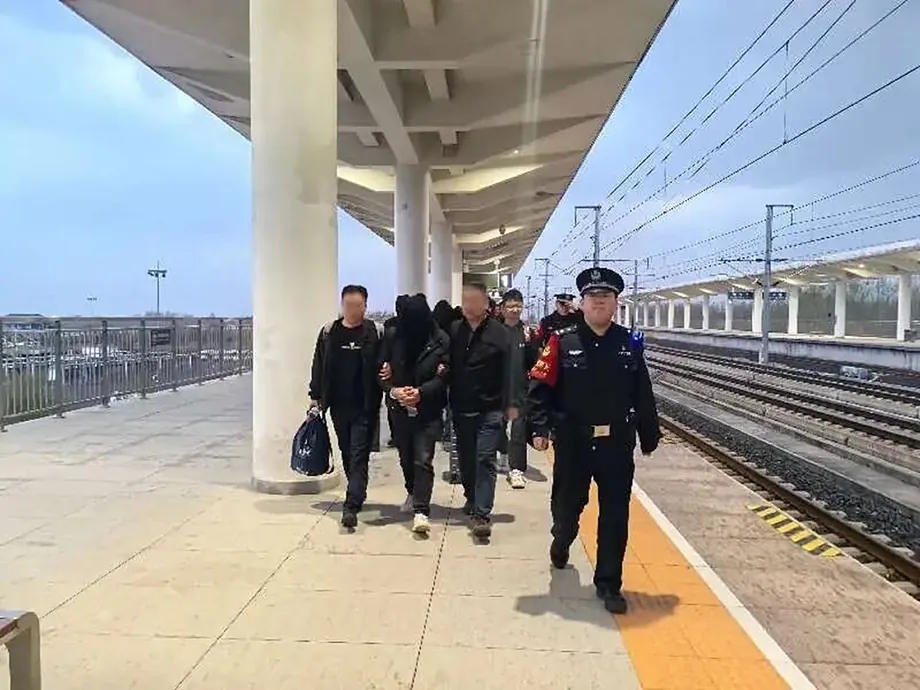
A couple of months ago, after extensive surveillance, chemical analysis, and international cooperation, the final operation took place. Agents from several Chinese provinces made simultaneous arrests while police in Vietnam and Thailand raided previously identified facilities. The outcome was 71 suspected individuals arrested.
Among the detainees were Professor Wu and his scientific collaborators. Chinese law provides extremely severe penalties for drug manufacturing and trafficking, including the death penalty.
Other Walter White Imitators
The Chinese case is not the only one that has found a disturbing reflection in television fiction. In July 2025, the Indian Police arrested two Chemistry professors in the state of Rajasthan who, according to investigators, had directly drawn inspiration from Breaking Bad to set up a clandestine laboratory in a two-bedroom apartment. The agents seized 780 grams of mephedrone, a synthetic stimulant drug, prepared for distribution.
A year earlier, the police in Chennai, southern India, had discovered another makeshift laboratory inside a residence. Among the seven detainees were several engineering students and a young chemist.
The suspects were accused of producing methamphetamine, the same drug Walter White manufactured in the series. In March 2026, another chemistry professor was arrested in the city of Agra for his involvement in a network that produced precursors for synthetic drug production.