The midterm legislative elections on November 3rd are decisive. It is not an original statement, but neither is it false. The midterms, in American jargon, are always crucial because they are an essential part of the checks & balances process, of weights and counterweights, of the U.S. political system for over two centuries.
Each presidential election cycle is followed by a significant blow to the president two years later. It doesn't matter if the economy is doing well, poorly, or average. If there have been wars or crises. The Executive, theoretically not directly at stake, is punished as part of a historical process of accountability and balance. Only in three midterms since 1906 has the president's party gained seats. Citizens vote for governors, congressmen, senators, but they do so with one eye always on the White House. However, having said that, these elections are particularly decisive, and the reason, obviously, is Donald Trump.
At this point, it is indisputable that Trump is one of the presidents who will leave the most significant mark in the country's history. A figure of enormous significance, shaping an era. He would like to be part of the pantheon, alongside Washington, Lincoln, perhaps Roosevelt. To be immortalized on Mount Rushmore. But beyond his ego, the destruction of institutions, the discrediting of the office during his six years in power, it would be absurd to deny the mark he has already left. He has created his own style of politics that has spread worldwide. A language, gestures, even memes. His transformation is underway, and whatever happens, the effects of his actions and reactions will shape the coming decades. And that is why the outcome of the legislative elections is even more critical.
435 seats in the House of Representatives and 35 in the Senate
In these elections, the 435 seats in the House of Representatives and 35 in the Senate are at stake, just over a third because there will be special elections to fill vacancies. Governors and state legislatures are also elected throughout the country. But, above all, what is at stake is the control of Congress and of the times. To see if the Republicans lose the majority they hold in both chambers, or if the Democrats achieve a sweep that until recently seemed impossible. "These are the most momentous midterm elections in U.S. political history. The capital D in Drama is not for Donald, but for Drama," points out political analyst Myra Adams, a veteran of Republican campaigns.
The first two years of the term have shown a steamroller effect. With both chambers in Republican hands, the Executive has legislated, appointed, and pressured with little friction. Judges, regulators, and high-ranking officials have passed through the Senate almost automatically, and the legislative branch has functioned more as a rubber stamp than as a counterbalance. The opposition, if we can call it that, was non-existent in the first 12 months and only began to achieve small victories, in the Epstein case or regarding Iran, thereafter. In general, many statements and interviews, two large demonstrations, outrage on social media, and little else, because those who do not control any lever cannot turn their discourse into actions. In politics, what wears you down is not power, but not having it.
once they have dismantled traditional checks and balances and have instrumentalized the Government against their supposed political enemies, they proceed to disrupt and control elections to ensure that they and their allies remain in power," warns Michael Sozan, from the Center for American Progress.
The Democrats made a very risky bet, forced by a political and party system that has nothing to do with the European one. There is no opposition leader or anything resembling one, and due to this design, it is impossible for there to be one, at least until the midterms. If someone dared to launch too soon, they would be overwhelmed because the amount of money needed to try to rival the president is unaffordable, unimaginable. And because no one can be exposed for so long. So the party opted for patience, waiting for Trump to burn out on his own. They thought it would be the economy, tariffs, his internal crusade. But in the end, the Iran war, the cost of gasoline and diesel, inflation in general have added to the endless daily scandals.
Why the Congressional Majority Matters
That's why the majority in Congress matters so much now. Whoever chairs the committees decides what is investigated, who is summoned, and what reaches the floor. And with that, perhaps the news cycle and the debate on talk shows. Whoever controls the House decides on budgets and can halt what they dislike. And whoever controls the Senate holds the day's agenda in Washington. Winning just one chamber would be a real brake on paper, but winning both would allow the Democrats to reset the clock, force negotiations, expose the White House's loneliness. Or rather, its weakness, that of the so-called lame duck, an outgoing president who in many states is harming his own party's aspirations due to his desire for the limelight.
The issue is not only whether the Democrats manage to become an institutional counterbalance but whether they are capable of rebuilding themselves as a true political opposition. One that challenges the narrative, proposes recognizable alternatives, and forces the Government to be on the defensive, to step out of its comfort zone. An opposition that does not just react to each new decision from the White House but regains the initiative, voice, and mobilization capacity.
The Republicans had 220 out of 435 seats at the beginning of this term, so losing just three would allow the Democrats to reach 218. The average of polls suggests they should win many more, but perhaps not at the level that would have been expected given the president's very low popularity ratings. The number of truly competitive races in the House of Representatives has decreased in the last three decades, partly due to brutal polarization, but mainly due to advances in redistricting engineering or gerrymandering, which have turned many seats into Democratic or Republican strongholds. As a result, analysts seem to predict that only between 40 and 50 of the 435 House seats are truly up for grabs this year.
There is a consensus that the Democrats would regain the House, but perhaps with a majority of between 5 and 20 seats, not with 41 seats as in the middle of Trump's first term. "There will be a functional majority, but not an overwhelming majority," assumes Bill Galston, former advisor to Bill Clinton, in interviews and comments.
The Senate: Hard to Influence
But the Senate is harder to move. Republicans have a 53 to 47 advantage (although in reality, one of the independents who aligns with the Democrats is questionable), so progressives need a net gain of at least four seats. Of the 35 Senate seats at stake, 22 are Republican and 13 are Democratic. Therefore, victories in challenging strongholds are needed, some that have not chosen a leftist since 1932, with Franklin D. Roosevelt, or that Trump won in 2024 by more than 10 or 15 points.
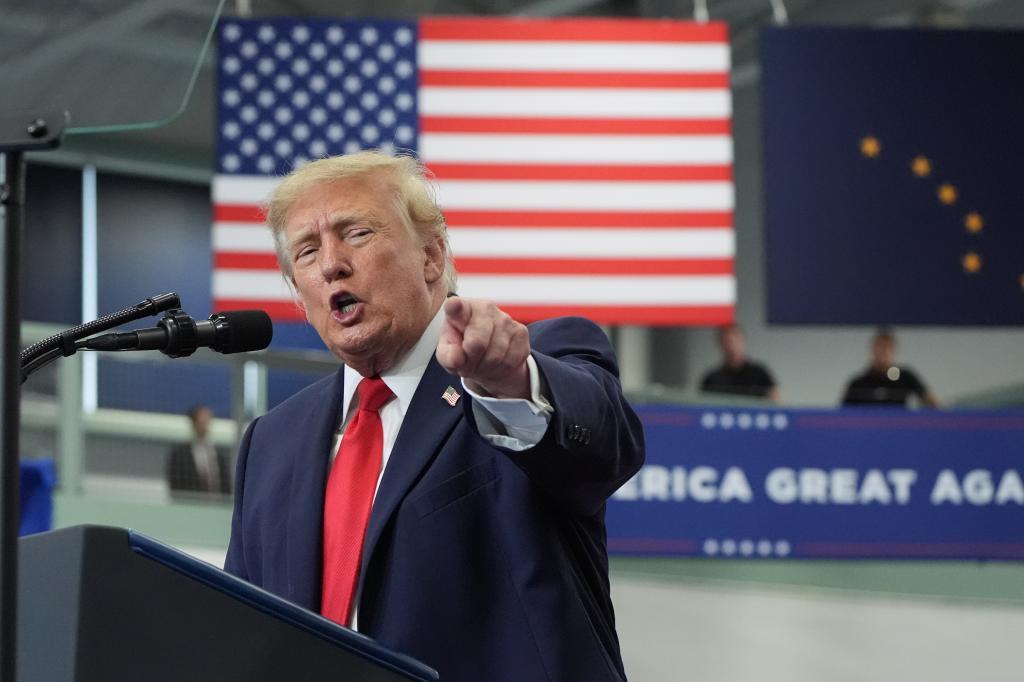
The opposition knows what's at stake, but the administration knows it even better. Trump said last Monday at a rally that he would likely be the last Republican president if his rivals manage to retake Congress. He claimed that if they do, "they'll add about 12 more electoral votes," "they'll add four more senators. They'll add about 10 more members of Congress." "They're going to manipulate the Supreme Court with the help of a lot of people," he said, claiming that Democrats want to increase the total number of Supreme Court justices from the current nine to 23. These are legislative elections, but the country knows that this is about power—the three branches of government.