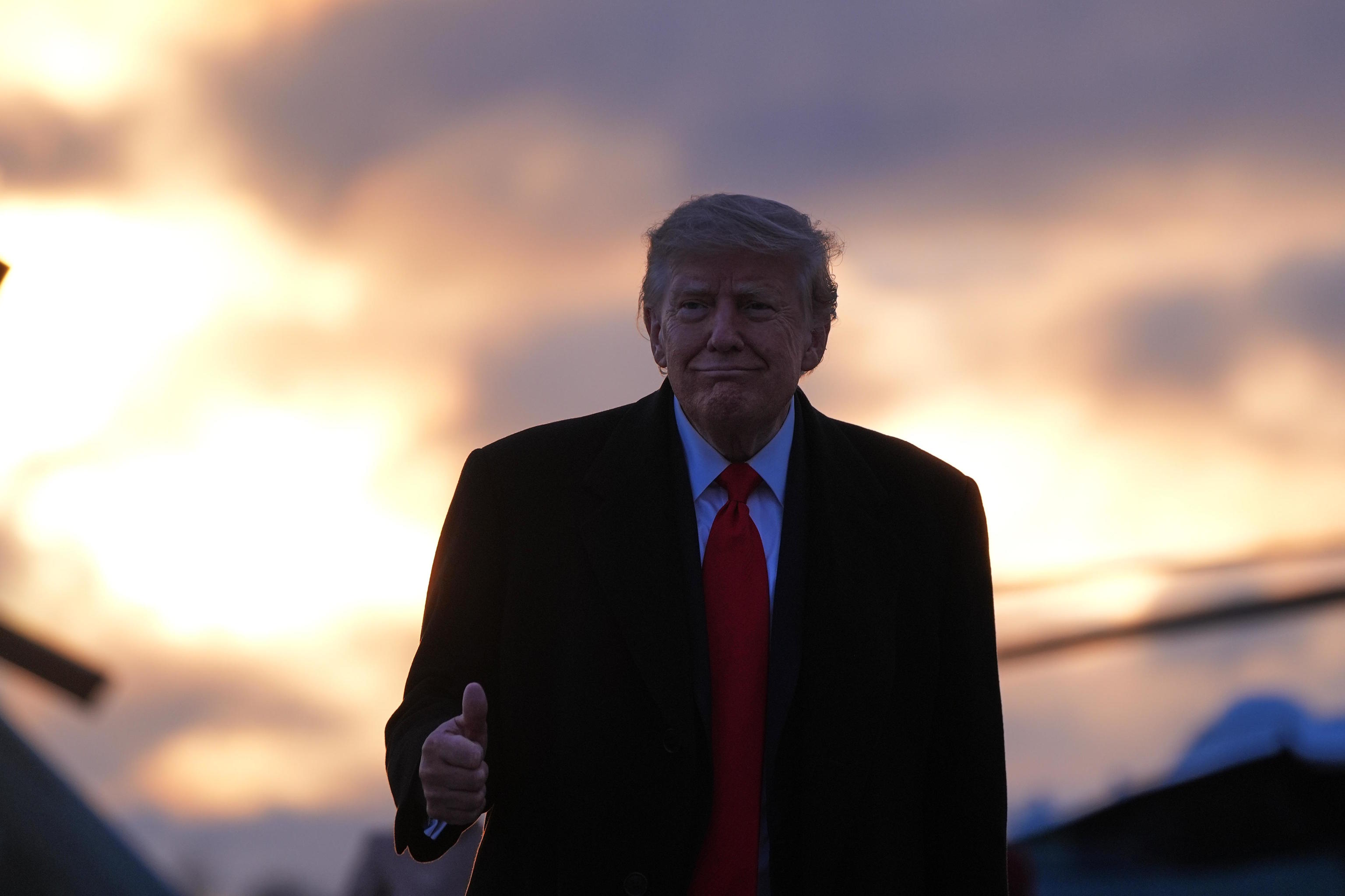
The President of the United States, Donald Trump, has announced the suspension of the live streaming of the execution of Nidal Malik Hasan, who will be shot by a firing squad in December at Fort Hood, the same base where he killed 13 people and injured 32 others in 2009. Ten days ago, Secretary of Defense Pete Hegseth caused a huge uproar across the country and around the world by stating that anyone could watch his death live, prompting comparisons with the methods of terrorist groups like the Islamic State.
Trump, who had confirmed just 48 hours earlier that Hasan would face a firing squad, immediately backtracked, showing his reservations. Vice President JD Vance did the same, not only casting doubt on whether it would happen but also stating that he would not witness that macabre spectacle under any circumstances.
"Broadcasting the execution live for everyone to see could have been a strong deterrent for the world to witness how the United States deals with terrorists and scum like Hasan, but many good and well-intentioned people would prefer not to see him die, neither through live broadcast nor any other visual means. He will die, as planned, by firing squad, but this event will not be broadcasted. That being said, the execution can be witnessed in person by the direct relatives of the victims, if they wish. They deserve to witness JUSTICE!" the president wrote on his social media.
The last public execution authorized by the State in the United States took place in 1936 in Kentucky, where 20,000 people witnessed the hanging of Rainey Bethea, a young black man who had been convicted of raping an elderly white woman. Execution by firing squad is very rare in the United States. Formally, it is only allowed in Idaho, Oklahoma, Utah, South Carolina, and Mississippi. Three people were executed by this method last year in South Carolina. Before that, only three people had been executed in this way since 1977, all in Utah.
Over the past week, the Administration has received numerous criticisms, including from figures within its own party and from religious and civil society leaders. There were also warnings from advisors about the unpopularity of executing someone in a wheelchair and the likely impact it would have on the internet. Hasan wanted to die during his attack to "become a martyr," he explained to interrogators. Critics believe that his execution could turn him into something similar within the jihadist world.
Trump's decision further exposes Hegseth, perhaps the most controversial figure in the government right now, who is accumulating scandals almost weekly, clashing with his team, and who may be one of those who will face the consequences of the Iran war if the November legislative elections go wrong for the Republicans. "Last week, Secretary of Defense Pete Hegseth promised to make the execution public and confirmed that it would be broadcast live: 'The Secretary is right. It will be broadcast live. More details will be provided soon,' the Pentagon assured yesterday in response to questions from journalists about the internal debate on the issue within the Executive branch.
In the U.S., it is common for the families of victims to attend the execution of a murderer, even 20 or 30 years after the crime. Normally, there are some witnesses, such as investigators or journalists. But nothing like this. The only exception was Timothy McVeigh, the perpetrator of the 1995 Oklahoma bombings, whose execution was broadcast on closed-circuit television for a few hundred witnesses. At that time, a company wanted to broadcast it on the internet, but the court rejected it.
House Republican leader Mike Johnson also warned about his colleagues' concerns regarding the possibility that the execution of a disabled person could be a major recruitment tool for future terrorists. Johnson also stated that he would not watch it. "I need to convey to the White House what some of my colleagues think about this, and not everyone is in favor of the idea," he insisted.
"Nidal Malik Hasan, a former U.S. Army major turned traitor, is an evil and wicked man who murdered 13 people, including a pregnant soldier who died along with her unborn child, and seriously injured 32 other innocent people. The FBI, under the direction of Barack Hussein Obama, intercepted electronic communications between Hasan and the radical Yemeni-American cleric Anwar al-Awlaki. After being reviewed by the FBI's counterterrorism task force, investigators concluded that Hasan's emails did not pose a threat. This assessment of the Obama administration's actions was later considered a serious intelligence failure," Trump wrote on his social media platform in an attempt to shift the detrimental narrative of the past week to blame his predecessor for the massacre at the base.